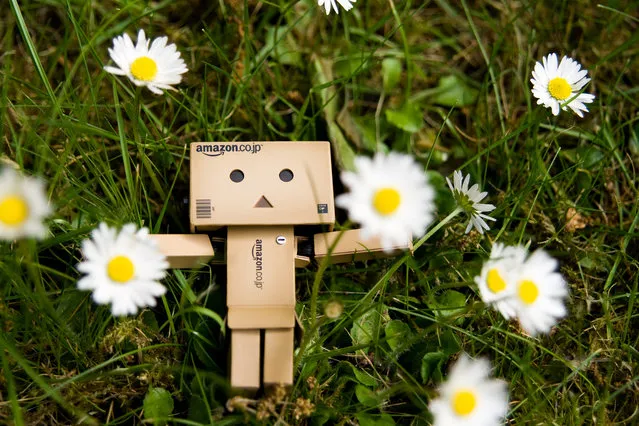
The name Danbo is a pun on the Japanese word for corrugated cardboard “danboru” (ダンボー). There’s also a company in Japan which makes cardboard boxes which has Danbooru in its name.
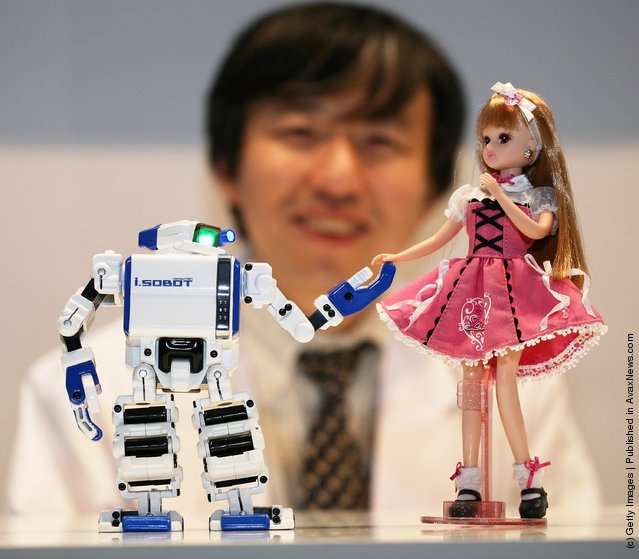
Japanese toy maker Takara Tomy's world's smallest humanoid robot “i-Sobot” is displayed during the Toy Forum 2007 on January 23, 2007 in Tokyo, Japan. The 165mm height robot is able to walk, play the drums and keep its balance. (Photo by Koichi Kamoshida/Getty Images)
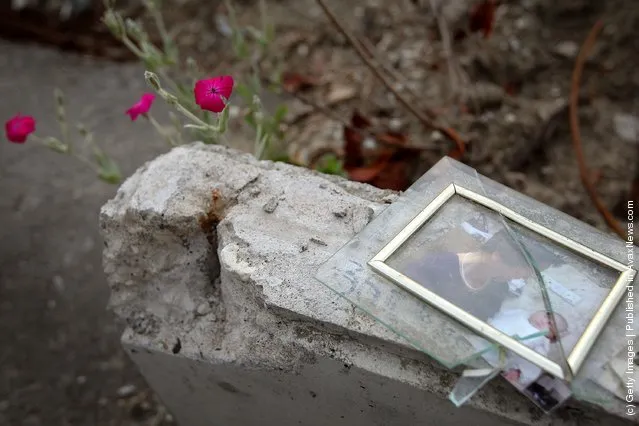
A broken picture frame is left in the tsunami-hit Arahama area, three months and two days after the magnitude 9.0 earthquake and subsequent tsunami on June 13, 2011 in Sendai, Miyagi, Japan. Japanese government has been struggling to deal with the earthquake and tsunami as well as the troubled Fukushima Daiichi Nuclear Power Plant. The fear on outbreak of virus infectious disease are mounting due to the humid rainy season on the corner and delay of the clearing the debris. (Photo by Kiyoshi Ota/Getty Images)
Takehiko Yagi is a rising star in Japanese photography, and his vibrant pictures of the Hindu spring festival of Holi won the Grand Prize at the fourth annual Nikkei National Geographic Photo Prize. Diving into the Colors of Holi is his first exhibition in the US, on show at Foto Care Gallery in New York until 28 September, 2016. Here: Jaipur, India, 2013, (Photo by Takehiko Yagi/The Guardian)
Jack Tia Kee Woon is an artist from Singapore. He is famous through his technique of watercolor painting in acrylic environment. His painting style is very light and radiant, where the watercolors add the transparence to the picture, while acrylic make the colors look very deep. One can see the influence of Chinese and Japanese culture on his art.
Minimiam is a project of the Japanese photographer Akiko Ida and French photographer Pierre Javelle. They met studying photography at the Paris “Arts Décoratifs” art school. The project has been ongoing since 2002 and was inspired by the married couple’s profession as commercial food photographers.
Masakatsu Sashie is a Japanese painter, born in 1974 in Kanazawa. His paintings of spherical structures floating above rubble on the streets, envision a future where environmental disasters have made the cities depicted uninhabitable. While he has been painting since 1999, his work caught more national intention in 2005 at the Geisai art show.
Japanese embroidery artist Hiroko Kubota was in the process of making custom sized clothes for her smaller-framed son when he made a small request: could some of the shirts have cats on them? Kubota explains her son was somewhat obsessed with cats and had collected a small library of adorable images found around the web.