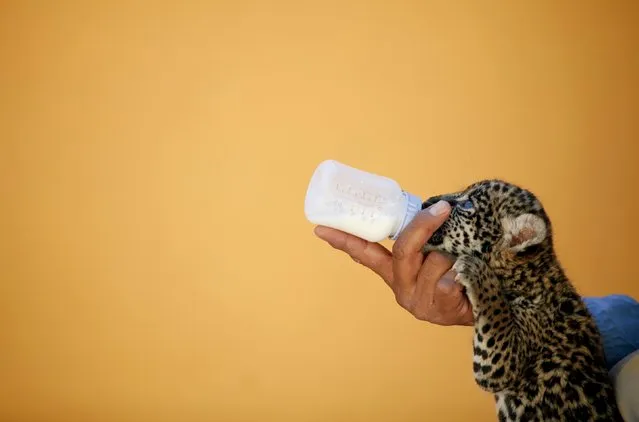
A keeper feeds a four-week-old jaguar while presenting it to the media, at a zoo in Ciudad Juarez, Mexico, October 14, 2015. (Photo by Jose Luis Gonzalez/Reuters)
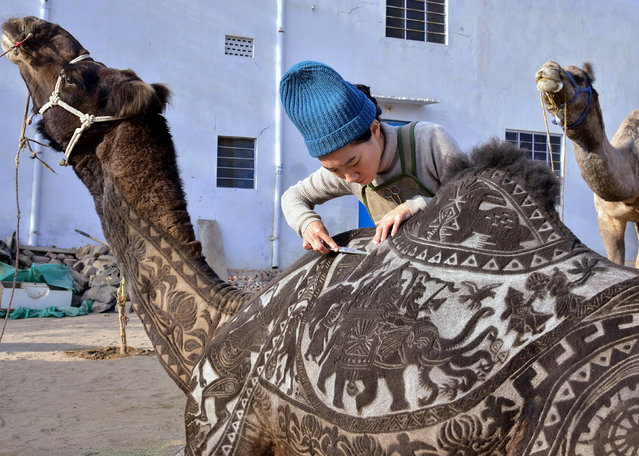
Japanese hairdresser Megumi Takeichi cuts patterns into the hair of a camel ahead of the Bikaner Camel Festival in Bikaner in the western Indian state of Rajasthan on January 10, 2019. (Photo by Dinesh Gupta/AFP Photo)
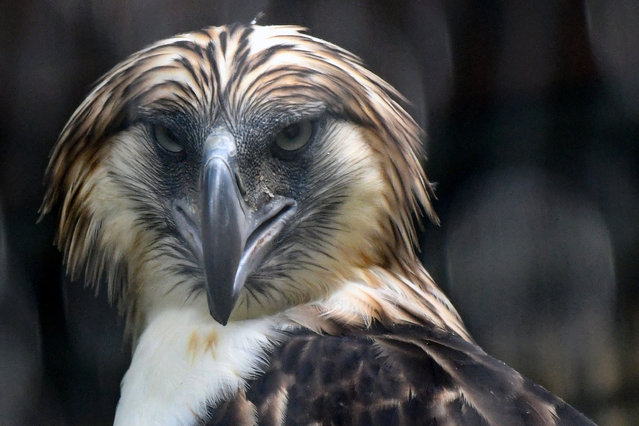
A male Philippine eagle named Geothermica is seen in an exclosure at Jurong Bird Park in Singapore on November 27, 2019. Singapore unveiled two Philippine eagles at its main aviary November 27, the first breeding pair of the critically endangered raptors to be brought outside their native country as part of a conservation plan. (Photo by Roslan Rahman/AFP Photo)
1st Place in Wildlife: A male orangutan peers from behind a tree while crossing a river in Borneo, Indonesia. (Photo by Jayaprakash Joghee Bojan/National Geographic Nature Photographer of the Year contest 2017)
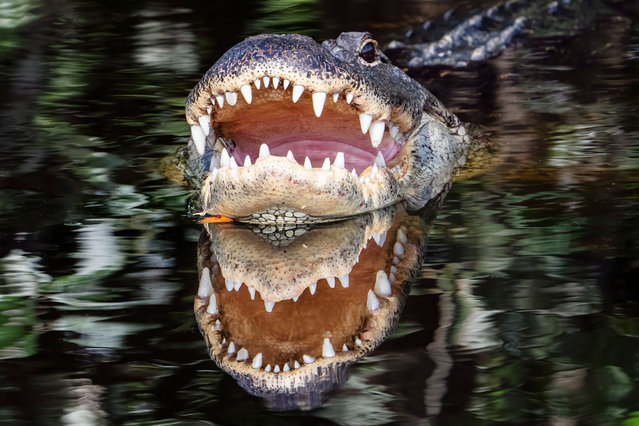
An alligator and his reflection seen in the Wakodahatchee Wetlands in Delray Beach, Florida on May 2, 2024. The wetlands attract nature lovers and wildlife photographers and are home to more than 140 bird species and a variety of other wildlife. (Photo by Ronen Tivony/ZUMA Press Wire/Rex Features/Shutterstock)
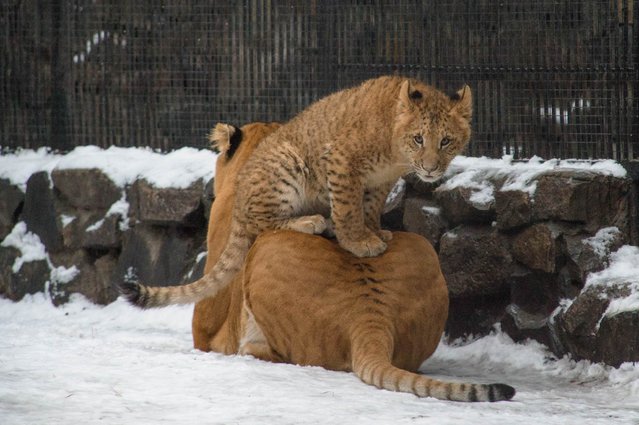
Six-month old female liliger cub Eva plays in snow with her mother Zita in the Zoo in Novosibirsk, Russia, Thursday, December 5, 2013. The cub's mother is Zita, a liger – half-lioness, half-tiger, and its father is a lion, Sam. (Photo by Ilnar Salakhiev/AP Photo)
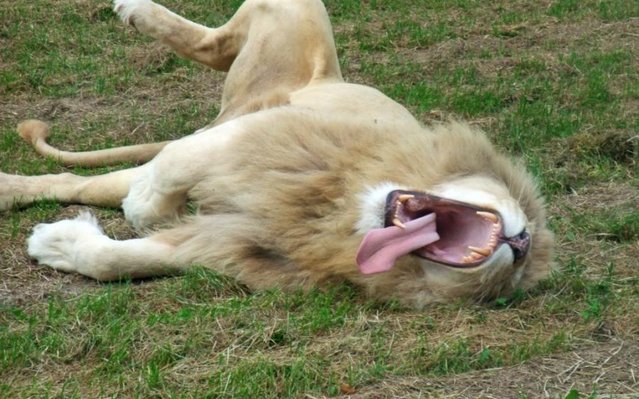
In animals, yawning can serve as a warning signal. For example, Charles Darwin, in his book The Expression of the Emotions in Man and Animals, mentioned that baboons yawn to threaten their enemies, possibly by displaying large canine teeth. Similarly, Siamese fighting fish yawn only when they see a conspecific (same species) or their own mirror-image, and their yawn often accompanies aggressive attack. Guinea pigs also yawn in a display of dominance or anger, displaying their impressive incisor teeth. This is often accompanied by teeth chattering, purring and scent marking.
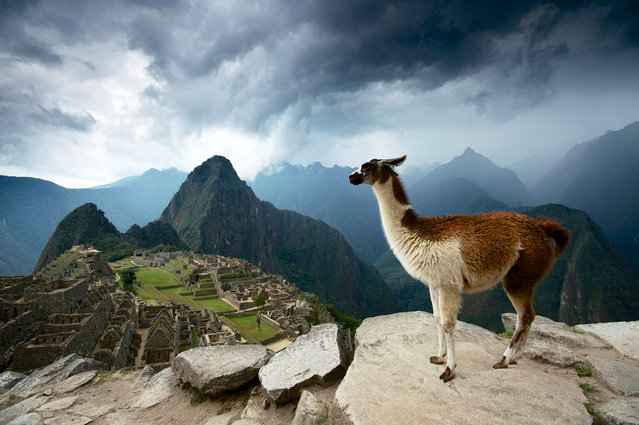
Machu Picchu, Peru. A llama’s-eye view of the legendary Inca settlement at Machu Picchu, isolated high in the Peruvian Andes. (Photo by Jim Turner/National Geographic)