Loading...
Done
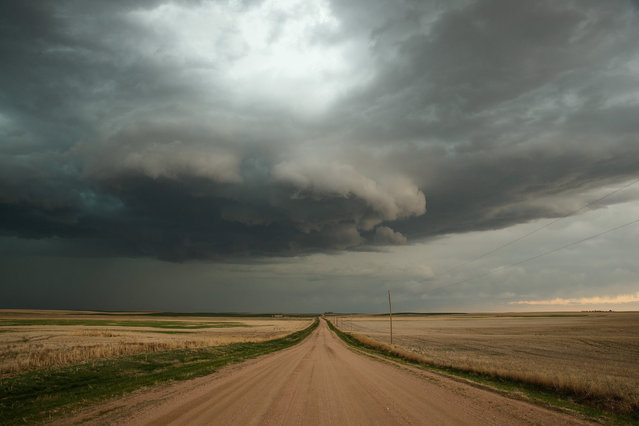
A supercell thunderstorm develops, May 8, 2017 in Elbert County outside of Limon, Colorado. With funding from the National Science Foundation and other government grants, scientists and meteorologists from the Center for Severe Weather Research try to get close to supercell storms and tornadoes trying to better understand tornado structure and strength, how low-level winds affect and damage buildings, and to learn more about tornado formation and prediction. (Photo by Drew Angerer/Getty Images)

A supercell thunderstorm develops, May 8, 2017 in Elbert County outside of Limon, Colorado. With funding from the National Science Foundation and other government grants, scientists and meteorologists from the Center for Severe Weather Research try to get close to supercell storms and tornadoes trying to better understand tornado structure and strength, how low-level winds affect and damage buildings, and to learn more about tornado formation and prediction. (Photo by Drew Angerer/Getty Images)
Details
16 Jun 2017 06:20:00
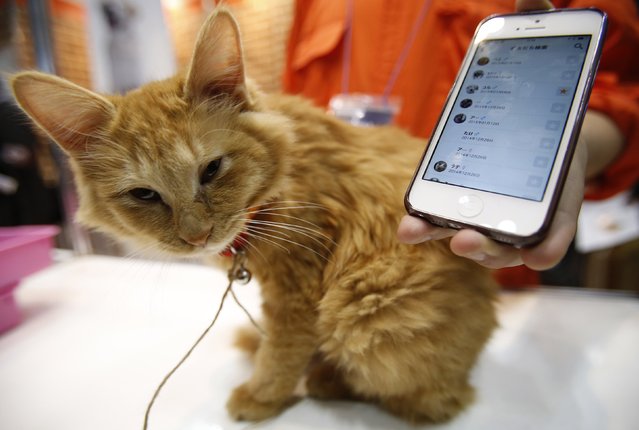
A cat wears a “Tsunagaru Col” gadget next to a smart phone displaying the connected app, at the Anicall Corp booth during the Wearable Device Technology Expo in Tokyo January 14, 2015. The gadget (“Tsunagaru” means connection) for animals tracks information about pets, such as the location and other animals the pet might be interacting with, with the purpose of providing “social networking” for animals. (Photo by Yuya Shino/Reuters)

A cat wears a “Tsunagaru Col” gadget next to a smart phone displaying the connected app, at the Anicall Corp booth during the Wearable Device Technology Expo in Tokyo January 14, 2015. The gadget (“Tsunagaru” means connection) for animals tracks information about pets, such as the location and other animals the pet might be interacting with, with the purpose of providing “social networking” for animals. The expo runs until January 16 as a part of Japan's largest electronic exhibition expected to attract around 77,000 visitors, according to organisers. (Photo by Yuya Shino/Reuters)
Details
16 Jan 2015 12:57:00
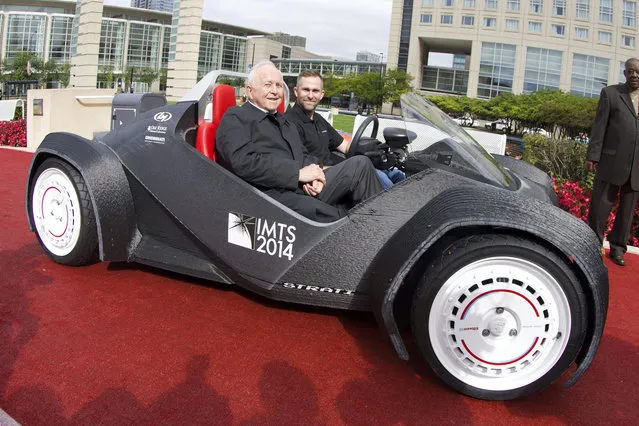
The world's first 3D printed car – the Stratti – was built in just 45 hours at the International Manufacturing Technology Show which took place between September 8 – 13, 2014. The Strati, which is Italian for layers, has a chassis body made of one solid piece and has a top speed of 40mph. (Photo by Barcroft Media/ABACAPress)

The world's first 3D printed car – the Stratti – was built in just 45 hours at the International Manufacturing Technology Show which took place between September 8 – 13, 2014. The Strati, which is Italian for layers, has a chassis body made of one solid piece and has a top speed of 40mph. The tyres, seats, wheels, battery, wiring, suspension, electric motor and window shield of the revolutionary vehicle were made using conventional methods. (Photo by Barcroft Media/ABACAPress)
Details
24 Oct 2014 12:44:00
These heartwarming images capture the pure happiness of young children playing with a buffalo in the sweltering Indonesian heat on July 28, 2018. The children are all sons of the farmers who work on the rice farms in the West Java region of Indonesia. Amateur photographer Tamlikho Tam, 46 from Depok in West Java Indonesia snapped up the joyful moment because it shows what a typical childhood should be like without technology. (Photo by Tamlikho Tam/South West News Service)

These heartwarming images capture the pure happiness of young children playing with a buffalo in the sweltering Indonesian heat on July 28, 2018. The children are all sons of the farmers who work on the rice farms in the West Java region of Indonesia. Amateur photographer Tamlikho Tam, 46 from Depok in West Java Indonesia snapped up the joyful moment because it shows what a typical childhood should be like without technology. (Photo by Tamlikho Tam/South West News Service)
Details
16 Aug 2018 00:01:00
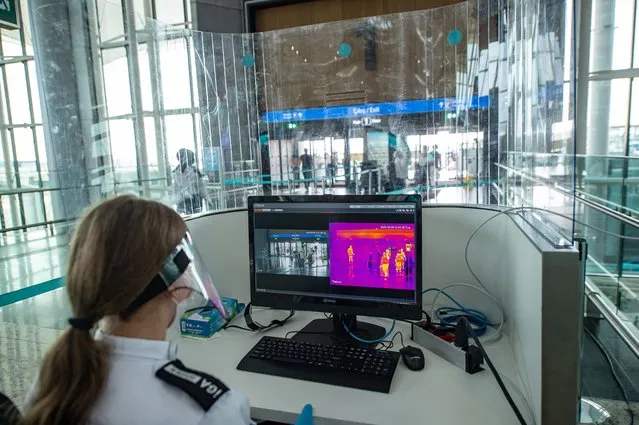
A security officer looks at a scanning screen for checking passengers' temperature at the Istanbul Airport in Istanbul, Turkey, on June 9, 2020. Technology and innovation will top the precautions of Turkey's biggest airport Istanbul Airport against the COVID-19 in the post-pandemic era, according to the management of the airport. The management on June 9 presented their final preparations and measures taken against coronavirus while Turkish airline companies are preparing to resume their international operations the next day. (Photo by Yasin Akgul/Xinhua News Agency via Getty Images)

A security officer looks at a scanning screen for checking passengers' temperature at the Istanbul Airport in Istanbul, Turkey, on June 9, 2020. Technology and innovation will top the precautions of Turkey's biggest airport Istanbul Airport against the COVID-19 in the post-pandemic era, according to the management of the airport. The management on June 9 presented their final preparations and measures taken against coronavirus while Turkish airline companies are preparing to resume their international operations the next day. (Photo by Yasin Akgul/Xinhua News Agency via Getty Images)
Details
11 Jun 2020 00:03:00
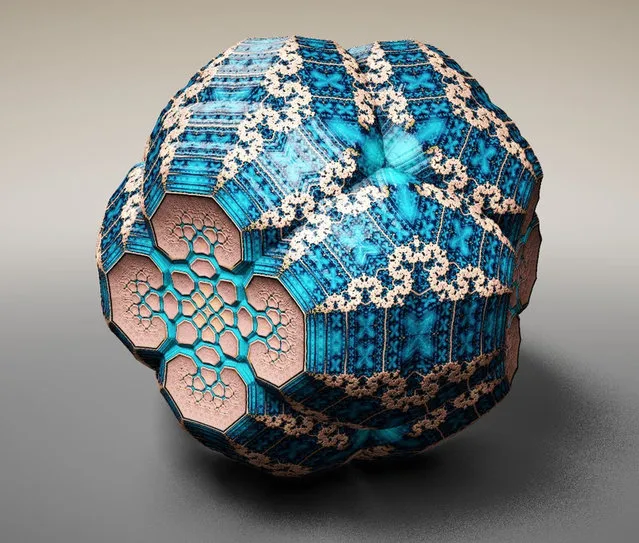
Organic Geometry By Tom Beddard

Edinburgh-based physicist-turned-web-designer Tom Beddard was inspired by geometry to create these virtual Fabergé fractals – made up of self-repeating patterns, so that structures within the object resemble the whole. “Within a 3D fractal, there is infinite detail”, says Beddard, 37. “The closer you zoom in, the more structure is revealed”. Beddard rendered the fractals using WebGL, a technology used to animate 3D scenes in a browser.
Details
25 Jul 2014 12:14:00
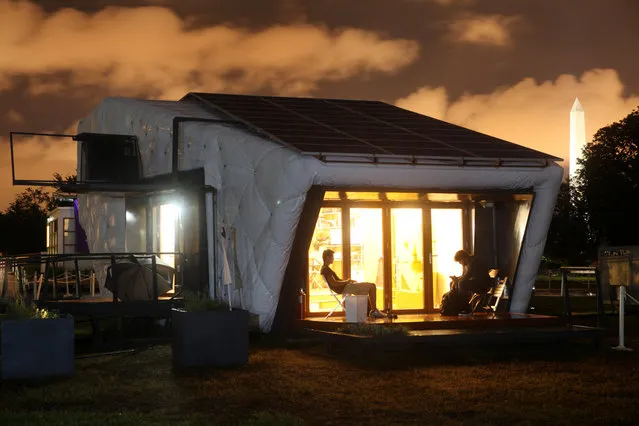
CHIP House Powered By Solar Energy

CHIP is a prefab, net-zero solar-powered house designed and built by a student-run team from two Southern California schools: Southern California Institute of Architecture (SCI-Arc) and California Institute of Technology (Caltech). The house is the team's entry for the U.S. Department of Energy Solar Decathlon 2011 competition.
Details
13 Dec 2012 11:35:00
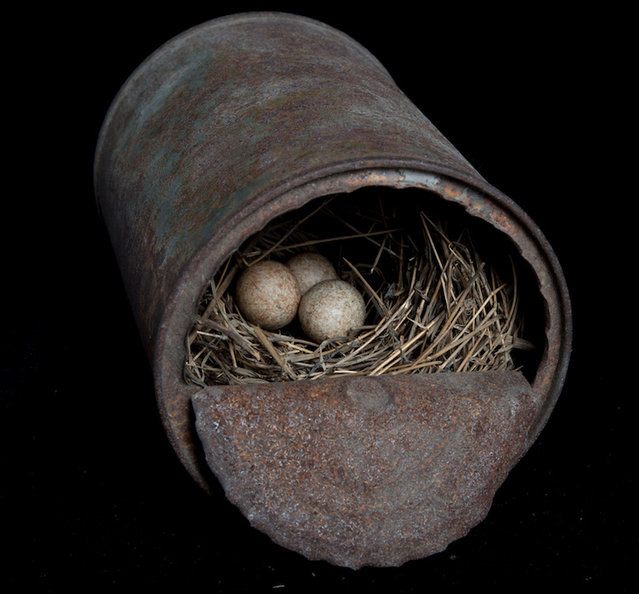
Bird Nest By Sharon Beals Part2

Sharon Beals is a San Francisco based photographer who has photographed nest and eggs specimens collected over the last two centuries at The California Academy of Sciences, The Museum of Vertebrate Zoology, and The Western Foundation of Vertebrate Zoology. While few nests are collected today, these nests and eggs are used for research, providing important information about their builder’s habitats, DNA, diseases and other survival issues.
Details
21 Aug 2013 11:34:00