Loading...
Done
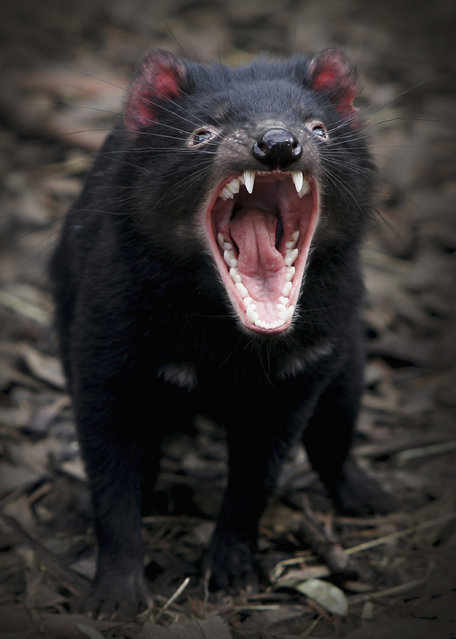
A Tasmanian Devil bears it's teeth at a quarantine facility August 31, 2005 in Hobart, Australia. The Devil, a native marsupial unique to Tasmania, is under threat from Devil Facial Tumor Disease (DFTD) which is decimating numbers throughout Tasmania. (Photo by Ian Waldie/Getty Images)

“The Tasmanian devil (Sarcophilus harrisii) is a carnivorous marsupial of the family Dasyuridae now found in the wild only in the Australian island state of Tasmania. The size of a small dog, it became the largest carnivorous marsupial in the world following the extinction of the thylacine in 1936. It is characterised by its stocky and muscular build, black fur, pungent odour, extremely loud and disturbing screech, keen sense of smell, and ferocity when feeding”. – Wikipedia. Photo: A Tasmanian Devil bears it's teeth at a quarantine facility August 31, 2005 in Hobart, Australia. (Photo by Ian Waldie/Getty Images)
Details
27 Jan 2014 09:45:00
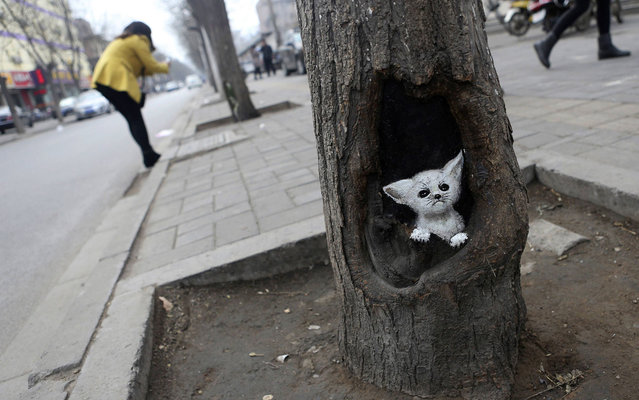
An image of a Fennec fox painted on a tree hole by Wang Yue is seen in Shijiazhuang, on March 13, 2013. Wang Yue, a senior at Dalian Industry University, uses her paintbrush to turn ugly tree holes into lovely views in Shijiazhuang, capital city of Hebei Province, China. Wang and her companions call the tree-hole paintings “meitu”, which means “beautiful journey”. The paintings on the trees have brightened the city during the dull, grey winter. (Photo by Pillar Lee/Reuters)

An image of a Fennec fox painted on a tree hole by Wang Yue is seen in Shijiazhuang, on March 13, 2013. Wang Yue, a senior at Dalian Industry University, uses her paintbrush to turn ugly tree holes into lovely views in Shijiazhuang, capital city of Hebei Province, China. Wang and her companions call the tree-hole paintings “meitu”, which means “beautiful journey”. The paintings on the trees have brightened the city during the dull, grey winter. (Photo by Pillar Lee/Reuters)

P.S. All pictures are presented in high resolution. To see Hi-Res images – just TWICE click on any picture. In other words, click small picture – opens the BIG picture. Click BIG picture – opens VERY BIG picture (if available; this principle works anywhere on the site AvaxNews).
Details
16 Mar 2013 11:27:00
Believers burn dried oak branches, which symbolizes the Yule log, on Orthodox Christmas Eve in front of the St. Sava temple in Belgrade, Serbia, January 6, 2016. (Photo by Marko Djurica/Reuters)

Believers burn dried oak branches, which symbolizes the Yule log, on Orthodox Christmas Eve in front of the St. Sava temple in Belgrade, Serbia, January 6, 2016. Serbian Orthodox believers celebrate Christmas on January 7, according to the Julian calendar. (Photo by Marko Djurica/Reuters)
Details
08 Jan 2016 08:00:00
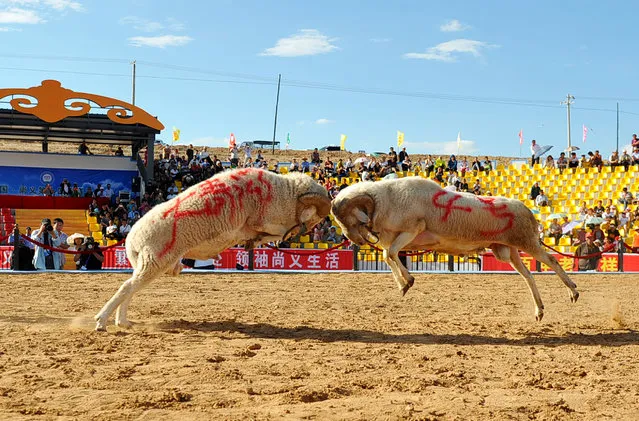
Two sheep fight in a competition in Zhangjiakou, Hebei province, China on August 1, 2017. (Photo by Reuters/China Stringer Network)

Two sheep fight in a competition in Zhangjiakou, Hebei province, China on August 1, 2017. (Photo by Reuters/China Stringer Network)
Details
06 Aug 2017 07:57:00
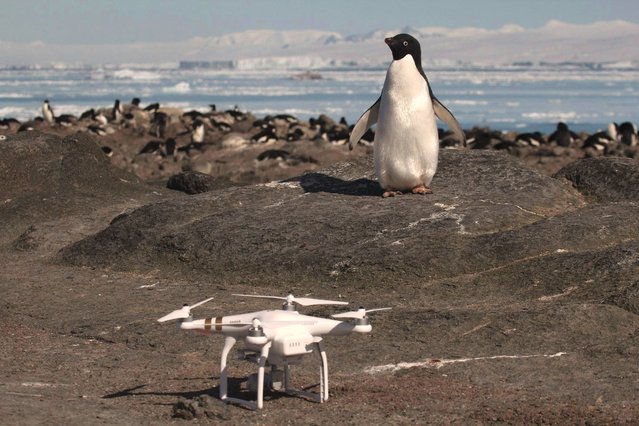
This undated handout photograph released by Stony Brook University/ Louisiana State University on March 2, 2018, shows an Adélie penguin (R) looking at a drone at breeding colony on Heroina Island, Danger Islands, Antarctica. A thriving “hotspot” of some 1.5 million Adelie penguins has been discovered on the remote Danger Islands in the east Antarctic, surprised scientists announced on March 2, 2018. (Photo by Rachael Herman/AFP Photo/Louisiana State University AND Stony Brook University)

This undated handout photograph released by Stony Brook University/ Louisiana State University on March 2, 2018, shows an Adélie penguin looking at a drone at breeding colony on Heroina Island, Danger Islands, Antarctica. A thriving “hotspot” of some 1.5 million Adelie penguins has been discovered on the remote Danger Islands in the east Antarctic, surprised scientists announced on March 2, 2018. (Photo by Rachael Herman/AFP Photo/Louisiana State University AND Stony Brook University)
Details
04 Mar 2018 00:03:00
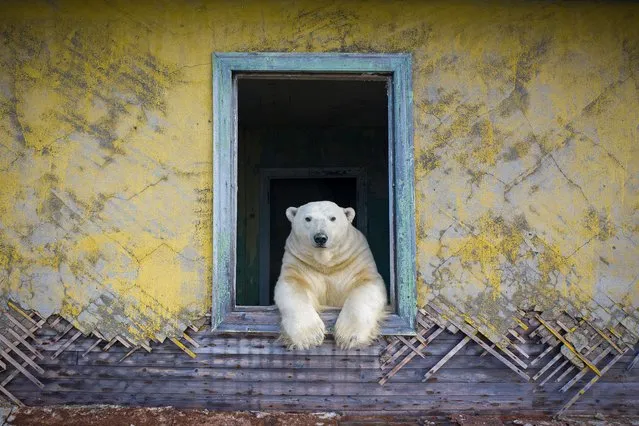
Polar frame, by Dmitry Kokh, Russia. When Kokh’s boat approached the small island of Kolyuchin in the Russian High Arctic, which had been abandoned by humans since 1992, he was surprised to spot movement in one of the houses. Binoculars revealed polar bears – more than 20 in total – exploring the ghost town. Dmitry used a low-noise drone to document them. (Photo by Dmitry Kokh/Wildlife Photographer of the Year 2022)

Polar frame, by Dmitry Kokh, Russia. When Kokh’s boat approached the small island of Kolyuchin in the Russian High Arctic, which had been abandoned by humans since 1992, he was surprised to spot movement in one of the houses. Binoculars revealed polar bears – more than 20 in total – exploring the ghost town. Dmitry used a low-noise drone to document them. (Photo by Dmitry Kokh/Wildlife Photographer of the Year 2022)
Details
03 Sep 2022 05:43:00
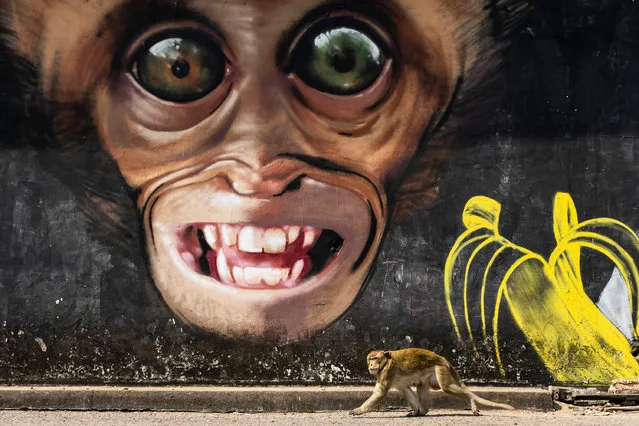
Natural world and wildlife shortlist. Lop Buri in Thailand is home to hundreds of macaques, which local residents consider to be disciples of the Hindu god Hanuman. While some people love them, others fear or even hate them. Despite the inconvenience they often cause, the macaques are generally respected and considered sacred. (Photo by Joan de la Malla/Sony World Photography Awards)

Natural world and wildlife shortlist. Lop Buri in Thailand is home to hundreds of macaques, which local residents consider to be disciples of the Hindu god Hanuman. While some people love them, others fear or even hate them. Despite the inconvenience they often cause, the macaques are generally respected and considered sacred. (Photo by Joan de la Malla/Sony World Photography Awards)
Details
15 Feb 2020 00:05:00
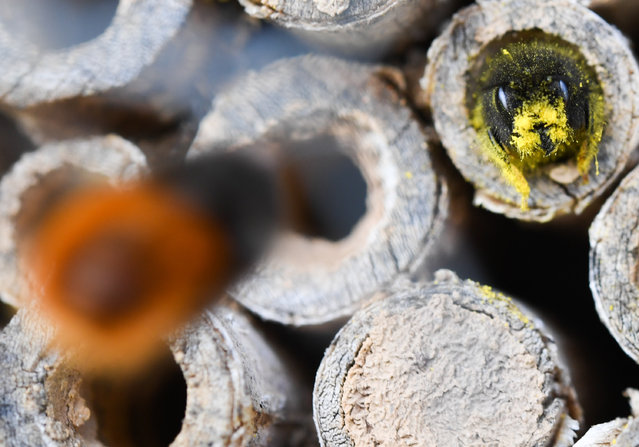
A mason bee deposits its collected pollen in an elderberry stick near Hessen, Germany on March 27, 2020. The food supply is sufficient for the eleven-month development of the brood from the egg to the finished bee. Wild bees are active in March and April and die before their offspring hatch. (Photo by Arne Dedert/dpa)

A mason bee deposits its collected pollen in an elderberry stick near Hessen, Germany on March 27, 2020. The food supply is sufficient for the eleven-month development of the brood from the egg to the finished bee. Wild bees are active in March and April and die before their offspring hatch. (Photo by Arne Dedert/dpa)
Details
22 Jul 2020 00:03:00