Visitors look at the work titled “In Bed”, 2005 by Australian-born artist Ron Mueck at Triennale di Milano on January 09, 2024 in Milan, Italy. (Photo by Giuseppe Cottini/Getty Images)
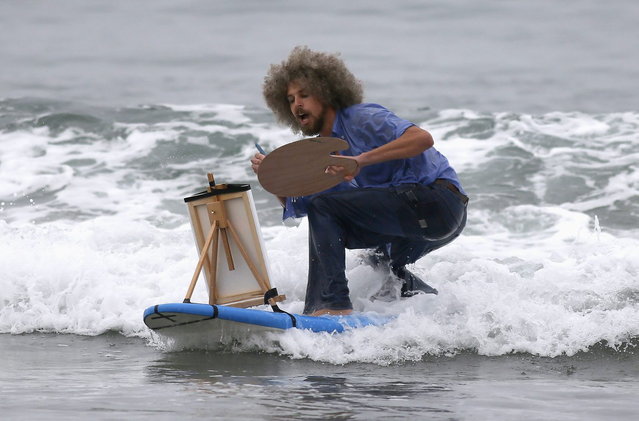
David Nickerson, 28, competes dressed as artist Bob Ross, during the ZJ Boarding House Halloween Surf Contest in Santa Monica, California October 26, 2013. (Photo by Lucy Nicholson/Reuters)
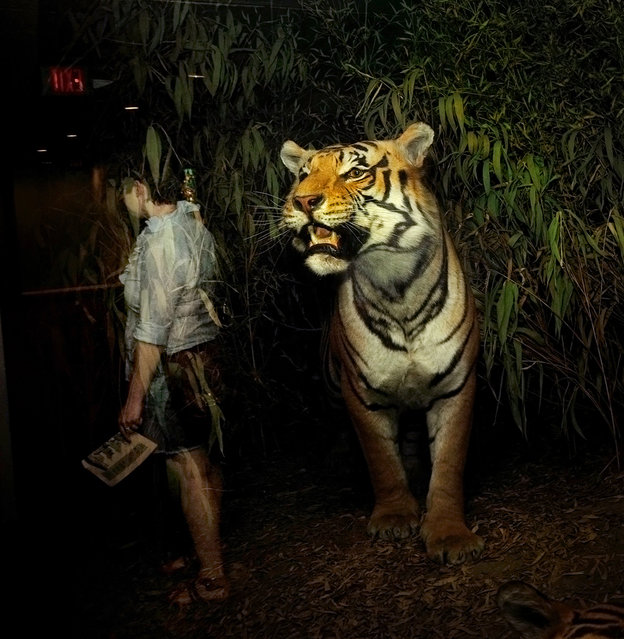
“Natural History” is a series of completely candid single exposure images that merge the living and the dead to create allegorical narratives of our troubled co-existence with nature. Ghost-like reflections of modern visitors viewing wildlife dioramas are juxtaposed against the antique taxidermied subjects housed behind thick glass, their faces molded into permanent expressions of fear, aggression or fleeting passivity. After decades of over-hunting, climate change, poaching and destruction of habitat, many of these long dead diorama specimens now represent endangered or completely extinct species”. – Traer Scott. (Photo by Traer Scott)
A bride stretches before the event during the “Running of the Brides” race, in Bangkok, Thailand, December 2, 2017. Six hundred of to be brides and their grooms compete a run race aimed to win more than two million baht (61,000 US dollars or 51,000 euro) of wedding package prizes including a pair of white gold diamond rings and honeymoon trip to the Maldives. (Photo by Athit Perawongmetha/Reuters)
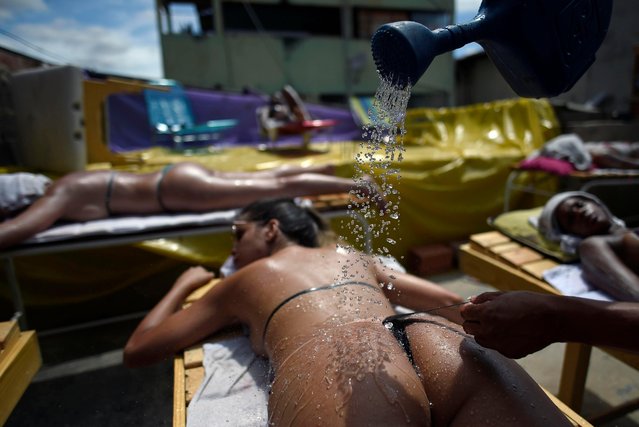
A woman is cooled down with a watering can as she sunbathes using insulating tape, at a beauty center in Belo Horizonte, Brazil, on December 21, 2017. Brazilian women take advantage of the beginning of the summer to sunbathe using the new national trend: natural tanning with insulating tape. Instead of using tiny bikinis on the beach, women avoid being bothered or stalked by getting taped in the shape of them, and lay in the sun over rooftops to enjoy the morning sun and get the perfect “marquinha” tan lines. (Photo by Douglas Magno/AFP Photo)
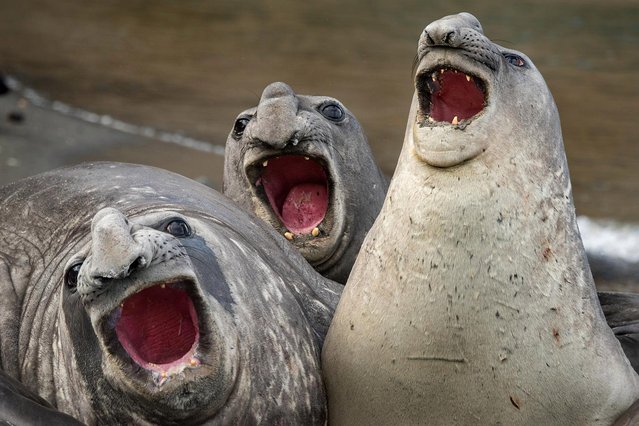
Three elephant seals put on a show in Roie Galitz's “Three Tanors”, taken on January 7, 2016 in South Georgia Island. The Comedy Wildlife Photography Awards are in full swing, so check out some of the fierce competitors jostling for the top prize this year. Photographers Paul Joynson-Hicks MBE and Tom Sullam founded the awards to spotlight wildlife conservation efforts and to inject some humour into the world of wildlife photography. (Photo by Roie Galitz/CWPA/Barcroft Images)
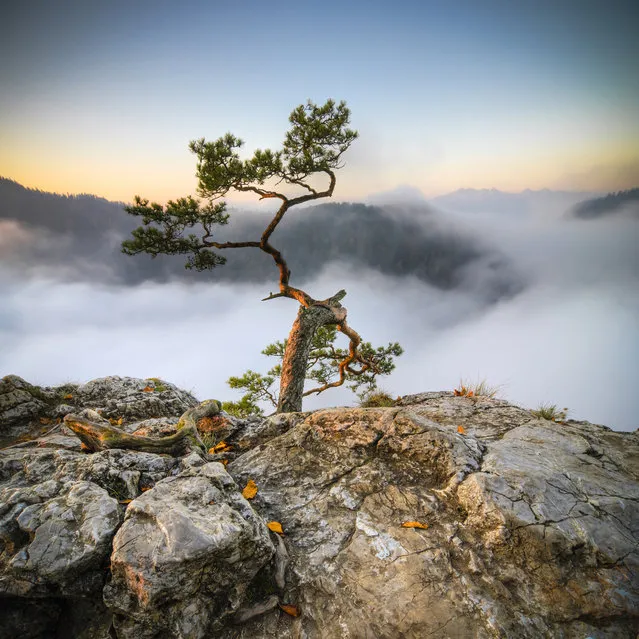
“Sokolica”. Sokolica, Poland. (Photo and caption by Marcin Kęsek/National Geographic Traveler Photo Contest)
ATTENTION! All pictures are presented in high resolution. To see Hi-Res images – just TWICE click on any picture. In other words, click small picture – opens the BIG picture. Click BIG picture – opens VERY BIG picture.
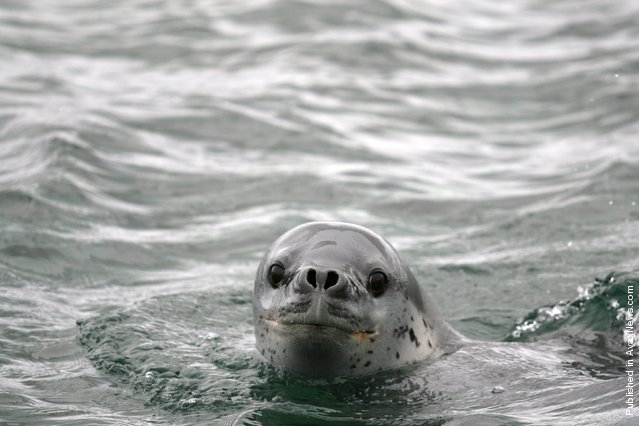
“The leopard seal (Hydrurga leptonyx), also referred to as the sea leopard, is the second largest species of seal in the Antarctic (after the southern elephant seal). It is most common in the southern hemisphere along the coast of Antarctica and on most sub-Antarctic islands, but can also be found on the coasts of southern Australia, Tasmania, South Africa, New Zealand, Lord Howe Island, Tierra del Fuego, the Cook Islands, and the Atlantic coast of South America. It can live twenty-six years, possibly more. Orcas and large sharks are the only natural predators of leopard seals”. – Wikipedia