Loading...
Done


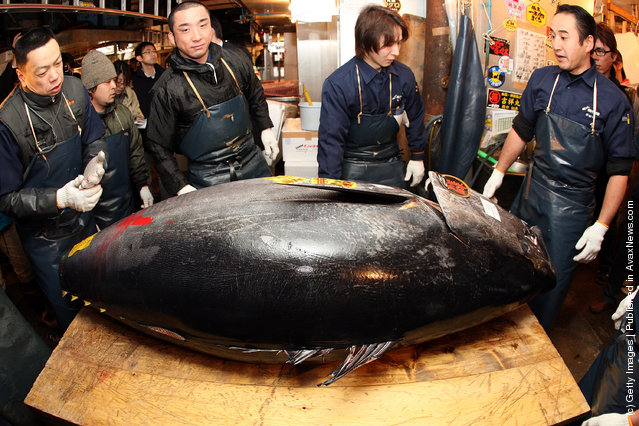
“The Tokyo Metropolitan Central Wholesale Market, commonly known as the Tsukiji Market, is the biggest wholesale fish and seafood market in the world and also one of the largest wholesale food markets of any kind. The market is located in Tsukiji in central Tokyo, and is a major attraction for foreign visitors”. – Wikipedia

Photo: A 232kg blue-fin tuna is displayed during the new year's first auction at the Tsukiji fish market on January 5, 2010 in Tokyo, Japan. (Photo by Koichi Kamoshida/Getty Images)
Details
19 Jul 2011 12:29:00
A girl gives a dog ice cream at dog beach and bar in Crikvenica, Croatia, July 12, 2016. (Photo by Antonio Bronic/Reuters)

A girl gives a dog ice cream at dog beach and bar in Crikvenica, Croatia, July 12, 2016. The first Croatian beach bar specifically designed for dogs opens in the northern Adriatic town of Crikvenica, enabling canines and their owners to experience the joys of summertime together. Located at one of the few dog friendly beaches in the country, the bar's offer includes specially prepared ice cream, dog beer and snacks. (Photo by Antonio Bronic/Reuters)
Details
13 Jul 2016 13:36:00
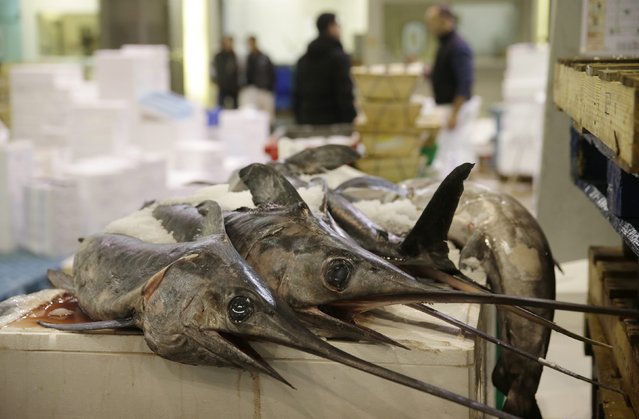
Swordfish are sold at the fish pavilion in Rungis International food market as buyers prepare for the Christmas holiday season in Rungis, south of Paris, December 11, 2015. (Photo by Philippe Wojazer/Reuters)

Rungis is a commune in the southern suburbs of Paris, France. It is best known as the location of the large wholesale food market serving the Paris metropolitan area and beyond, the Marché d'Intérêt National de Rungis, said to be the largest food market in the world. The name Rungis was recorded for the first time in a royal charter of 1124 as Rungi Villa. Here: swordfish are sold at the fish pavilion in Rungis International food market as buyers prepare for the Christmas holiday season in Rungis, south of Paris, December 11, 2015. (Photo by Philippe Wojazer/Reuters)
Details
13 Dec 2015 08:02:00
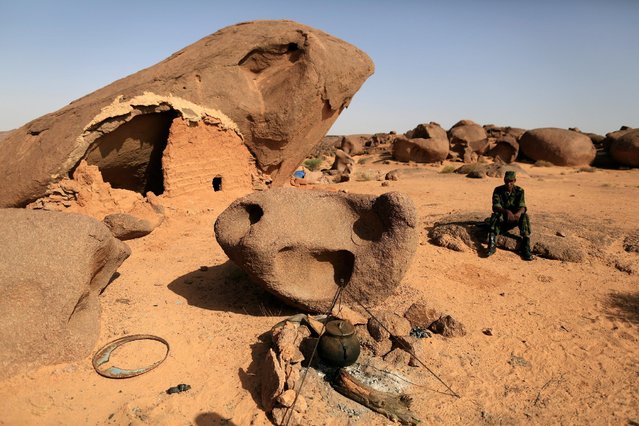
A Polisario fighter sits on a rock at a forward base on the outskirts of Tifariti, Western Sahara, September 9, 2016. At a rocky outpost in Western Sahara, a new generation of soldiers who have never known war are mobilising as tensions resurface in one of Africa's oldest disputes after a quarter century of uneasy peace. Young Sahrawi troops man new desert posts for the Polisario Front, which for more than 40 years has sought independence for the vast desert region - first in a guerrilla war against Morocco and then politically since a ceasefire deal in 1991. Now a standoff with Morocco, which controls the majority of Western Sahara, is renewing pressure for a diplomatic solution to ensure foot soldiers don't return to fighting as the last generation of commanders once did. The standoff since August has brought Moroccan and Polisario forces within 200 metres of each other in a narrow strip of land near the Mauritanian border. Rich in phosphate, Western Sahara has been contested since 1975 when Spanish colonial powers left. Morocco claimed the territory and fought the 16-year war with Polisario. (Photo by Zohra Bensemra/Reuters)

A Polisario fighter sits on a rock at a forward base on the outskirts of Tifariti, Western Sahara, September 9, 2016. At a rocky outpost in Western Sahara, a new generation of soldiers who have never known war are mobilising as tensions resurface in one of Africa's oldest disputes after a quarter century of uneasy peace. (Photo by Zohra Bensemra/Reuters)
Details
04 Nov 2016 12:09:00


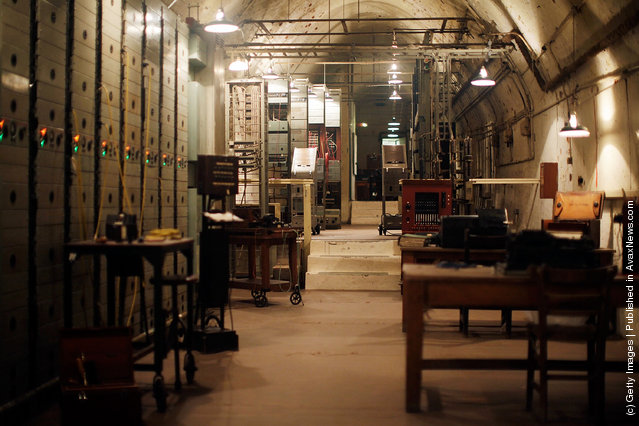
“Dover Castle is a medieval castle in the town of the same name in the English county of Kent. It was founded in the 12th century and has been described as the “Key to England” due to its defensive significance throughout history. It is the largest castle in England.

The outbreak of the Second World War in 1939 saw the tunnels converted first into an air-raid shelter and then later into a military command centre and underground hospital. In May 1940, Admiral Sir Bertram Ramsey directed the evacuation of French and British soldiers from Dunkirk, code-named Operation Dynamo, from his headquarters in the cliff tunnels”. – Wikipedia

Photo: The Repeater Station in the subterranean tunnels underneath Dover Castle, which has been restored by English Heritage for a public exhibition on June 3, 2011 in Dover, England. The evacuation of allied soldiers from Dunkirk was masterminded and co-ordinated from the secret command and control centre in the tunnels deep below the castle. (Photo by Matthew Lloyd/Getty Images)
Details
07 Jun 2011 09:26:00
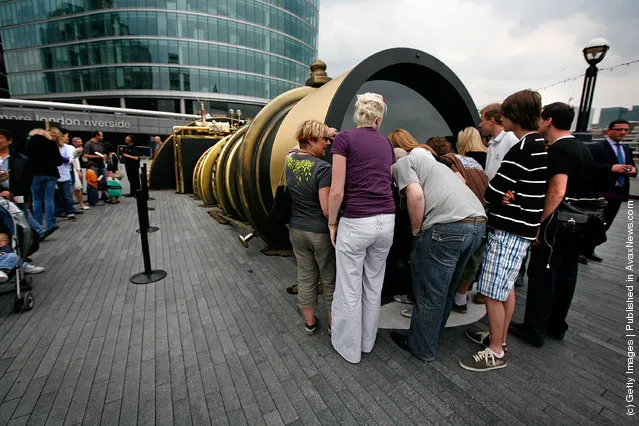
Telectroscope

“The telectroscope (also referred to as “electroscope”) was the first non-working prototype (i.e. conceptual model) of a television or videophone system. The term was used in the 19th century to describe science-based systems of distant seeing. The name and its concept came into being not long after the telephone was patented in 1876, and its original concept evolved from that of remote facsimile reproductions onto paper, into the live viewing of remote images”. – Wikipedia

Photo: Visitors to London wave to people they can see in New York as they peer through the Telectroscope situated by Tower Bridge on May 23, 2008 in London, England. The device named the Telectroscope provides a live visual link up between London and New York, to another Telectroscope by Brooklyn Bridge. (Photo by Cate Gillon/Getty Images)
Details
16 Sep 2011 12:19:00
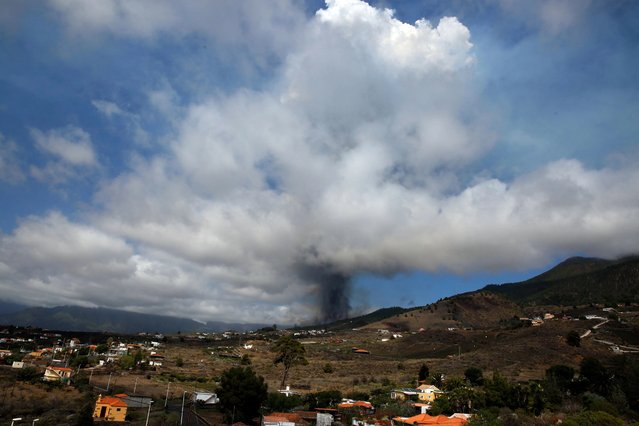
Mount Cumbre Vieja erupts spewing a column of smoke and ash as seen from Los Llanos de Aridane on the Canary island of La Palma on September 19, 2021. (Photo by Desiree Martin/AFP Photo)

Mount Cumbre Vieja erupts spewing a column of smoke and ash as seen from Los Llanos de Aridane on the Canary island of La Palma on September 19, 2021. The Cumbre Vieja volcano erupted on Spain's Canary Islands today spewing out lava, ash and a huge column of smoke after days of increased seismic activity, sparking evacuations of people living nearby, authorities said. Cumbre Vieja straddles a ridge in the south of La Palma island and has erupted twice in the 20th century, first in 1949 then again in 1971. (Photo by Desiree Martin/AFP Photo)
Details
20 Sep 2021 08:27:00
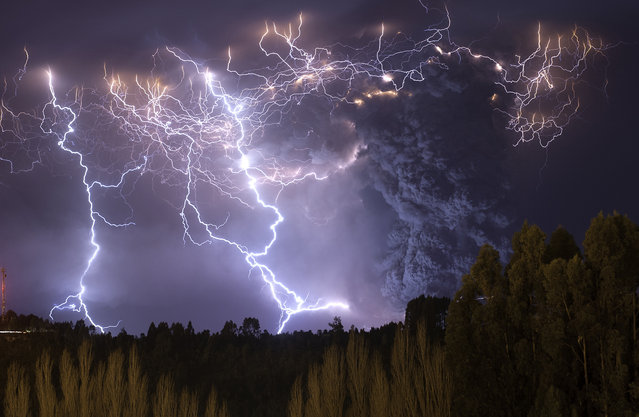
The eruption of Cordon Caulle began on June 4, 2011, located in the Region of Los Rios in Chile. For about 12 months, people and animals became accustomed to living with the daily fall of ash, which also caused problems in the air traffic in South America. The explosions and lightning during first days of the eruption could be seen from hundreds of miles around. This photograph was taken on the second night of eruption from the town of Lago Ranco. (Photo and caption by Francisco Negroni/National Geographic Traveler Photo Contest)

The eruption of Cordon Caulle began on June 4, 2011, located in the Region of Los Rios in Chile. For about 12 months, people and animals became accustomed to living with the daily fall of ash, which also caused problems in the air traffic in South America. The explosions and lightning during first days of the eruption could be seen from hundreds of miles around. This photograph was taken on the second night of eruption from the town of Lago Ranco. (Photo and caption by Francisco Negroni/National Geographic Traveler Photo Contest)

ATTENTION! All pictures are presented in high resolution. To see Hi-Res images – just TWICE click on any picture. In other words, click small picture – opens the BIG picture. Click BIG picture – opens VERY BIG picture.
Details
23 Jun 2013 11:24:00