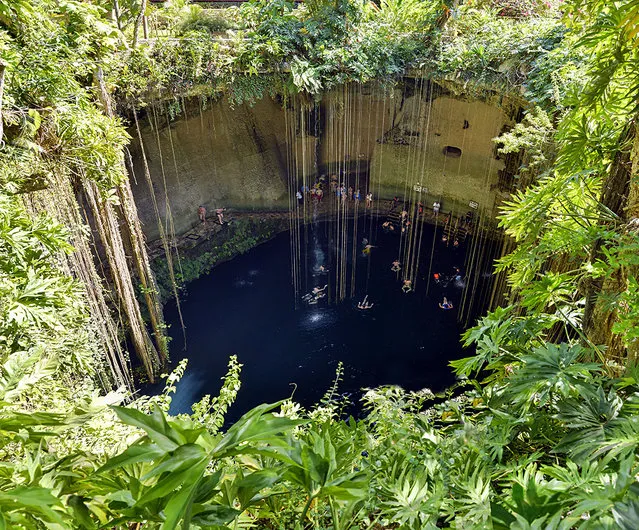
A cenote is a natural phenomenon, a sinkhole in the Earth’s surface. The Yucatan Peninsula in Mexico has an estimated 7,000 cenotes because it is primarily made up of porous limestone. For millions of years, rainfall slowly ate away at the limestone and a huge system of underground caves and caverns was formed. Many filled with water from rain or from the underground water table. When the roof of a water filled cave collapses, a cenote is born. The water found in a cenote may be fresh water, salt water, or both. Structurally it may be completely open, like a lake, almost completely closed with just a small opening at the top, or somewhere in between.
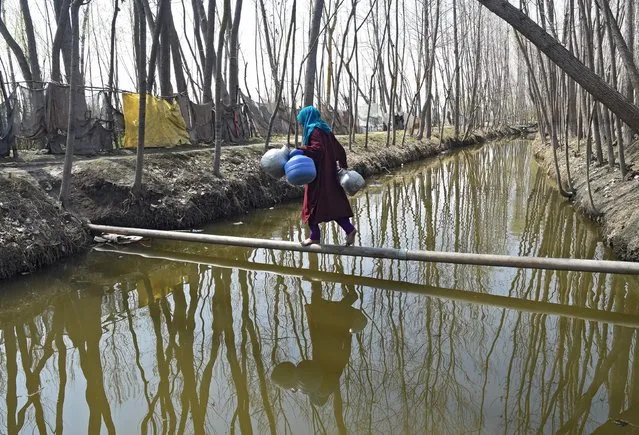
A Kashmiri Muslim woman balances on a water pipe before collecting water at Dasilpora village on March 22, 2018. World Water Day is held annually on 22 March as a means of focusing attention on the importance of freshwater and advocating for the sustainable management of freshwater resources. (Photo by Tauseef Mustafa/AFP Photo)
A man holds a gun under his chin as he speaks with members of the NYPD outside the United Nations Headquarters in New York City, U.S., December 2, 2021. (Photo by Carlo Allegri/Reuters)
People work to rescue a dog from under rubble, in the aftermath of a deadly earthquake, in Iskenderun, Turkey February 8, 2023, in this screengrab obtained from a social media video. (Photo by Gurcan Ozturk via Reuters)