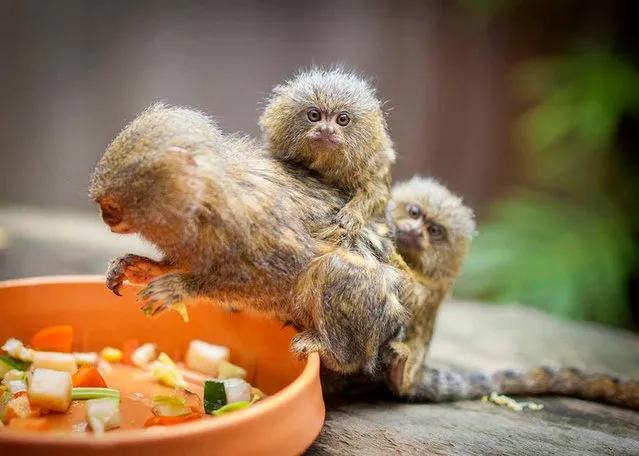
An undated handout picture made available by the Symbio Wildlife Park on 28 November 2016 shows three Pygmy Marmoset monkeys including an adult male, a female juvenile and a four-week-old baby, at the Symbio Wildlife Park in Helensburgh, South of Sydney, New South Wales, Australia. (Photo by EPA/Symbio Wildlife Park)
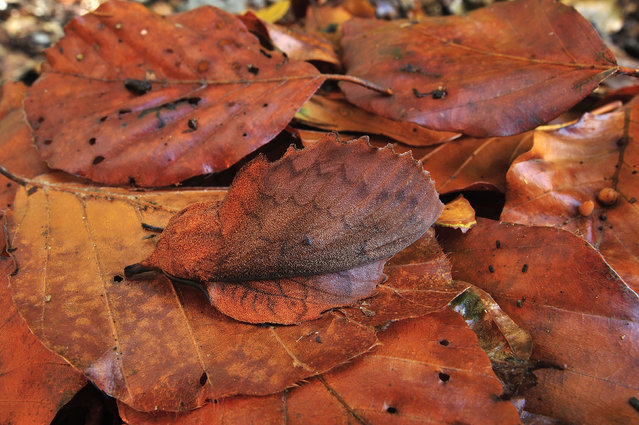
Whether they are the hunter or the hunted, these camouflage animals show natures incredible ability to blend in with its surroundings. Pictured perfectly concealed against their natural environment, the stunning pictures show the amazing lengths some animals will go to to stay out of sight. Here: The camouflage mappet moth looks like a fall lead in Switzerland. (Photo by Thomas Marent/Caters News/Ardea)
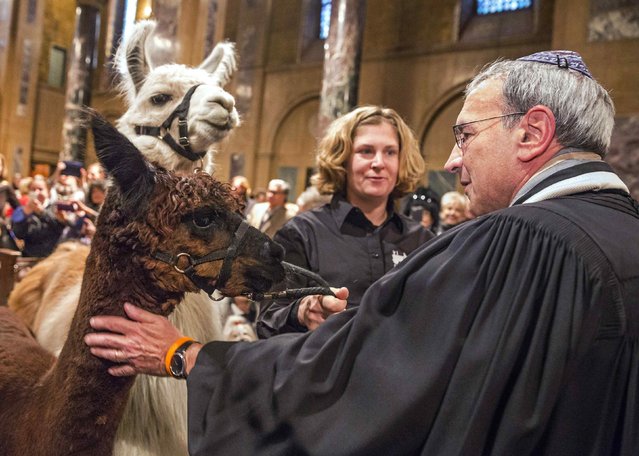
Farm animals are walked down the aisle and blessed by church officials during the “Blessing of the Animals” at the Christ Church United Methodist in Manhattan, New York December 7, 2014. (Photo by Elizabeth Shafiroff/Reuters)
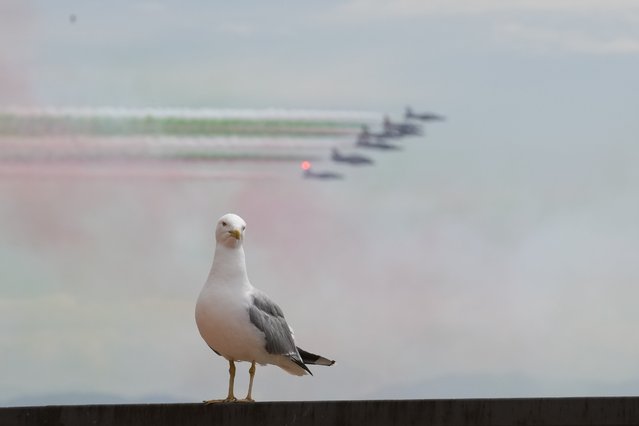
A seagull looks on as the Italian three-color special air force acrobatic team “Frecce Tricolori” flies over Rome and the Vatican Wednesday, June 2, 2021, as Italy celebrates the anniversary of its unification. (Photo by Andrew Medichini/AP Photo)
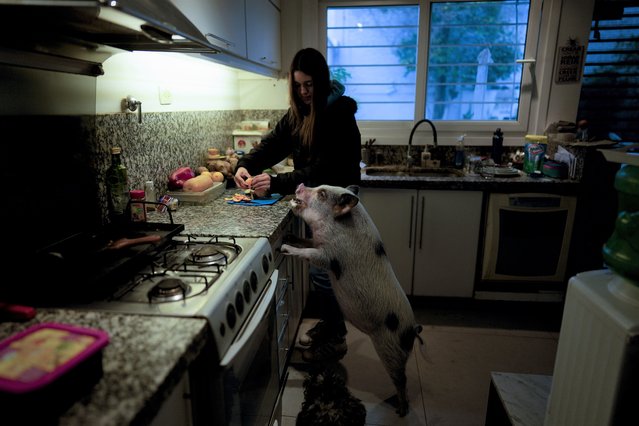
Luciana Benetti, 16, feeds her pet pig Chanchi, given to her for a birthday present the previous year in Buenos Aires, Argentina, Saturday, September 4, 2021. As the new coronavirus began to circulate last year, Benetti found her plans for a big traditional 15th birthday party scrapped. In its place, her parents gave her a pig. (Photo by Natacha Pisarenko/AP Photo)
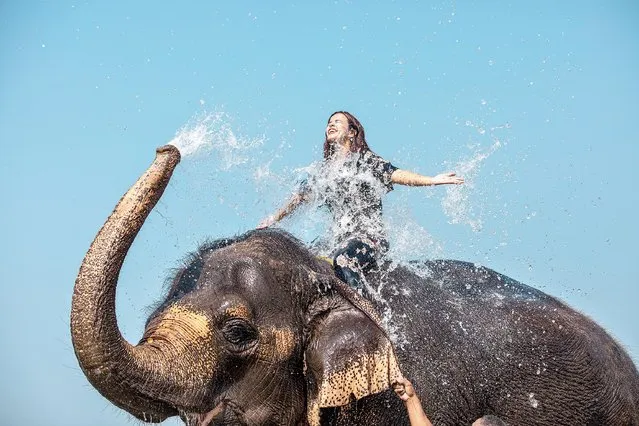
A young girl is splashed as she takes an elephant bath at Rapti river in Chitwan, Nepal, 30 October 2021. Chitwan is one of the major tourist destinations in Nepal and popular zone for wild life sightseeing in Chitwan National Park. (Photo by Narendra Shrestha/EPA/EFE)
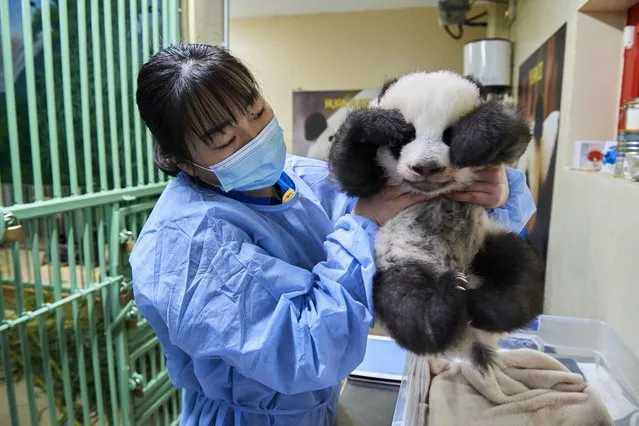
Yuandudu, a camera-shy panda cub, covers her eyes in Beauval ZooParc in France in November 2021. The three-month-old and her twin are fed once each by their mother every day, taking 150-200g of milk per feed. In between they have one bottle feed per day from the specially trained keepers who were sent from China to supervise their birth and early care. (Photo by Eric Baccega/Naturepl.com/LDY Agency)