Loading...
Done
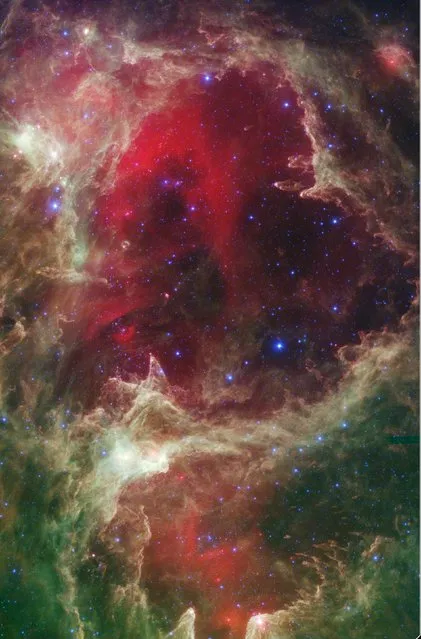
An infrared portrait from NASA's Spitzer Space Telescope which shows generations of stars is seen in this undated NASA handout image released February 14, 2013. In this wispy star-forming region, called W5, the oldest stars can be seen as blue dots in the centers of the two hollow cavities (other blue dots are background and foreground stars not associated with the region). Red shows heated dust that pervades the region's cavities, while green highlights dense clouds. (Photo by NASA/Reuters/JPL-Caltech/Harvard-Smithsonian/Handout)

An infrared portrait from NASA's Spitzer Space Telescope which shows generations of stars is seen in this undated NASA handout image released February 14, 2013. In this wispy star-forming region, called W5, the oldest stars can be seen as blue dots in the centers of the two hollow cavities (other blue dots are background and foreground stars not associated with the region). Red shows heated dust that pervades the region's cavities, while green highlights dense clouds. (Photo by NASA/Reuters/JPL-Caltech/Harvard-Smithsonian/Handout)
Details
03 Mar 2013 08:44:00
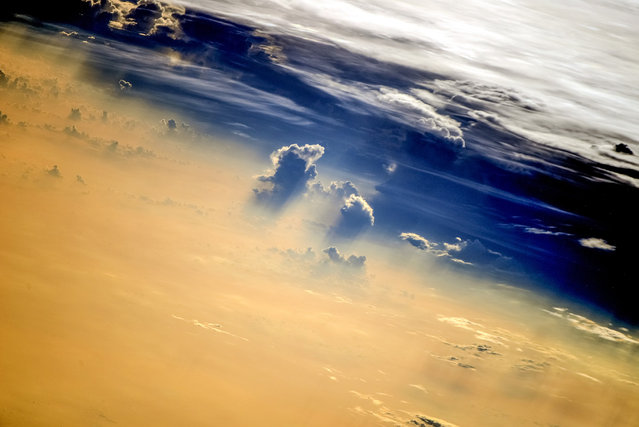
Image of the Clouds taken in August 2014 by astronauts on board the International Space Station (ISS).  A year from space photographs of hurricanes, typhoons and meteorite craters show an astronauts-eye view of our planet from hundreds of miles above the earth. The illuminating images were taken by astronauts onboard the International Space Station (ISS) over the course of 2014. (Photo by NASA/SPL/Barcroft Media)

Image of the Clouds taken in August 2014 by astronauts on board the International Space Station (ISS). A year from space photographs of hurricanes, typhoons and meteorite craters show an astronauts-eye view of our planet from hundreds of miles above the earth. The illuminating images were taken by astronauts onboard the International Space Station (ISS) over the course of 2014. (Photo by NASA/SPL/Barcroft Media)
Details
31 Dec 2014 14:47:00
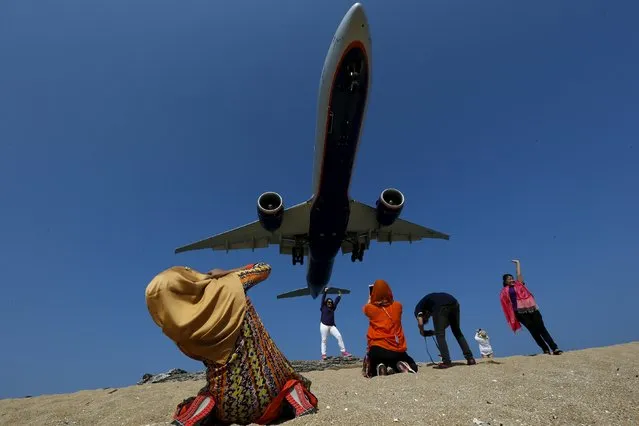
Tourist take pictures at Mai Khao Beach, as a plane approaches the Phuket International Airport in Phuket, Thailand March 17, 2016. With its palm-fringed beaches, Buddhist culture and racy nightlife, Thailand has been the poster child for Asian tourism for decades, attracting a range of visitors from backpackers and adventure-seekers, to families and culture vultures. But dark clouds could be forming even as a record of 32 million tourists are expected this year. (Photo by Athit Perawongmetha/Reuters)

Tourist take pictures at Mai Khao Beach, as a plane approaches the Phuket International Airport in Phuket, Thailand March 17, 2016. With its palm-fringed beaches, Buddhist culture and racy nightlife, Thailand has been the poster child for Asian tourism for decades, attracting a range of visitors from backpackers and adventure-seekers, to families and culture vultures. But dark clouds could be forming even as a record of 32 million tourists are expected this year. (Photo by Athit Perawongmetha/Reuters)
Details
31 Mar 2016 11:01:00
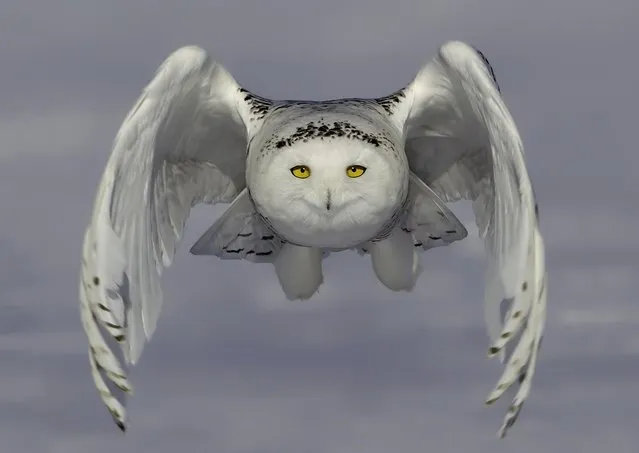
A beautiful snowy owl looks like she is flying above a cloud, but in fact she is gliding inches above a snowplain in a hunt for food. The owls fit in perfectly with their surroundings as both the male and female, which has darker markings on her feathers referred to as barres, hunt for voles. (Photo by Rick Dobson/Solent News/SIPA Press)

A beautiful snowy owl looks like she is flying above a cloud, but in fact she is gliding inches above a snowplain in a hunt for food. The owls fit in perfectly with their surroundings as both the male and female, which has darker markings on her feathers referred to as barres, hunt for voles. The female is so low to the ground she is almost touching it as she spots her prey in the snow. Nature photographer Rick Dobson captured the two birds hunting in corn fields near his home, just outside of Ottawa, Ontario, Canada. (Photo by Rick Dobson/Solent News/SIPA Press)
Details
24 Mar 2015 10:00:00
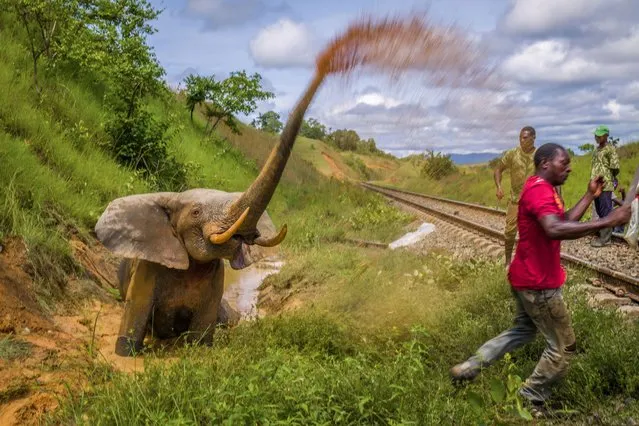
Grand prize winner: environmental photographer of the year 2023; also 1st place in the humanity v nature category; and winner of the 2023 public award. Lopé national park, Gabon, 2021. An angry elephant tries to defend itself after it was hit by a train that crosses paths the animals use within Lopé national park. Park officials decided the elephant was too severely injured to be saved. After it was killed, the park director distributed the meat to local people. As the forest loses its carrying capacity to sustain its megafauna, this kind of human-wildlife conflict is increasing. (Photo by Jasper Doest/Environmental Photography Award)

Grand prize winner: environmental photographer of the year 2023; also 1st place in the humanity v nature category; and winner of the 2023 public award. Lopé national park, Gabon, 2021. An angry elephant tries to defend itself after it was hit by a train that crosses paths the animals use within Lopé national park. Park officials decided the elephant was too severely injured to be saved. After it was killed, the park director distributed the meat to local people. As the forest loses its carrying capacity to sustain its megafauna, this kind of human-wildlife conflict is increasing. (Photo by Jasper Doest/Environmental Photography Award)
Details
09 Jul 2023 03:06:00
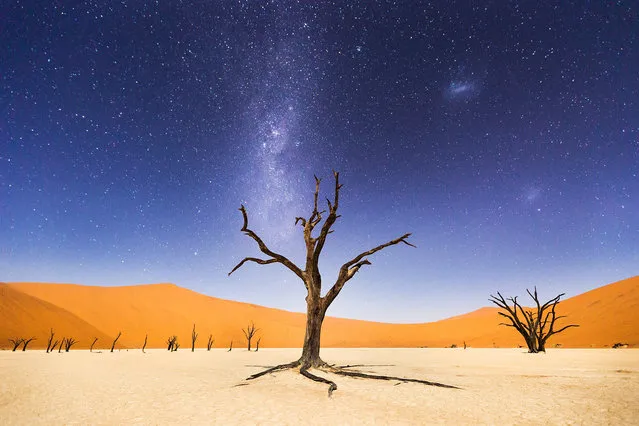
Merit: A Night at Deadvlei. The night before returning to Windhoek, we spent several hours at Deadveli. The moon was bright enough to illuminate the sand dunes in the distance, but the skies were still dark enough to clearly see the milky way and magellanic clouds. Deadveli means “dead marsh. (Photo and caption by Beth McCarley/National Geographic Traveler Photo Contest)

Merit: A Night at Deadvlei. The night before returning to Windhoek, we spent several hours at Deadveli. The moon was bright enough to illuminate the sand dunes in the distance, but the skies were still dark enough to clearly see the milky way and magellanic clouds. Deadveli means “dead marsh. The camelthorn trees are believed to be about 900 years old, but have not decomposed because the environment is so dry. (Photo and caption by Beth McCarley/National Geographic Traveler Photo Contest)
Details
04 Aug 2015 11:50:00
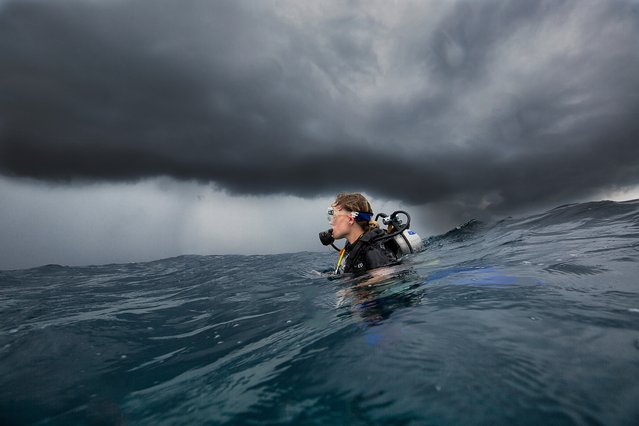
Winner. “This was taken in the South Ari Atolls, Maldives, as the south-west monsoon season was setting in. It features my partner – and dive buddy – Emma after surfacing at the end of the last dive of the day to find 1.5 metre swells and dark monsoon clouds. MICK RYAN, JUDGE: This beautiful portrait of a diver in an ocean swell below a menacing sky stands out this month for its emotional and elemental beauty. It is a reminder that while we may play among nature we are always dwarfed by its power and must be constantly on our guard”. (Photo by Simon Dunn/The Guardian)

Winner. “This was taken in the South Ari Atolls, Maldives, as the south-west monsoon season was setting in. It features my partner – and dive buddy – Emma after surfacing at the end of the last dive of the day to find 1.5 metre swells and dark monsoon clouds. MICK RYAN, JUDGE: This beautiful portrait of a diver in an ocean swell below a menacing sky stands out this month for its emotional and elemental beauty. It is a reminder that while we may play among nature we are always dwarfed by its power and must be constantly on our guard”. (Photo by Simon Dunn/The Guardian)
Details
04 Oct 2016 10:55:00
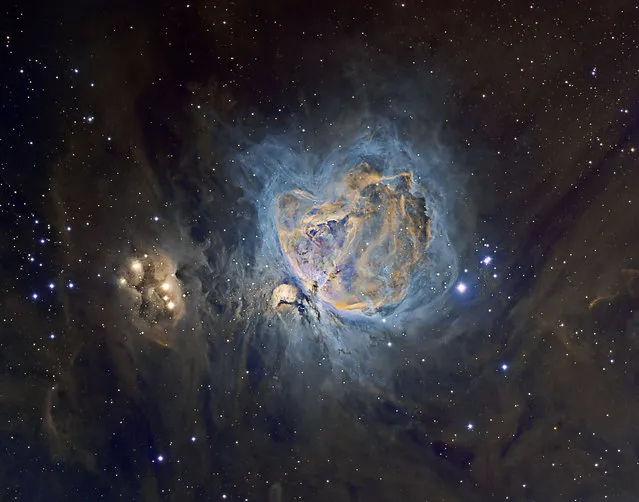
M42 Subtle V1 cropped. One of the most well-known astronomical objects in our universe is the Orion Nebula and this image depicts the wider region of the Orion Molecular Cloud Complex that is its home. This complex also includes another popular target for astrophotographers, the Horsehead Nebula, as well as Barnard’s Loop and the Running Man Nebula, which can be seen to the left of this photograph. (Photo by Patrick Gilliland)

M42 Subtle V1 cropped. One of the most well-known astronomical objects in our universe is the Orion Nebula and this image depicts the wider region of the Orion Molecular Cloud Complex that is its home. This complex also includes another popular target for astrophotographers, the Horsehead Nebula, as well as Barnard’s Loop and the Running Man Nebula, which can be seen to the left of this photograph. (Photo by Patrick Gilliland)
Details
17 Nov 2015 08:05:00