Loading...
Done
A South Korean man and a woman eat a live octopus during an event to promote a local food festival in Seoul on September 12, 2013. (Photo by Jung Yeon-Je/AFP Photo)

Live octopus is a delicacy in South Korea but is a known choking hazard, since the still-moving suction cups can cause tentacle pieces to stick in a person's throat. A baby octopus is often consumed whole, while larger varieties are cut up and the still-wriggling tentacles eaten with a splash of sesame oil. Photo: A South Korean man and a woman eat a live octopus during an event to promote a local food festival in Seoul on September 12, 2013. (Photo by Jung Yeon-Je/AFP Photo)
Details
13 Sep 2013 09:40:00
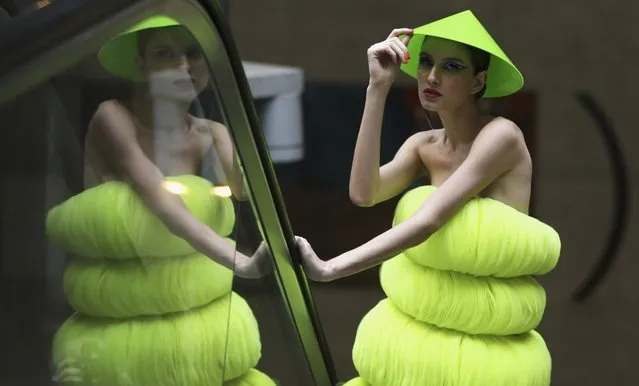
A model presents a creation in a subway station during the Sao Paulo Fashion Week in Sao Paulo October 27, 2013. (Photo by Paulo Whitaker/Reuters)

“It’s Fashion Week in Sao Paulo, Brazil and you don’t have to be a celebrity or a designer to check out these couture pieces. Subway stations were used as improvised catwalks in order to give the general public a chance to see these creations up close and at the price of a subway fare”. – Reuters. Photo: A model presents a creation in a subway station during the Sao Paulo Fashion Week in Sao Paulo October 27, 2013. (Photo by Paulo Whitaker/Reuters)
Details
31 Oct 2013 07:18:00
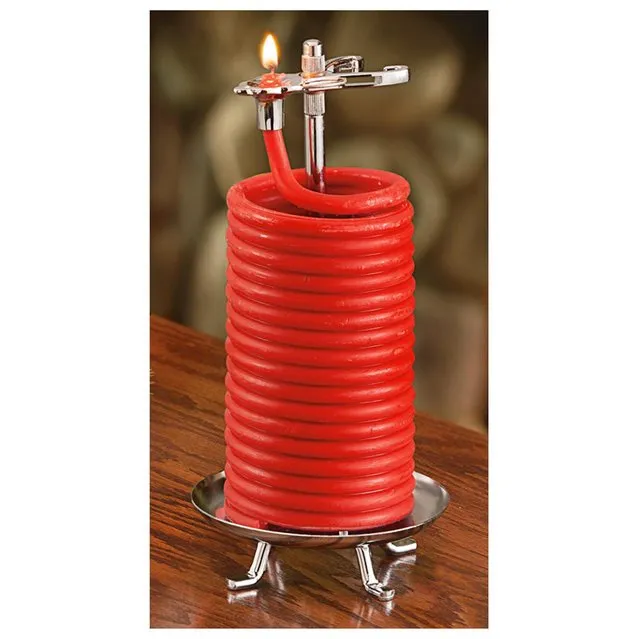
Candles By The Hour

With hours of dreamy candlelight in your Candle by the Hour, you canset the amount of time it burns, hour by gleaming hour. Simply feed the pliable bees wax coil through the candle clip in increments of 3 inches or less. Three inches of cancle will burn for approximately 1 hour. Set your nights alight with the Candle by the Hour!. Burning time total is 144 hours. Quirky bees wax Candle is like a sculpture. Candle reaches upward in a spiral from a metal burning plate with metal calipers gripping the Candle. A unique conversation piece for any room. Burns as long as you "tell it to" and then extinguishes itself!
Details
14 Feb 2014 12:11:00
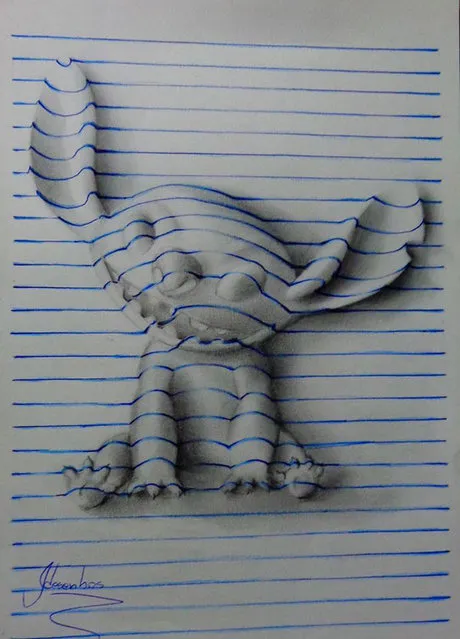
The 3D illustrations By Joao Carvalho

The illustrations created by Joao Carvalho are not just simple 3D drawings. By making it look as if various characters were drawn on regular note book paper, Joao fools our minds into thinking that the flat objects we see on the picture are actually 3-dimentional. To create these pieces of art, Joao first draws the lines of the “notebook” paper already bent, as if they stretch over the object that is about to be drawn. Then he applies shading and his masterpiece is all done! By looking at his pictures it is almost impossible to view them not as simple 2D drawings, but as real 3D objects. (Photo by Joao Desenhos)
Details
16 Nov 2014 12:08:00
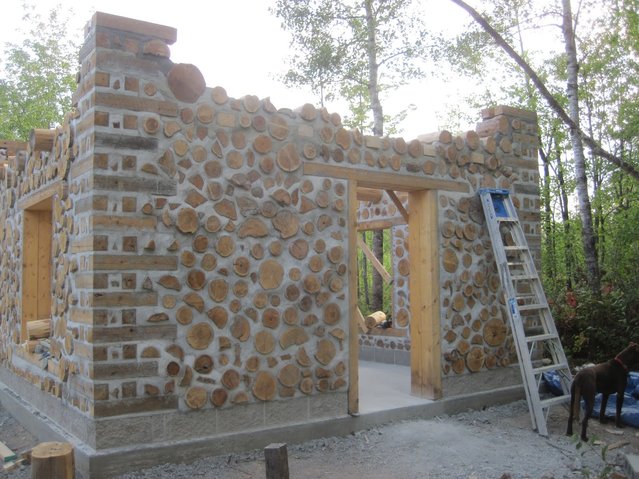
Cordwood Construction - Natural Building

Cordwood construction is a method of natural building that originated roughly one thousand years ago in Greece and Siberia. This method involves using pieces of wood that slightly protrude from the mortar, giving the walls an attractive appearance. Usually, the walls are made 12 to 24 inches thick. However, in some parts of Canada, the walls can be as thick as 36 inches. This method appeals to many people due to its ease of construction economy of resources. Cordwood Construction can be separated into two main types: mortar-insulation-mortar (M-I-M) and Throughwall. M-I-M is a more preferable and widely used choice as it allows for better insulating properties.
Details
27 Nov 2014 15:10:00
Botswana By Zack Seckler

Aerial shots always amaze us by their magnificence. Human-sized footprints look like ant trails, trees resemble little pieces of broccoli, and landscapes are transformed into breathtaking images, which look like something that can be seen under a microscope. This set of pictures features surreal aerial shots of Botswana taken by Zack Seckler. In the past, to make these kinds of shots, someone had to go up in a helicopter to take a picture. However, today, such images can be easily made using quadcopters, such as DJI Phantom or any other. Thanks to the new technology, we are able to view our world in new ways, allowing us to better appreciate its complexity and beauty. (Photo by Zack Seckler)
Details
14 Dec 2014 11:32:00
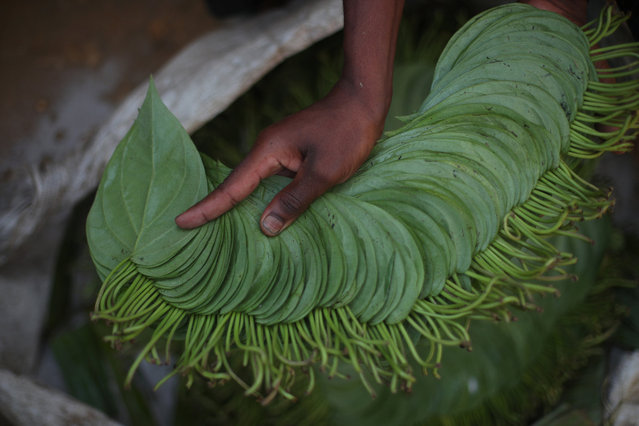
Faruk, 17, a Rohingya refugee trader holds betel leaves which are on sale at a stall in Palong Khali refugee camp near Cox's Bazar, Bangladesh, November 3, 2017. He left his village in Myanmar when the military opened fire towards the Rohingya. “I buy this betel leaf from Palong Khali market, in one bundle there are 160 pieces, I buy it for 80 taka and I sell it for 100 taka. Bangladeshi's and I sell for the same rate in the camp. Outside in the local market it is 80 taka per bundle. My problem is that I don't have money so I can't buy anything to eat, I can't buy fish to eat”, he said. (Photo by Hannah McKay/Reuters)

Faruk, 17, a Rohingya refugee trader holds betel leaves which are on sale at a stall in Palong Khali refugee camp near Cox's Bazar, Bangladesh, November 3, 2017. He left his village in Myanmar when the military opened fire towards the Rohingya. “I buy this betel leaf from Palong Khali market, in one bundle there are 160 pieces, I buy it for 80 taka and I sell it for 100 taka (1 Bangladeshi Taka = 0.012 US Dollar). Bangladeshi's and I sell for the same rate in the camp. Outside in the local market it is 80 taka per bundle. My problem is that I don't have money so I can't buy anything to eat, I can't buy fish to eat”, he said. (Photo by Hannah McKay/Reuters)
Details
27 Nov 2017 08:54:00
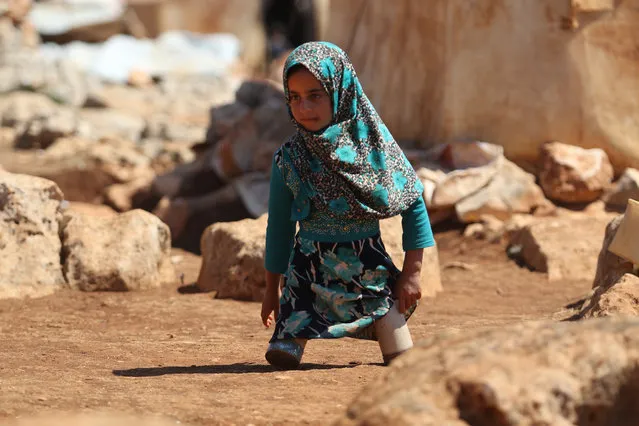
Eight year-old Maya Mohammad Ali Merhi walks using prosthetic legs made by her father from tin cans in a camp for displaced people, in the northern Syrian province of Idlib on June 20, 2018. Maya and her father were both born without lower limbs. Unable to afford real prosthetic limbs, her father made her a pair out of tin cans filled with cotton and scrap pieces of cloth. Maya's family had to leave their home in the Aleppo province to flee battles. (Photo by Aaref Watad/AFP Photo)

Eight year-old Maya Mohammad Ali Merhi walks using prosthetic legs made by her father from tin cans in a camp for displaced people, in the northern Syrian province of Idlib on June 20, 2018. Maya and her father were both born without lower limbs. Unable to afford real prosthetic limbs, her father made her a pair out of tin cans filled with cotton and scrap pieces of cloth. Maya's family had to leave their home in the Aleppo province to flee battles. (Photo by Aaref Watad/AFP Photo)
Details
09 Aug 2018 00:01:00