Loading...
Done
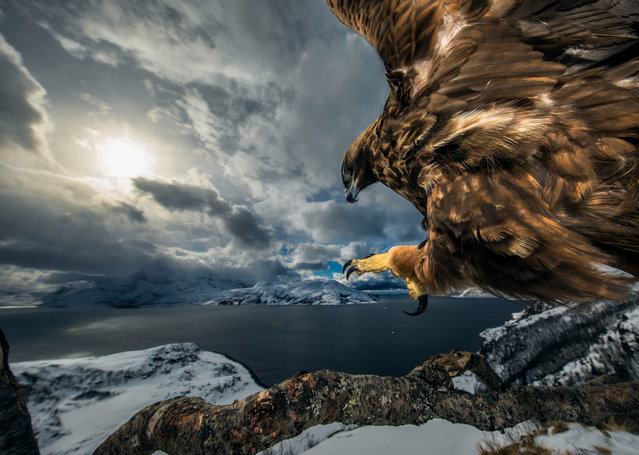
Birds behaviour winner: Land of the Eagle by Audun Rikardsen, Norway. High on a ledge, on the coast near his home in northern Norway, Rikardsen carefully positioned an old tree branch that he hoped would make a perfect golden eagle lookout. To this, he bolted a tripod head with a camera, flashes and motion sensor attached, and built himself a hide a short distance away. From time to time, he left road‑kill carrion nearby. Very gradually – over the next three years – a golden eagle got used to the camera and started to use the branch regularly to survey the coast below. (Photo by Audun Rikardsen/2019 Wildlife Photographer of the Year)

Birds behaviour winner: Land of the Eagle by Audun Rikardsen, Norway. High on a ledge, on the coast near his home in northern Norway, Rikardsen carefully positioned an old tree branch that he hoped would make a perfect golden eagle lookout. To this, he bolted a tripod head with a camera, flashes and motion sensor attached, and built himself a hide a short distance away. From time to time, he left road‑kill carrion nearby. Very gradually – over the next three years – a golden eagle got used to the camera and started to use the branch regularly to survey the coast below. (Photo by Audun Rikardsen/2019 Wildlife Photographer of the Year)
Details
17 Oct 2019 00:03:00
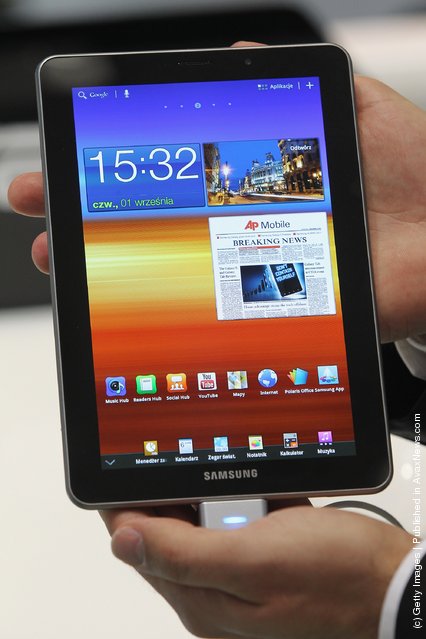
Samsung Galaxy Tab 7.7 tablet

The photographer holds up a Samsung Galaxy Tab 7.7 tablet at the Samsung hall at the IFA 2011 consumer electonics and appliances fair the day before the fair's official opening on September 1, 2011 in Berlin, Germany. The IFA 2011 will be open to the public from September 2-7. (Photo by Sean Gallup/Getty Images)
Details
03 Sep 2011 12:34:00


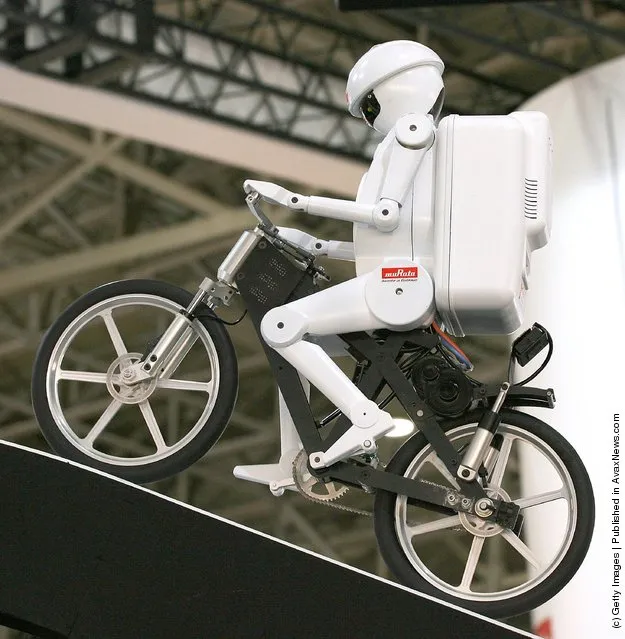
Japan's electronics equipment maker MuRata Manufacturing Co., Ltd's showcased their bicycle-riding robot “MuRata Boy” during the CEATEC Japan 2006 exhibition on October 3, 2006 in Chiba, Japan. The “MuRata Boy” robot can ride up a 25-degree slope, stop without losing its balance and make an S-curve without falling. (Photo by Koichi Kamoshida/Getty Images)
Details
14 May 2011 13:41:00
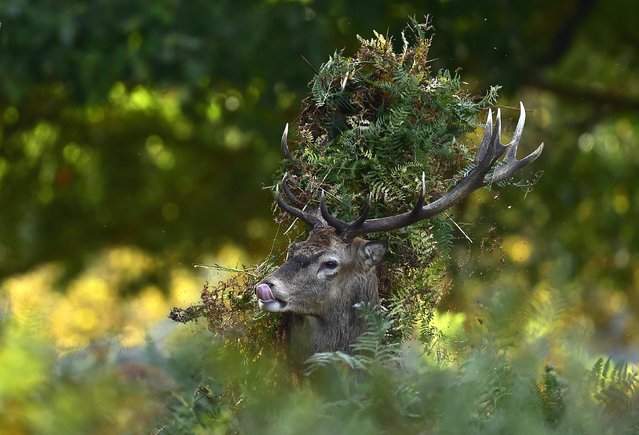
A male red deer with antlers covered in bracken, walks through undergrowth in Richmond Park in south west London, October 3, 2014. Over 600 red and fallow deer roam in the largest of London's Royal Parks, and have their numbers managed in an annual cull each November and February. (Photo by Toby Melville/Reuters)

A male red deer with antlers covered in bracken, walks through undergrowth in Richmond Park in south west London, October 3, 2014. Over 600 red and fallow deer roam in the largest of London's Royal Parks, and have their numbers managed in an annual cull each November and February. (Photo by Toby Melville/Reuters)
Details
04 Oct 2014 12:17:00
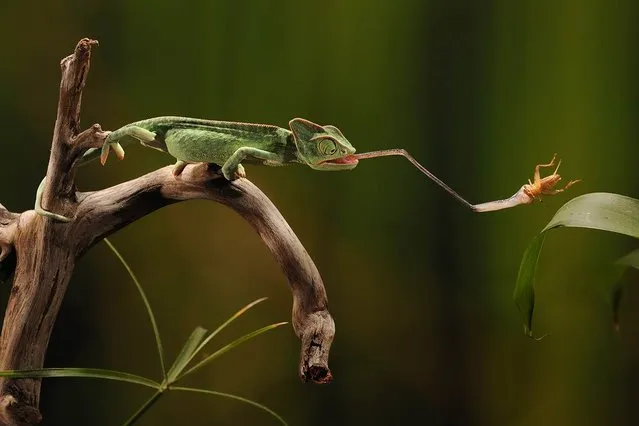
A veiled chameleon extends its tongue to catch a cricket

“Scott Linstead is an internationally published, freelance wildlife photographer/writer. His clients include Natural History Magazine, Hewlett Packard, Ranger Rick Magazine and a number of wildlife publications in North America and Europe. Scott's column on the techniques of bird photography appears in every issue of Outdoor Photography Canada”.

Photo: A veiled chameleon extends its tongue to catch a cricket. Canadian wildlife photographer Scott Linstead, formerly an aerospace engineer and high school teacher, uses a device called Phototrap “to not only photograph the elusive, but also the unimaginably quick”. (Photo by Scott Linstead)
Details
22 May 2012 11:32:00
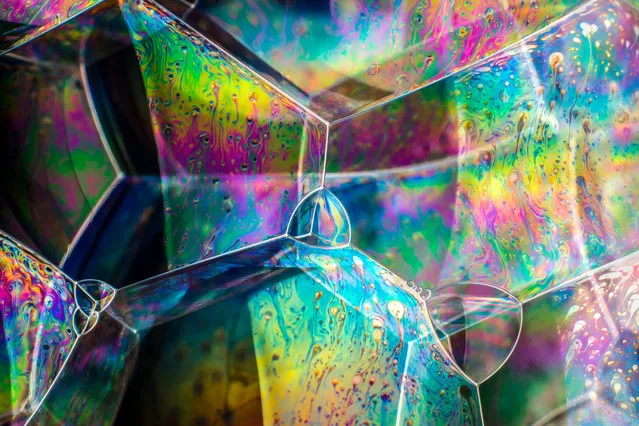
Soap Bubble Structures by Kym Cox. Bubbles optimise space and minimise their surface area for a given volume of air. This phenomenon makes them a useful tool in many areas of research, in particular, materials science and ‘packing’ – how things fit together. Bubble walls drain under gravity, thin at the top, thick at the bottom, which interferes with travelling lightwaves to create bands of colour. Black spots show the wall is too thin for interference colours, indicating the bubble is about to burst. (Photo by Kym Cox/2019 Science Photographer of the Year/RPS)

Soap Bubble Structures by Kym Cox. Bubbles optimise space and minimise their surface area for a given volume of air. This phenomenon makes them a useful tool in many areas of research, in particular, materials science and “packing” – how things fit together. Bubble walls drain under gravity, thin at the top, thick at the bottom, which interferes with travelling lightwaves to create bands of colour. Black spots show the wall is too thin for interference colours, indicating the bubble is about to burst. (Photo by Kym Cox/2019 Science Photographer of the Year/RPS)
Details
15 Aug 2019 00:03:00
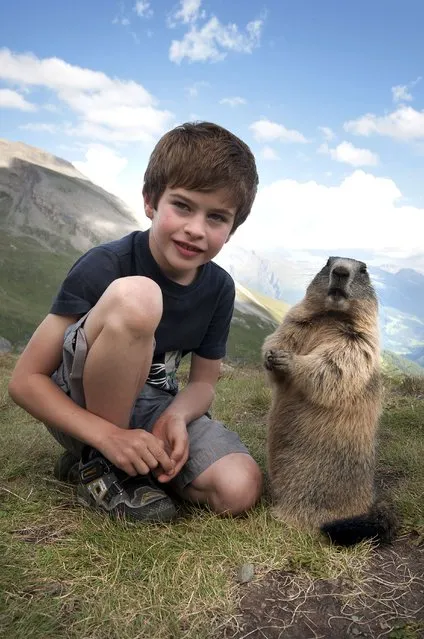
Austrian Boy  And Marmots

AUSTRIA — A nature-loving family says their 8-year-old boy has become friends with some of the Austrian Alps’ shiest creatures.
Details
13 Feb 2013 10:11:00
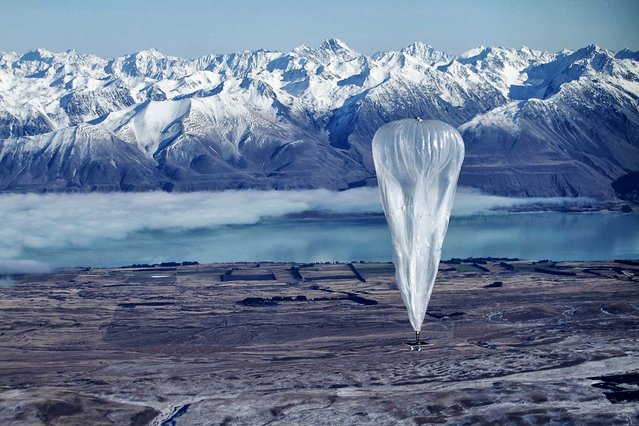
A Google balloon sails through the air with the Southern Alps mountains in the background, in Tekapo, New Zealand. (Photo by Jon Shenk/Associated Press)

“Google is launching balloons into near space to provide internet access to buildings below on the ground. About 30 of the superpressure balloons are being launched from New Zealand from where they will drift around the world on a controlled path. Attached equipment will offer 3G-like speeds to 50 testers in the country”. – BBC News. Photo: A Google balloon sails through the air with the Southern Alps mountains in the background, in Tekapo, New Zealand. (Photo by Jon Shenk/Associated Press)
Details
16 Jun 2013 10:54:00