Loading...
Done
Piper Hoppe, 10, from Minnetonka, Minnesota, holds a sign at the doorway of River Bluff Dental clinic in protest against the killing of a famous lion in Zimbabwe, in Bloomington, Minnesota July 29, 2015. (Photo by Eric Miller/Reuters)

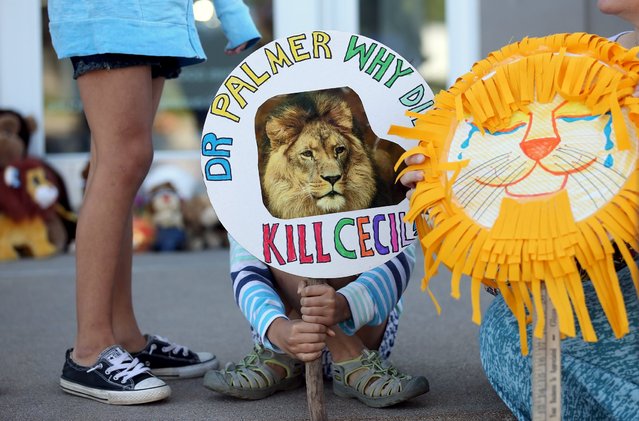
Piper Hoppe, 10, from Minnetonka, Minnesota, holds a sign at the doorway of River Bluff Dental clinic in protest against the killing of a famous lion in Zimbabwe, in Bloomington, Minnesota July 29, 2015. A Zimbabwean court on Wednesday charged a professional local hunter Theo Bronkhorst with failing to prevent an American from unlawfully killing “Cecil”, the southern African country's best-known lion. The American, Walter James Palmer, a Minnesota dentist who paid $50,000 to kill the lion, has left Zimbabwe. He says he did kill the animal but believed the hunt was legal and that the necessary permits had been issued. (Photo by Eric Miller/Reuters)
Details
30 Jul 2015 12:01:00
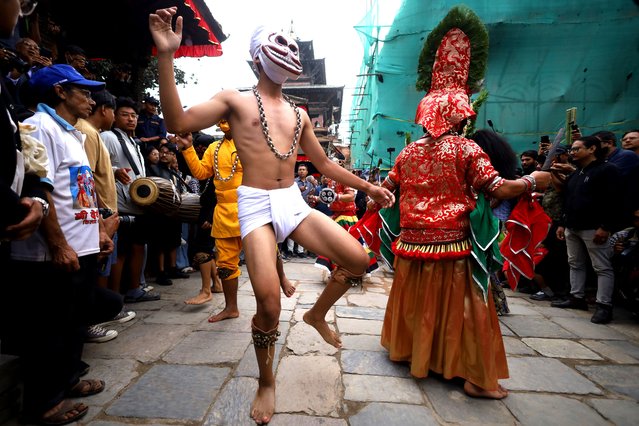
Masked dancers perform a ritualistic dance at Kathmandu Durbar Square during the procession of erecting a sacred pole locally called “Ya: Shi”, marking the formal start of Indra Jatra dedicated to rain god Indra in Kathmandu, Nepal, on September 15, 2024. The festival lasts for eight days with singing, mask dancing, and other rituals. Indra Jatra festival falls on the fourth day of the waxing moon in the month of Bhadra as per the lunar calendar. Legends say that the Indra Jatra festival observes the victory of the gods over the demons to release Jayanta, the son of Lord Indra. Indra, the god of rain, is worshiped in this festival primarily celebrated by the Newar communities following both Hinduism and Buddhism. (Photo by Subaas Shrestha/NurPhoto/Rex Features/Shutterstock)

Masked dancers perform a ritualistic dance at Kathmandu Durbar Square during the procession of erecting a sacred pole locally called “Ya: Shi”, marking the formal start of Indra Jatra dedicated to rain god Indra in Kathmandu, Nepal, on September 15, 2024. (Photo by Subaas Shrestha/NurPhoto/Rex Features/Shutterstock)
Details
24 Sep 2024 03:27:00
A view of the Hazelwood Power Station across the cooling pondage at sunrise in Melbourne, Australia

A view of the Hazelwood Power Station across the cooling pondage at sunrise on March 21, 2012 in Melbourne, Australia. The brown coal fueled power station, located in Latrobe Valley is the oldest in Victoria and provides the state nearly 25% of its energy. In 2005 Hazelwood was labeled Australia's least carbon efficient power station by WWF Australia and continues to be a target of issue of environmentalist groups. (Photo by Hamish Blair/Getty Images)
Details
21 Mar 2012 08:34:00


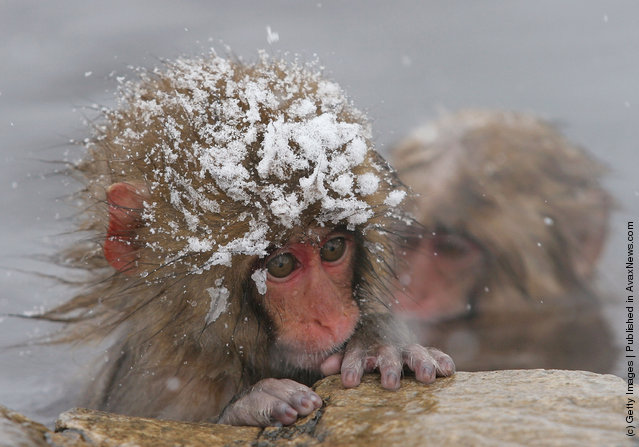
Japanese macaque monkeys enjoy sitting in the hot springs at Jigokudani-Onsen (Hell Valley) on January 23, 2005 in Jigokudani, Nagano-Prefecture, Japan. Japanese Macaques, also known as snow monkeys are the most northerly nonhuman primate in the world. In 1963 a female Macaque ventured into the hot springs to retrieve some soybeans. This behaviour was adopted by other monkeys, and eventually by the entire troop. This Macaque troop regularly visits the Jigokudani-Onsen springs to escape the cold. The hot springs are said to help relieve nerve pain and fatigue. (Photo by Koichi Kamoshida/Getty Images)
Details
20 May 2011 08:04:00
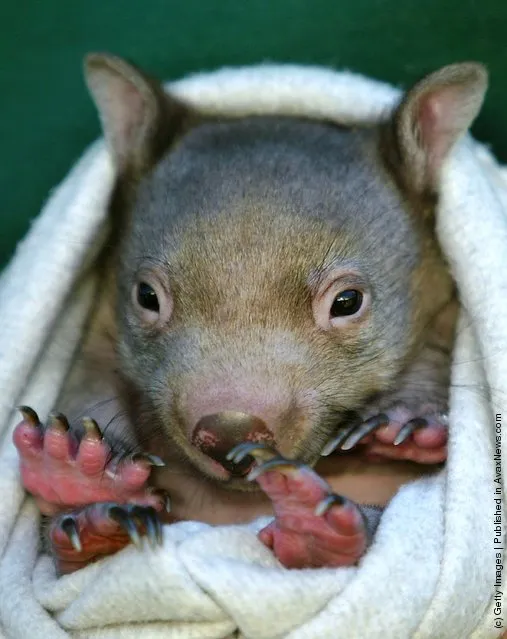
A baby Common Wombat

“Wombats are Australian marsupials; they are short-legged, muscular quadrupeds, approximately 1 metre (39 in) in length with a short, stubby tail. They are adaptable in their habitat tolerances, and are found in forested, mountainous, and heathland areas of south-eastern Australia, including Tasmania, as well as an isolated patch of about 300 ha in Epping Forest National Park in central Queensland”. – Wikipedia

Photo: “Abdul”, a baby Common Wombat, is one of the marsupials on show during the spring baby boom at Taronga Zoo September 1, 2005 in Sydney, Australia. “Abdul” was orphaned when his mother was killed by a car. (Photo by Mark Nolan/Getty Images)
Details
20 Aug 2011 11:23:00
An actor plays an injured passer-by during Exercise Strong Tower, the scene of a mock terror attack at a disused underground station in central London, Britain June 30, 2015. (Photo by Peter Nicholls/Reuters)

An actor plays an injured passer-by during Exercise Strong Tower, the scene of a mock terror attack at a disused underground station in central London, Britain June 30, 2015. London police held their biggest-ever terrorism drill on Tuesday, pitting the emergency services against a group of marauding attackers, nearly 10 years since four young British Islamists killed 52 people in suicide bombings on London's transport network in July 2005. (Photo by Peter Nicholls/Reuters)
Details
01 Jul 2015 13:21:00
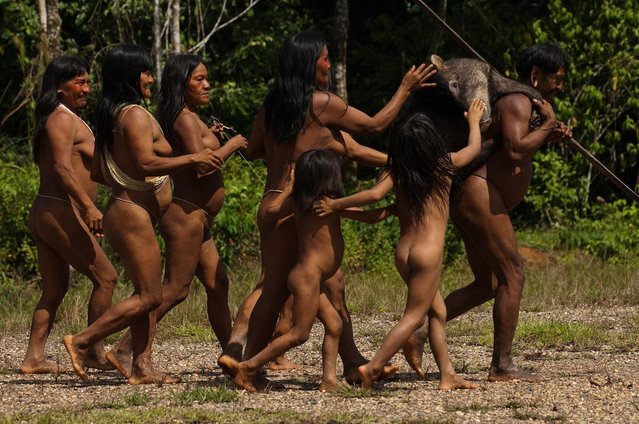
Spectacular images offering insight into the lives of the Huaorani people in the Ecuadorian Amazon have been revealed showing how they use traditional methods to hunt monkeys for food. The stunning pictures were taken by conservation photographer Pete Oxford from Torquay, Devon in the Ecuadorian Amazon. “The Huaorani Indians are a forest people highly in tune with their environment. Many are now totally acculturated since the 1950s by missionaries”, said Pete. “Today they face radical change to their culture to the proximity of oil exploration within their territory and the Yasuni National Park and Biosphere Reserve, they are vastly changed. Some still live very traditionally and for this shoot, through my Huaorani friend, a direct relative of those photographed he wanted to depict them as close to their original culture as possible. They still largely hunt with blow pipes and spears eating a lot of monkeys and peccaries”. The Huaorani are also known as the Waorani, Waodani or the Waos and are native Amerindians. Their lands are located between the Curaray and Napo rivers and speak the Huaorani language. Pete says that during his visit he was welcomed into the group and hopes that ancient cultures can be saved. Here: The tribe were seen celebrating after a hunter returned to camp with a wild pig. (Photo by Pete Oxford/Mediadrumworld.com)

Spectacular images offering insight into the lives of the Huaorani people in the Ecuadorian Amazon have been revealed showing how they use traditional methods to hunt monkeys for food. The stunning pictures were taken by conservation photographer Pete Oxford from Torquay, Devon in the Ecuadorian Amazon. Here: The tribe were seen celebrating after a hunter returned to camp with a wild pig. (Photo by Pete Oxford/Mediadrumworld.com)
Details
20 Jan 2017 07:58:00
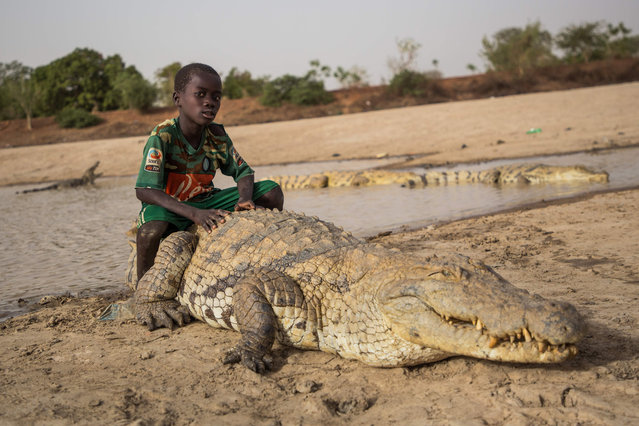
A boy sits on the back of a crocodile on May 19, 2018 at a pond in Bazoule in Burkina Faso, a village which happily shares its local pond with “sacred” crocodiles. Crocodiles may be one of the deadliest hunters in the animal kingdom, but in a small village in Burkina Faso it is not unusual to see someone sitting atop one of the fearsome reptiles. According to local legend, the startling relationship with the predators dates back to at least the 15 th century. The village was in the grip of an agonising drought until the crocodiles led women to a hidden pond where the population could slake their thirst. (Photo by Olympia de Maismont/AFP Photo)

A boy sits on the back of a crocodile on May 19, 2018 at a pond in Bazoule in Burkina Faso, a village which happily shares its local pond with “sacred” crocodiles. Crocodiles may be one of the deadliest hunters in the animal kingdom, but in a small village in Burkina Faso it is not unusual to see someone sitting atop one of the fearsome reptiles. According to local legend, the startling relationship with the predators dates back to at least the 15 th century. The village was in the grip of an agonising drought until the crocodiles led women to a hidden pond where the population could slake their thirst. (Photo by Olympia de Maismont/AFP Photo)
Details
17 Jul 2018 00:01:00