Loading...
Done
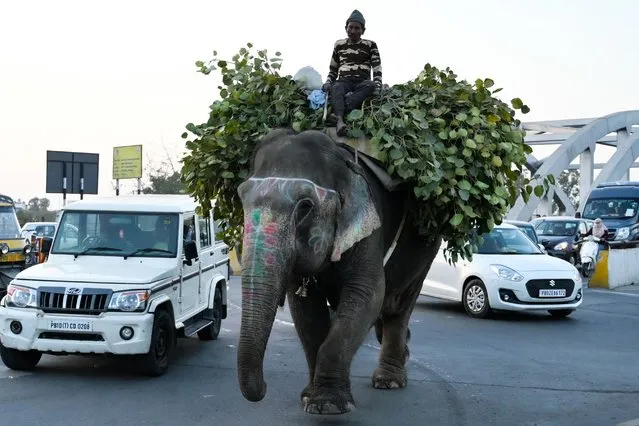
A mahout carrying leaves rides an elephant along a street in Amritsar on February 27, 2024. (Photo by Narinder Nanu/AFP Photo)

A mahout carrying leaves rides an elephant along a street in Amritsar on February 27, 2024. (Photo by Narinder Nanu/AFP Photo)
Details
12 Mar 2024 06:37:00
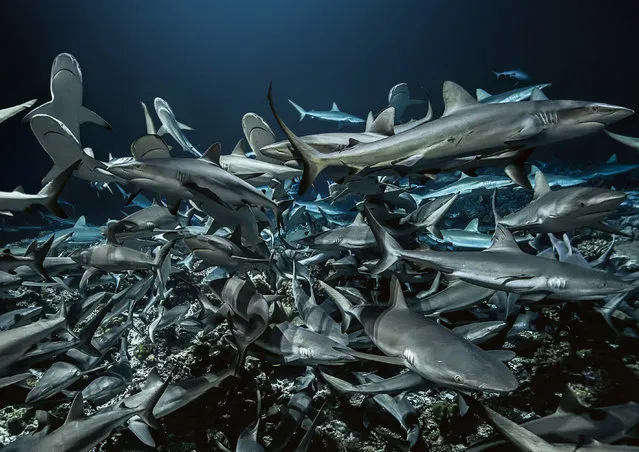
The men also decreased the time for Laurent to decompress from 20 hours to six. (Photo by Laurent Ballesta/Caters News Agency)

ne committed photographer spent a grand total of 3,000 dive hours trying to get the perfect shots, capturing beautiful images of a rare shark feeding frenzy. Laurent Ballesta’s images show the glimmering gray reef sharks hunting in swift packs, flying through the water and feasting on the likes of helpless grouper. (Photo by Laurent Ballesta/Caters News Agency)
Details
06 Jun 2018 00:03:00
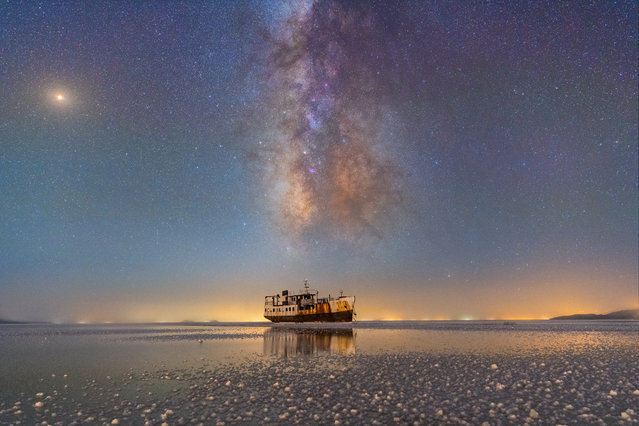
Sharafkhaneh port and lake Urmia. Masoud Ghadiri (Iran). The summer Milky Way is very prominent in this photo. On the galaxy zone, Saturn is located besides the Lagoon nebula. On the right of the horizon, you can see the extreme light pollution of Urmia, which is caused by ever-increasing city development. (Photo by Masoud Ghadiri/National Maritime Museum)

Sharafkhaneh port and lake Urmia. Masoud Ghadiri (Iran). The summer Milky Way is very prominent in this photo. On the galaxy zone, Saturn is located besides the Lagoon nebula. On the right of the horizon, you can see the extreme light pollution of Urmia, which is caused by ever-increasing city development. (Photo by Masoud Ghadiri/National Maritime Museum)
Details
20 Jun 2019 00:01:00
Actors perform in a scene during the “Dino Safari” show in Tokyo, Japan, 25 April 2018. The Dino Safari show features dinosaurs moving in a realistic way thanks to the Dino-Tronics mechanism that enable the dinosaurs to walk, move their heads and jaws. The event will run from 26 April to 05 May 2018. (Photo by Franck Robichon/EPA/EFE)

Actors perform in a scene during the “Dino Safari” show in Tokyo, Japan, 25 April 2018. The Dino Safari show features dinosaurs moving in a realistic way thanks to the Dino-Tronics mechanism that enable the dinosaurs to walk, move their heads and jaws. The event will run from 26 April to 05 May 2018. (Photo by Franck Robichon/EPA/EFE)
Details
27 Apr 2018 05:35:00
Syrian refugee and Olympic swimmer Yusra Mardini is pictured during a training session in a pool at the Olympic park in Berlin, Germany on April 26, 2018. (Photo by Fabrizio Bensch/Reuters)

Syrian refugee and Olympic swimmer Yusra Mardini is pictured during a training session in a pool at the Olympic park in Berlin, Germany on April 26, 2018. (Photo by Fabrizio Bensch/Reuters)
Details
28 Apr 2018 09:15:00
A lovely sunrise in at the beachfront of Playa de Muro, Alcudia on the island of Mallorca, Majorca, Spain on May 16, 2022. As a road cyclist walks his road bike along a wooden jetty heading out into the calm waters. (Photo by Phil Wilkinson/Alamy Live News)

A lovely sunrise in at the beachfront of Playa de Muro, Alcudia on the island of Mallorca, Majorca, Spain on May 16, 2022. As a road cyclist walks his road bike along a wooden jetty heading out into the calm waters. (Photo by Phil Wilkinson/Alamy Live News)
Details
07 Jul 2022 04:17:00
Sarah Everhardt of the U.S. performs during the gala exhibition in the ISU Four Continents Figure Skating Championships at the Mokdong ice rink in Seoul, South Korea, Sunday, February 23, 2025. (Photo by Lee Jin-man/AP Photo)

Sarah Everhardt of the U.S. performs during the gala exhibition in the ISU Four Continents Figure Skating Championships at the Mokdong ice rink in Seoul, South Korea, Sunday, February 23, 2025. (Photo by Lee Jin-man/AP Photo)
Details
28 Jul 2025 02:44:00
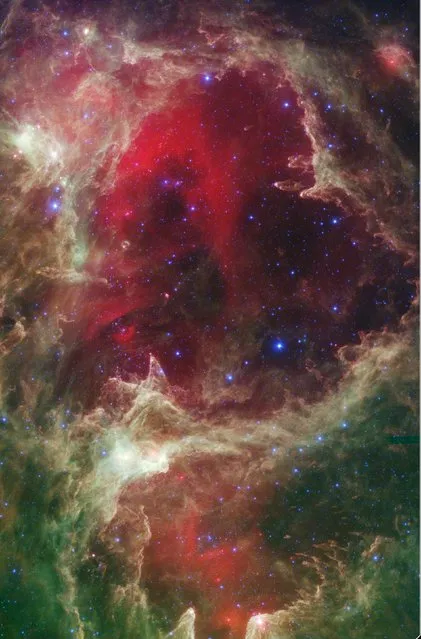
An infrared portrait from NASA's Spitzer Space Telescope which shows generations of stars is seen in this undated NASA handout image released February 14, 2013. In this wispy star-forming region, called W5, the oldest stars can be seen as blue dots in the centers of the two hollow cavities (other blue dots are background and foreground stars not associated with the region). Red shows heated dust that pervades the region's cavities, while green highlights dense clouds. (Photo by NASA/Reuters/JPL-Caltech/Harvard-Smithsonian/Handout)

An infrared portrait from NASA's Spitzer Space Telescope which shows generations of stars is seen in this undated NASA handout image released February 14, 2013. In this wispy star-forming region, called W5, the oldest stars can be seen as blue dots in the centers of the two hollow cavities (other blue dots are background and foreground stars not associated with the region). Red shows heated dust that pervades the region's cavities, while green highlights dense clouds. (Photo by NASA/Reuters/JPL-Caltech/Harvard-Smithsonian/Handout)
Details
03 Mar 2013 08:44:00