Loading...
Done
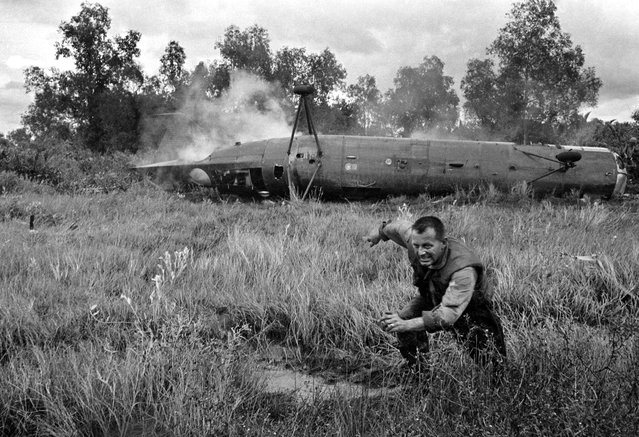
A U.S. crewman runs from a crashed CH-21 Shawnee troop helicopter near the village of Ca Mau in the southern tip of South Vietnam, Dec. 11, 1962

“Horst Faas (28 April 1933 – 10 May 2012) was a German photo-journalist and two-time Pulitzer Prize winner. He is best-known for his images of the Vietnam War”. – Wikipedia

Photo: A U.S. crewman runs from a crashed CH-21 Shawnee troop helicopter near the village of Ca Mau in the southern tip of South Vietnam, December 11, 1962. Two helicopters crashed without serious injuries during a government raid on the Viet Cong-infiltrated area. Both helicopters were destroyed to keep them out of enemy hands. (Photo by AP Photo/Horst Faas)
Details
24 May 2012 09:43:00
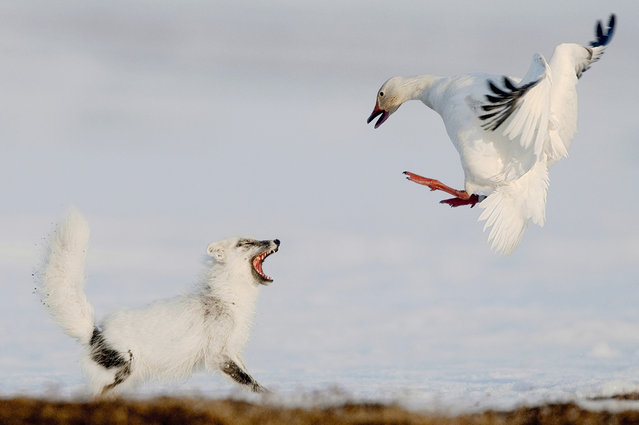
Commended. In late May, about a quarter of a million snow geese arrive from North America to nest on Wrangel Island, in northeastern Russia. They form the world's largest breeding colony of snow geese. Photographer Sergey Gorshkov spent two months on the remote island photographing the unfolding dramas. (Photo by Sergey Gorshkov/Veolia Environnement Wildlife Photographer)

Commended. In late May, about a quarter of a million snow geese arrive from North America to nest on Wrangel Island, in northeastern Russia. They form the world's largest breeding colony of snow geese. Photographer Sergey Gorshkov spent two months on the remote island photographing the unfolding dramas. Arctic foxes take advantage of the abundance of eggs, caching surplus eggs for leaner times. But a goose (here the gander) is easily a match for a fox, which must rely on speed and guile to steal eggs. “The battles were fairly equal”, notes Sergey, “and I only saw a fox succeed in grabbing an egg on a couple of occasions, despite many attempts”. Surprisingly, “the geese lacked any sense of community spirit”, he adds, “and never reacted when a fox harassed a neighboring pair nesting close by”. (Photo by Sergey Gorshkov/Veolia Environnement Wildlife Photographer)
Details
16 Jun 2015 12:30:00
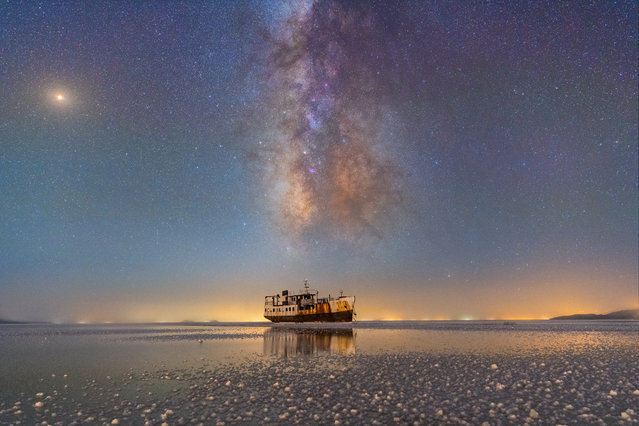
Sharafkhaneh port and lake Urmia. Masoud Ghadiri (Iran). The summer Milky Way is very prominent in this photo. On the galaxy zone, Saturn is located besides the Lagoon nebula. On the right of the horizon, you can see the extreme light pollution of Urmia, which is caused by ever-increasing city development. (Photo by Masoud Ghadiri/National Maritime Museum)

Sharafkhaneh port and lake Urmia. Masoud Ghadiri (Iran). The summer Milky Way is very prominent in this photo. On the galaxy zone, Saturn is located besides the Lagoon nebula. On the right of the horizon, you can see the extreme light pollution of Urmia, which is caused by ever-increasing city development. (Photo by Masoud Ghadiri/National Maritime Museum)
Details
20 Jun 2019 00:01:00
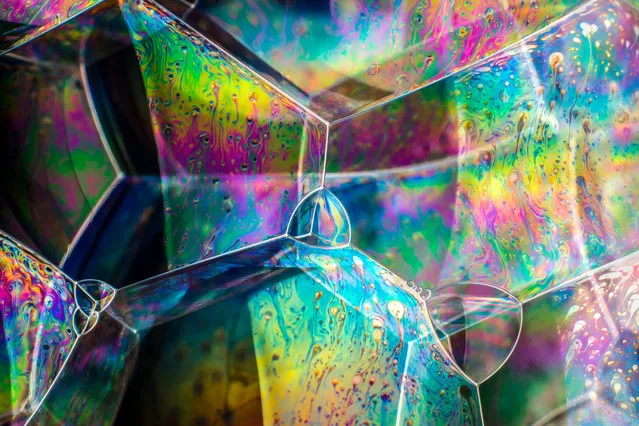
Soap Bubble Structures by Kym Cox. Bubbles optimise space and minimise their surface area for a given volume of air. This phenomenon makes them a useful tool in many areas of research, in particular, materials science and ‘packing’ – how things fit together. Bubble walls drain under gravity, thin at the top, thick at the bottom, which interferes with travelling lightwaves to create bands of colour. Black spots show the wall is too thin for interference colours, indicating the bubble is about to burst. (Photo by Kym Cox/2019 Science Photographer of the Year/RPS)

Soap Bubble Structures by Kym Cox. Bubbles optimise space and minimise their surface area for a given volume of air. This phenomenon makes them a useful tool in many areas of research, in particular, materials science and “packing” – how things fit together. Bubble walls drain under gravity, thin at the top, thick at the bottom, which interferes with travelling lightwaves to create bands of colour. Black spots show the wall is too thin for interference colours, indicating the bubble is about to burst. (Photo by Kym Cox/2019 Science Photographer of the Year/RPS)
Details
15 Aug 2019 00:03:00
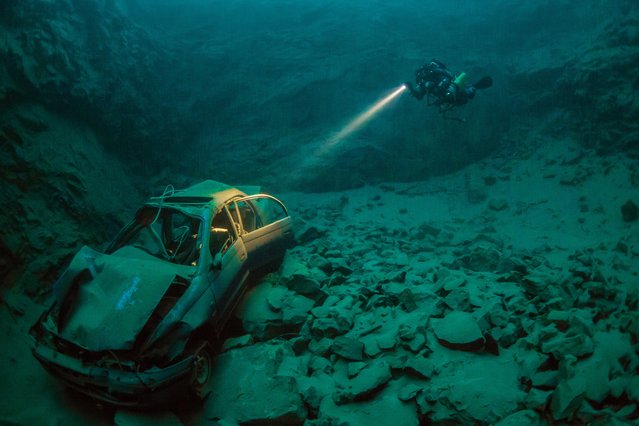
Wide-angle category winner. Part of the Illusion by Marcus Blatchford (UK). Location: National Dive & Activity Centre, Chepstow, Wales. “This is the deepest inland dive centre in the UK. The dive plan was to explore the deep end, but this time I dived ‘unplugged’ (without my strobes). With the exception of this change to my camera technique, there were no planned shots I wanted to achieve – just a fun dive with ad-hoc photos along the way. Shortly after this photo was captured, in 6C water and two hours of decompression ahead of us, we turned and started the long ascent back to the surface”. (Photo by Marcus Blatchford/Underwater Photographer of the Year 2016)

Wide-angle category winner. Part of the Illusion by Marcus Blatchford (UK). Location: National Dive & Activity Centre, Chepstow, Wales. “This is the deepest inland dive centre in the UK. The dive plan was to explore the deep end, but this time I dived ‘unplugged’ (without my strobes). With the exception of this change to my camera technique, there were no planned shots I wanted to achieve – just a fun dive with ad-hoc photos along the way. Shortly after this photo was captured, in 6C water and two hours of decompression ahead of us, we turned and started the long ascent back to the surface”. (Photo by Marcus Blatchford/Underwater Photographer of the Year 2016)
Details
18 Feb 2016 13:44:00
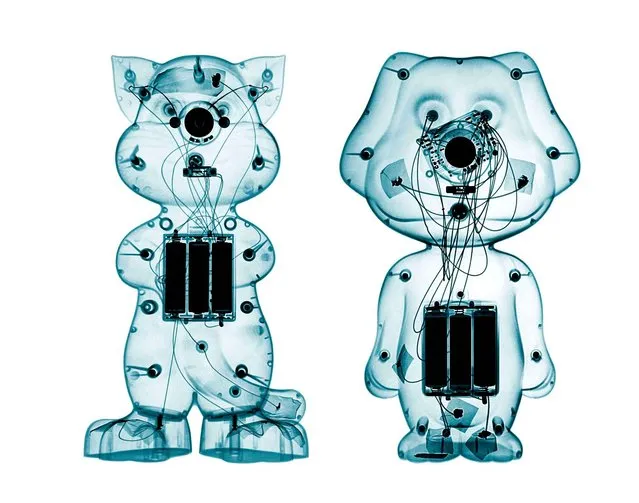
Australian photographer Brendan Fitzpatrick’s X-ray photographs expose the inner workings of toys. Fitzpatrick’s photographs are both whimsical and mechanical, evoking the curiosity of childhood and the desire to discover how things look and work from other perspectives. (Photo by Brendan Fitzpatrick)

Australian photographer Brendan Fitzpatrick’s X-ray photographs expose the inner workings of toys. Fitzpatrick’s photographs are both whimsical and mechanical, evoking the curiosity of childhood and the desire to discover how things look and work from other perspectives. The strategic placement of wires, batteries, and screws are revealed, the complexity of the inside contrasting with the seemingly simplistic design of the outside. Fitzpatrick uses chest X-ray and mammogram machines to photograph flowers, toys, and creatures, then enhances the color in the images in order to more effectively distinguish the various parts that have been exposed. This photographs are part of series he calls “Invisible Light”. (Photo by Brendan Fitzpatrick)
Details
08 Aug 2014 10:59:00
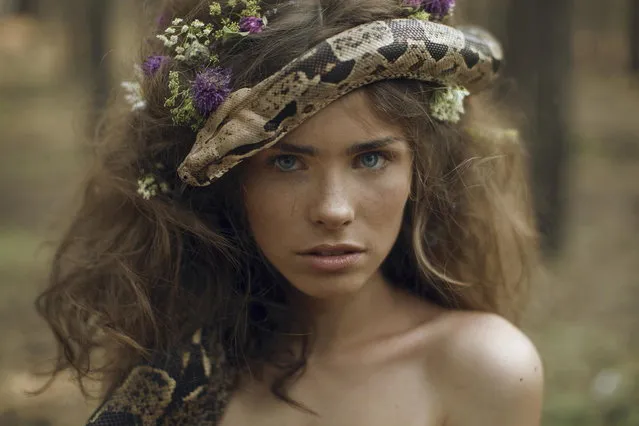
Russian photographer takes stunning images with real animals. (Photo by Katerina Plotnikova)

There’s no need to suspend your disbelief when viewing these stunning photographs – the exquisite images are the real-life interactions between humans and animals. (Photo by Katerina Plotnikova)
Details
02 Apr 2014 07:10:00
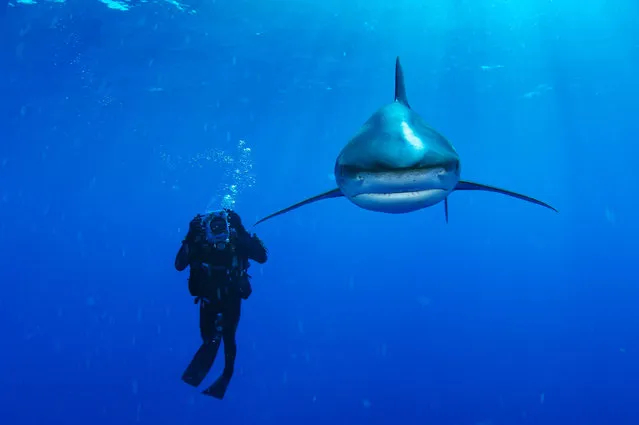
This Bahamian oceanic whitetip shark, known for the distinctive coloring on its white-tipped, rounded extremities, is part of a globally threatened species due to overfishing demands, primarily for its fins. (Photo by Brian Skerry)

Brian Skerry can be called many things – explorer, journalist, conservation advocate – but he is first and foremost a photographer. His journeys to capture amazing underwater photographs have taken him across the world’s oceans. Photo: This Bahamian oceanic whitetip shark, known for the distinctive coloring on its white-tipped, rounded extremities, is part of a globally threatened species due to overfishing demands, primarily for its fins. (Photo by Brian Skerry)
Details
08 Sep 2013 07:26:00