Loading...
Done
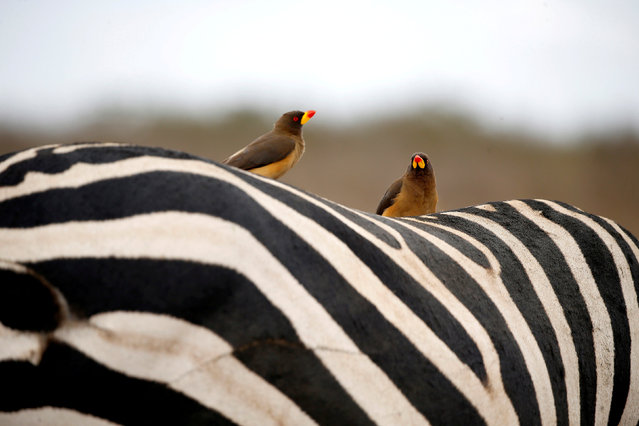
Birds sit on the back of a zebra in the Nairobi National Park, near Nairobi, Kenya, November 21, 2018. (Photo by Baz Ratner/Reuters)

Birds sit on the back of a zebra in the Nairobi National Park, near Nairobi, Kenya, November 21, 2018. (Photo by Baz Ratner/Reuters)
Details
25 Nov 2018 00:03:00
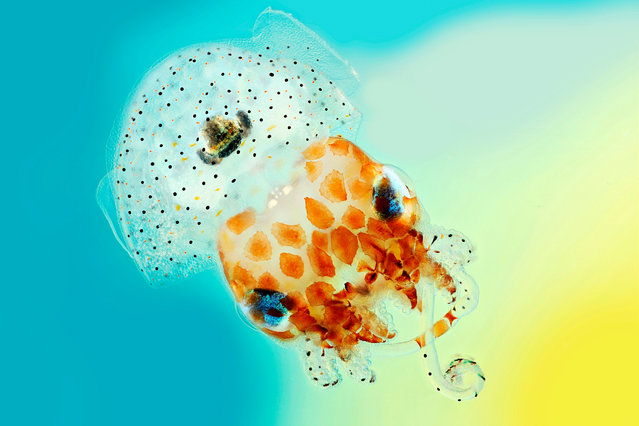
With its huge eyes, comical name and diminutive size, Mark R. Smith’s image of a baby Hawaiian bobtail squid can’t help but raise a smile. A curiously endearing creature, the cephalopod is just 1.5cm across, its mantle cavity bearing more than a passing resemblance to a rather natty shower cap. But it is also a beautiful example of symbiosis – nature’s version of “I’ll scratch your back if you scratch mine” – for on the underside of the squid is a light organ which houses bioluminescent bacteria. The squid offers the bacteria protection and food, while the bacteria emit a glow – a handy trait that the squid uses to offset its silhouette, helping it to evade predators in the depths below. Mark R. Smith’s entry combines several images of a Hawaiian bobtail squid with different focus lengths to create a final picture with greater depth of field than normal. (Photo by Mark R. Smith/Wellcome Images/Macroscopic Solutions)

With its huge eyes, comical name and diminutive size, Mark R. Smith’s image of a baby Hawaiian bobtail squid can’t help but raise a smile. A curiously endearing creature, the cephalopod is just 1.5cm across, its mantle cavity bearing more than a passing resemblance to a rather natty shower cap. But it is also a beautiful example of symbiosis – nature’s version of “I’ll scratch your back if you scratch mine” – for on the underside of the squid is a light organ which houses bioluminescent bacteria. The squid offers the bacteria protection and food, while the bacteria emit a glow – a handy trait that the squid uses to offset its silhouette, helping it to evade predators in the depths below. Mark R. Smith’s entry combines several images of a Hawaiian bobtail squid with different focus lengths to create a final picture with greater depth of field than normal. (Photo by Mark R. Smith/Wellcome Images/Macroscopic Solutions)
Details
08 Mar 2017 00:05:00
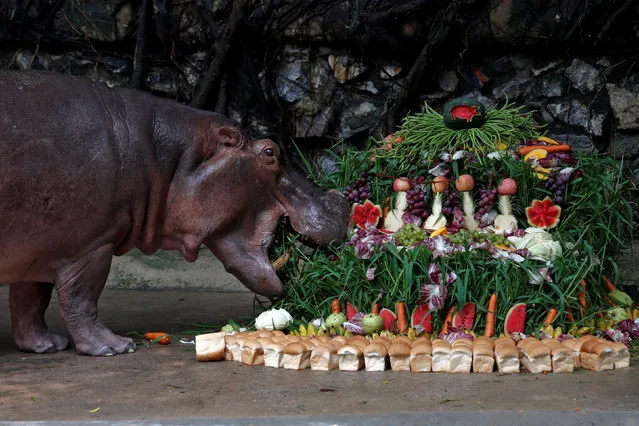
A female hippopotamus named “Mali”, which means Jasmine, eats fruits arranged to look like a cake during her 50th birthday celebration at Dusit Zoo in Bangkok, Thailand September 23, 2016. (Photo by Chaiwat Subprasom/Reuters)

A female hippopotamus named “Mali”, which means Jasmine, eats fruits arranged to look like a cake during her 50th birthday celebration at Dusit Zoo in Bangkok, Thailand September 23, 2016. (Photo by Chaiwat Subprasom/Reuters)
Details
25 Sep 2016 07:06:00
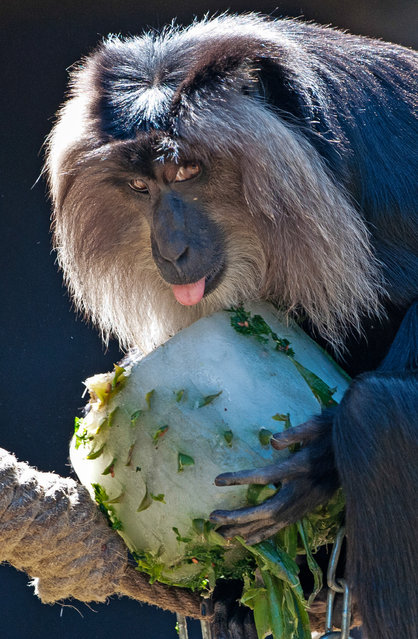
A Lion-Tailed macaque holds a big block of ice  with a mix of  frozen vegetables and fruit  at the zoo in Leipzig, central Germany, Friday, July 19, 2013. Weather forecasts predict sunny weather and warm temperatures for Germany in the next few days. (Photo by Jens Meyer/AP Photo)

A Lion-Tailed macaque holds a big block of ice with a mix of frozen vegetables and fruit at the zoo in Leipzig, central Germany, Friday, July 19, 2013. Weather forecasts predict sunny weather and warm temperatures for Germany in the next few days. (Photo by Jens Meyer/AP Photo)
Details
27 Jul 2013 09:44:00
Things Cut in Half

HalfPics is a Twitter feed pointing to things cut in half like a bowl of ramen, a Mini Cooper, and toothpaste. Their tagline: “Ever wonder what stuff looks like when it’s cut in half?” Yes. We previously posted about “Cut Food,” a photo series of foods cut neatly in half by food photographer Beth Galton and food stylist Charlotte Omnès.

See also:Things Cut in Half Part1
Details
09 Sep 2013 10:05:00
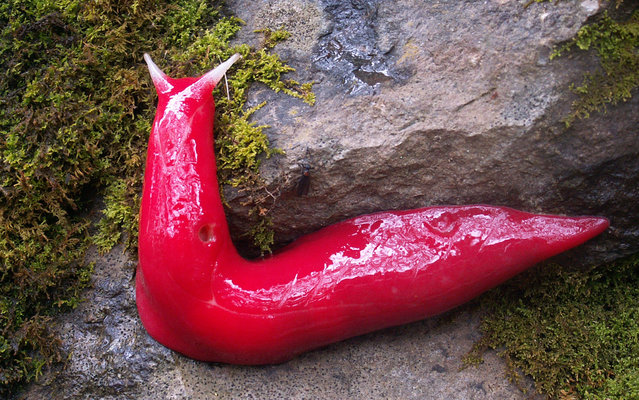
It would seem to be something you'd see only in a cartoon or at a Phish concert, but according to park rangers in New South Wales, Australia, dozens of giant, fluorescent pink slugs have been popping up on a mountaintop there. (Photo by Michael Murphy/AFP Photo/NSW Environment Office)

It would seem to be something you'd see only in a cartoon or at a Phish concert, but according to park rangers in New South Wales, Australia, dozens of giant, fluorescent pink slugs have been popping up on a mountaintop there. The eight-inch creatures have been spotted only on Mount Kaputar, a 5,000-foot peak in the Nandewar Range in northern New South Wales. Scientists believe the eye-catching organisms are survivors from an era when Australia was home to rainforests. A series of volcanoes, millions of years of erosion and other geological changes “have carved a dramatic landscape at Mount Kaputar”, the park service wrote on its Facebook page, and unique arid conditions spared the slugs from extinction. (Photo by Michael Murphy/AFP Photo/NSW Environment Office)
Details
01 Jun 2013 14:09:00
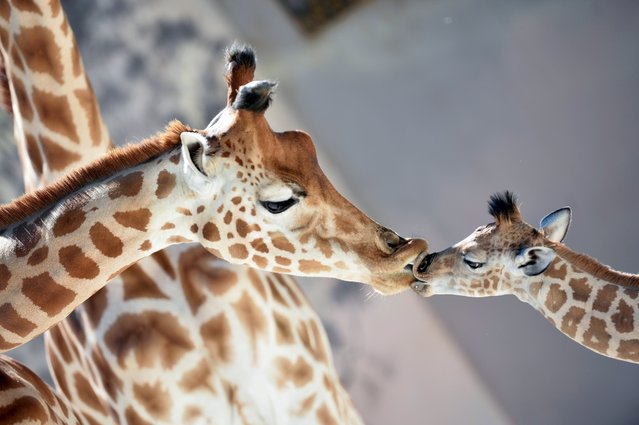
Baby giraffe of Niger (Giraffa Camelopardalis) “Kenai” (R), born on August 25, 2016, kisses his mother “Dioni” on August 31, 2016 at the zoo of La Fleche, northwestern France. (Photo by Jean-Francois Monier/AFP Photo)

Baby giraffe of Niger (Giraffa Camelopardalis) “Kenai” (R), born on August 25, 2016, kisses his mother “Dioni” on August 31, 2016 at the zoo of La Fleche, northwestern France. (Photo by Jean-Francois Monier/AFP Photo)
Details
04 Sep 2016 09:14:00
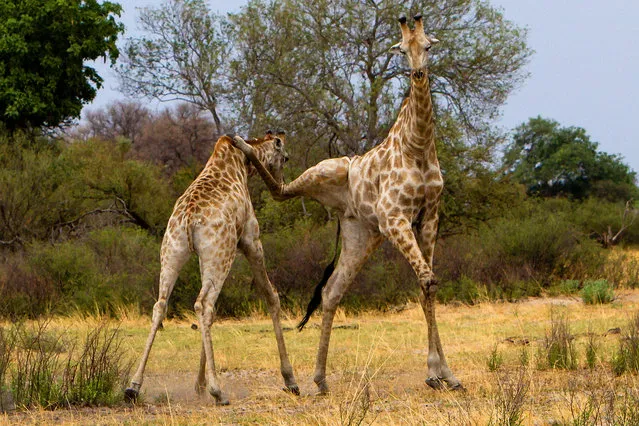
A giraffe lands a karate kick on a rival on the plains of Botswana. (Photo by Thomas Retterath/Caters News)

The Kung Fu King was spotted in Botswana, Africa, as the two giraffes fought for dominance. Thomas Retterath, 53, says hes often seen the mammals fight, but they usually do it by banging their heads against each others bodies.Here: A giraffe lands a karate kick on a rival on the plains of Botswana. (Photo by Thomas Retterath/Caters News)
Details
26 Feb 2017 00:00:00