Colombia midfielder Natalia Gaitan (3) goes up for a header against Mexico midfielder Nayeli Rangel (7) in Moncton, June 9, 2015. (Photo by Matt Kryger/USA TODAY Sports)
Natalia Arango works with her mine detector in a zone of landmines planted by rebels groups near Sonson in Antioquia province, November 19, 2015. Women's work takes on a nontraditional meaning for fifteen Colombian women who work to rid the Antioquia Mountains of deadly landmines as the country edges closer to a peace agreement with Marxist rebels to end over a decade of conflict which has claimed 220,000 lives. (Photo by Fredy Builes/Reuters)
Peasants in the re-taken Somme District work in the fields, circa 1916- 1917, in this Library of Congress handout photo. For women 100 years ago, opportunities to work beyond the home and take part in political life were very limited. As the 20th century progressed, hard-won progress included gradually improved voting rights, while the upheaval of war pushed doors ajar as women worked as part of the war effort. U.S. Library of Congress archive photos show women's workplaces ranging from a flour mill in England to a coal mine in Belgium or Lincoln Motor Co.'s welding department in Detroit. International Women's Day is celebrated on March 8. (Photo by Reuters/Bain Collection/Library of Congress)
A protester uses molotov cocktails against riot police during May Day protests on May 1, 2010 in Athens, Greece. (Photo by Milos Bicanski /Getty Images)
Riot police walk in the street as a couple kiss on June 15, 2011 in Vancouver, Canada. Vancouver broke out in riots after their hockey team the Vancouver Canucks lost in Game Seven of the Stanley Cup Finals. (Photo by Rich Lam/Getty Images)
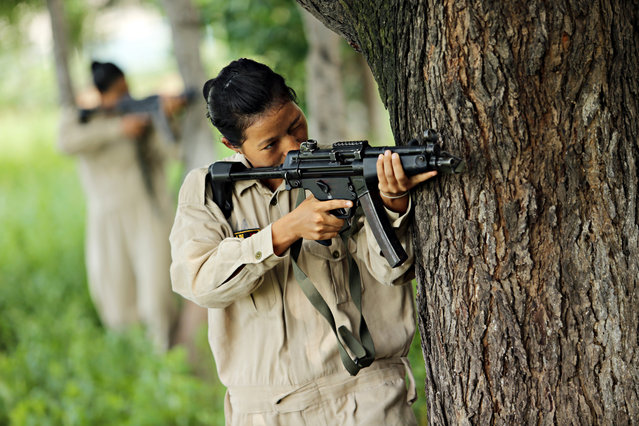
Police academy graduates march during their graduation ceremony in Islamabad, Pakistan May 18, 2015. Out of the 408 graduating officers, 76 female officers were inducted into the Pakistan police force, according to the police force. (Photo by Caren Firouz/Reuters)
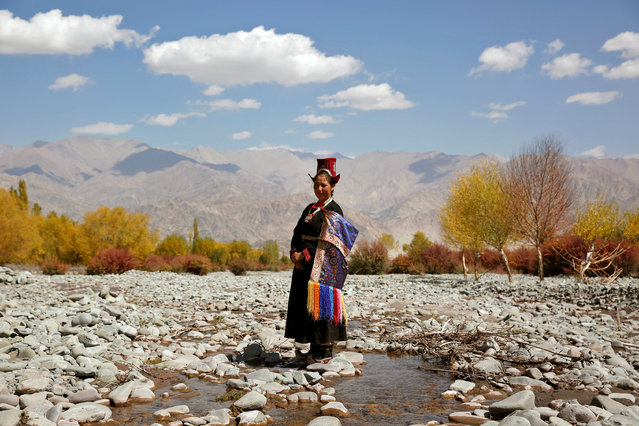
Tsewang Dolma, 33, a farmer and housewife poses for a photograph in Matho, a village nestled high in the Indian Himalayas, India September 29, 2016. When asked how living in the world's fastest growing major economy had affected life, Dolma replied: “Our culture is spoiled now. We don't wear our traditional dress”. (Photo by Cathal McNaughton/Reuters)
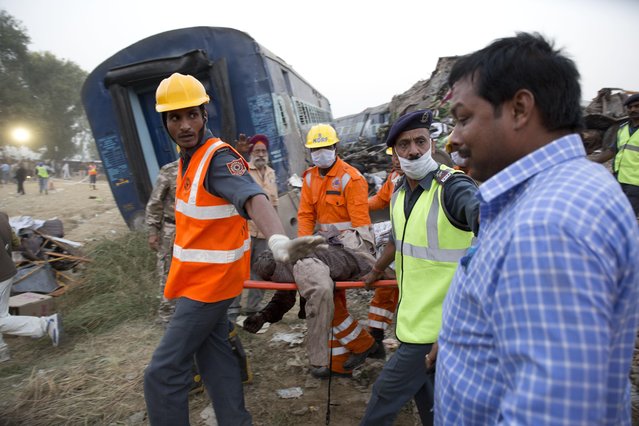
A relative, right, breaks down as rescuers carry the body of a victim after 14 coaches of an overnight passenger train rolled off the track near Pukhrayan village Kanpur Dehat district, Uttar Pradesh state, India, Sunday, November 20, 2016. Dozens were killed and dozens more were injured in the accident. (Photo by Rajesh Kumar Singh/AP Photo)