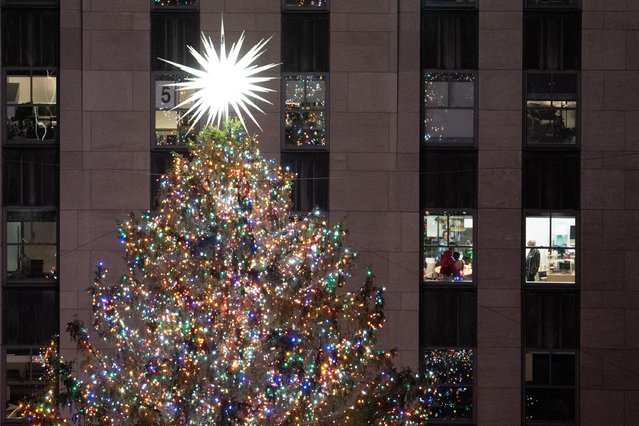
The Christmas tree is lit at Rockefeller Center in the Manhattan borough of New York City, New York, U.S., November 30, 2022. (Photo by Jeenah Moon/Reuters)
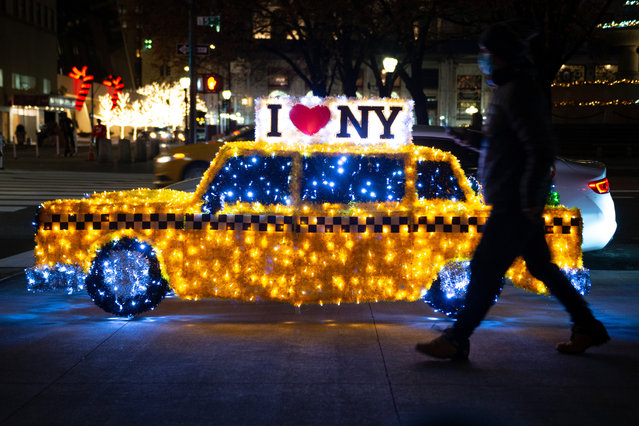
A man wearing a mask walks past the “Christmas Cab” sculpture displayed along Fifth Avenue on December 02, 2020 in New York City. The annual Holiday Sculptures display is organized by the Fifth Avenue Association and consist of 10 sculptures that runs from 50th Street to 59th Street. (Photo by Alexi Rosenfeld/Getty Images)
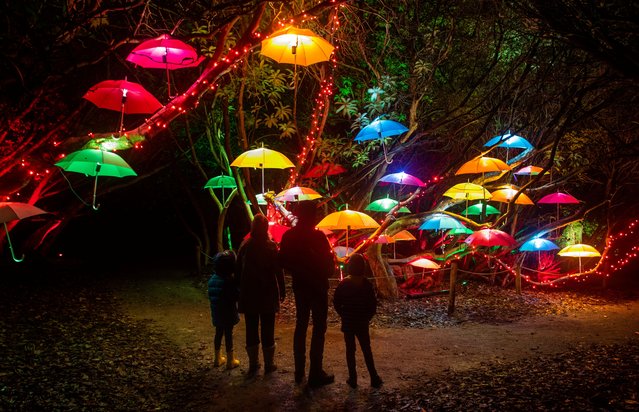
Illuminated installations light up the Heligan Night Garden on November 17, 2022, set amidst the atmospheric Lost Gardens in Cornwall. The Lost Gardens of Heligan have worked with The Lantern Company to illuminate the Gardens which is now open to the public. (Photo by South West News Service)
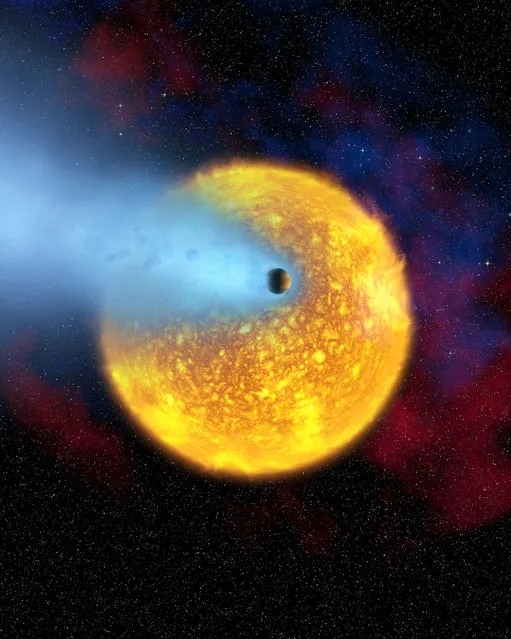
This artist's rendering illustrates the evaporation of HD 189733b's atmosphere in response to a powerful eruption from its host star. NASA's Hubble Space Telescope detected the escaping gases and NASA's Swift satellite caught the stellar flare. (Credit: NASA's Goddard Space Flight Center)
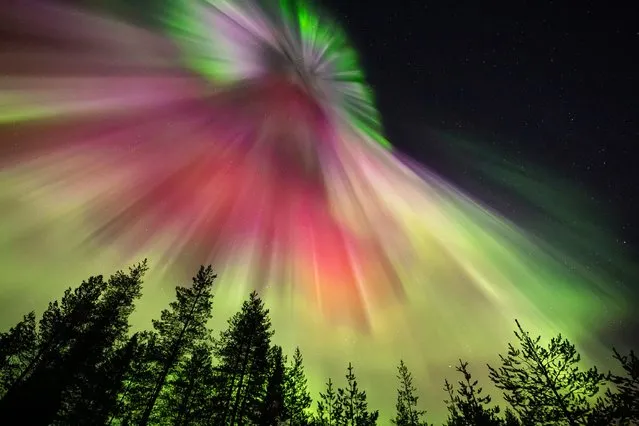
Picture made available by “All About Lapland” on March 24, 2023 and taken on on late March 23, 2023 shows colourful northern lights (Aurora borealis) appearing around the Arctic Circle near Rovaniemi, Finland. The northern lights appeared right after dawn, and they continued all the way through the night. (Photo by Alexander Kuznetsov/All About Lapland/AFP Photo)
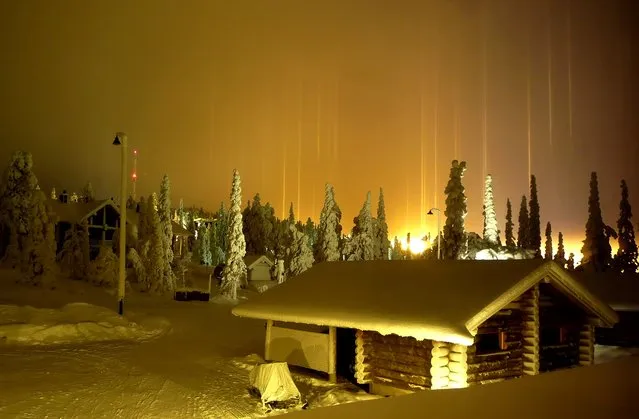
A light pillar is a visual phenomenon created by the reflection of light from ice crystals with near horizontal parallel planar surfaces. The light can come from the Sun (usually at or low to the horizon) in which case the phenomenon is called a sun pillar or solar pillar. It can also come from the Moon or from terrestrial sources such as streetlights.