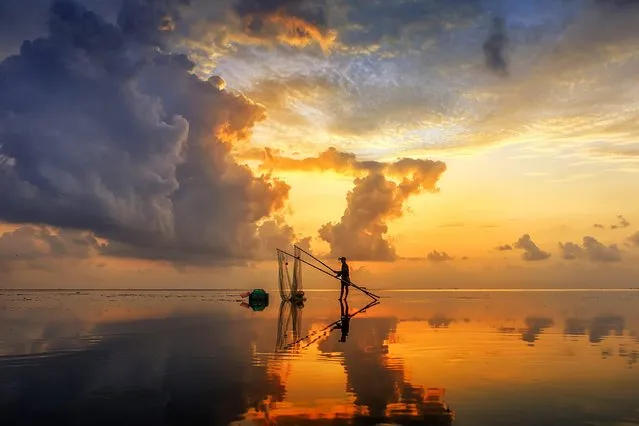
In the mangrove swamps of Quang Lang in Vietnam fishermen use stilts to take them into the deeper water on December 18, 2021. (Photo by Bang Nguyen Trong/Solent News)
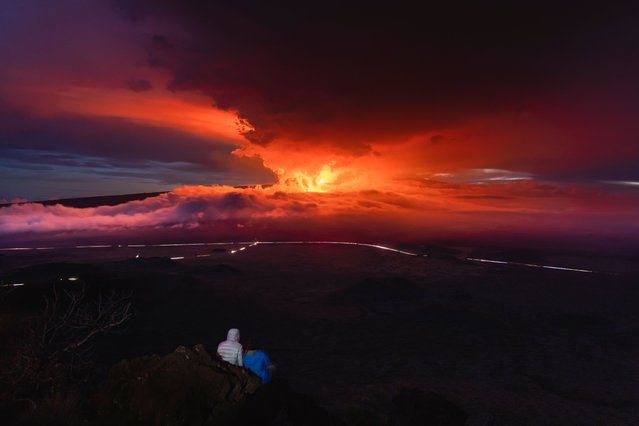
The Big Island's Mauna Loa Volcano erupts on November 28, 2022 on the Island of Hawaii. For the first time in almost 40 years, the biggest active volcano in the world erupted prompting an emergency response on the Big Island. (Photo by Andrew Richard Hara/Getty Images)
A woman helps another to wade through a waterlogged road during heavy rain following tropical storm Dana, in Kolkata, India, Friday, October 25, 2024. (Photo by Bikas Das/AP Photo)
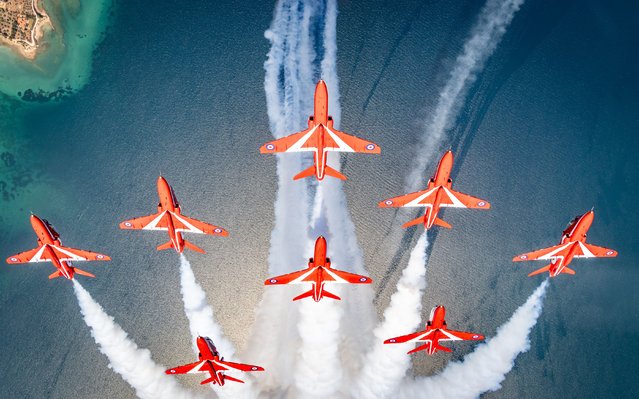
Hawk T1 aircraft of the Royal Air Force Aerobatic Team, the Red Arrows, perform a vertical loop during a practice display in Fitties, Greece on November 10, 2025. The team conducted the display practice as part of Exercise SpringHawk 2025. (Photo by AS1 Iwan Lewis/RAF)
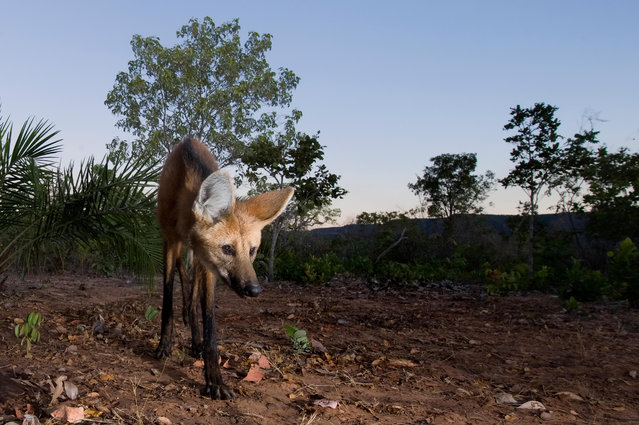
Global wildlife populations will decline by 67% by 2020 unless urgent action is taken to reduce human impact on species and ecosystems, warns the biennial Living Planet Index report from WWF (World Wide Fund for Nature) and ZSL (Zoological Society of London). From elephants to eels, here are some of the wildlife populations most affected by human activity. Here: The maned wolf is among the large mammals in the Brazilian Cerrado that are threatened by the increasing conversion of grasslands into farmland for grazing and growing crops. (Photo by Ben Cranke/Nature Picture Library/Alamy Stock Photo)
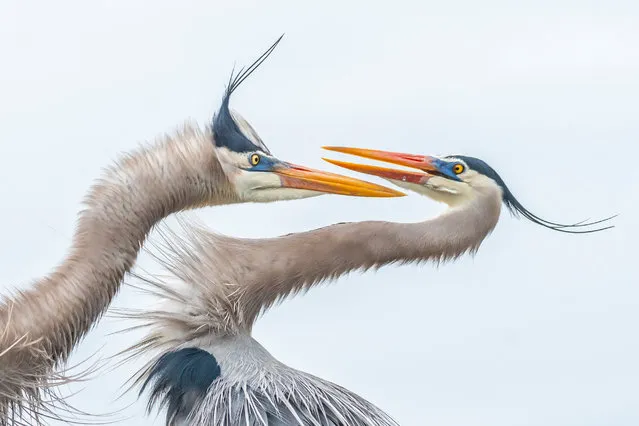
Wakodahatchee wetlands, Delray Beach, Florida, US. Equipped with sinewy necks and spear-like bills, great blue herons can lunge with fearsome speed to strike their aquatic prey. Adults will also employ rapid stabbing motions as one aspect of their complex courtship displays; they’re seemingly dangerous moves, but fitting to the intensity of mating season. (Photo by Melissa Rowell/Audubon Photography Awards)
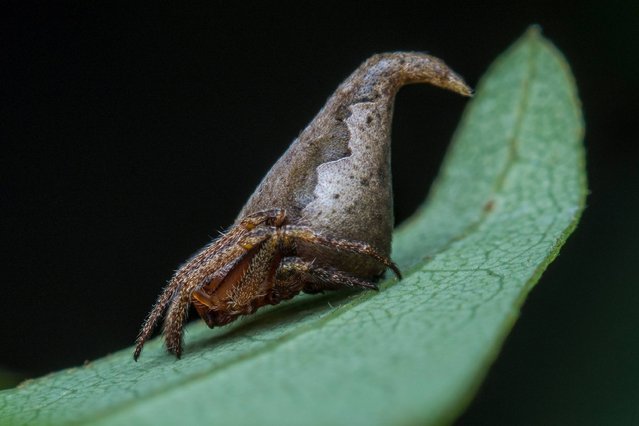
In this handout photograph received from Sumukha J.N on December 15, 2016, the newly-discovered spider Eriovixia Gryffindori sits on a leaf in the Kans in India's Western Ghats. (Photo by Sumukha J.N./AFP Photo)