Loading...
Done
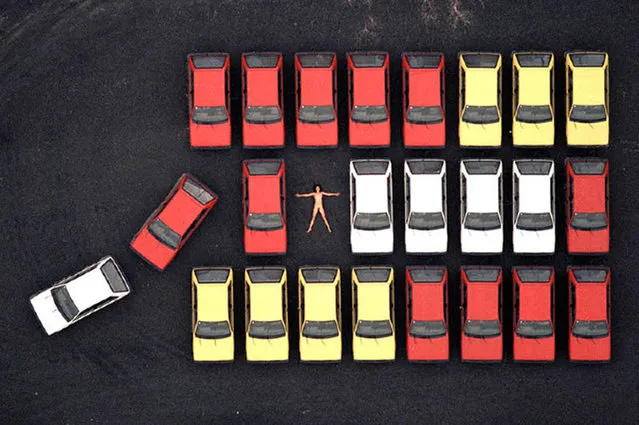
Aerial Nudes by John Crawford

John Crawford was always fascinated of a birds eye view, looking straight down in a vertical perspective. In his series ‘Aerial Nudes’ he is photographing single naked bodies from a high elevation. Perfectly timed photographs show a distant nude body laying down in a series of interesting locations. On each selected shoot day Crawford would deliver his model Carina to the location in the helicopter, positioning her in the carefully arranged set-up, then flying to 600 feet and capturing the image, which would take no more than ten minutes.
Details
09 Aug 2012 11:35:00
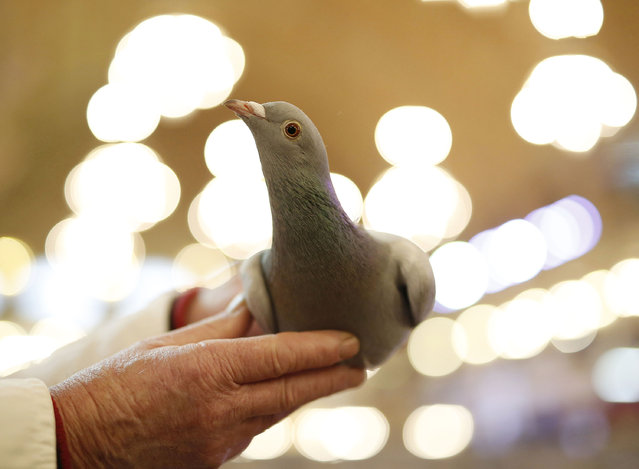
A man holds a pigeon during the British Homing World show of the year at Blackpool's Winter Gardens in Blackpool, north west England on January 17, 2016. (Photo by Andrew Yates/Reuters)

A man holds a pigeon during the British Homing World show of the year at Blackpool's Winter Gardens in Blackpool, north west England on January 17, 2016. Homing pigeon fanciers from across Europe gathered to find the Supreme Show Champion with judges casting their eyes over hundreds of birds on show. The Royal Pigeon Racing Association organises the event and has Queen Elizabeth II, who keeps pigeons at Sandringham, as its patron. (Photo by Andrew Yates/Reuters)
Details
19 Jan 2016 08:02:00
Tsukimi Ayano steps out of her house in the village of Nagoro on Shikoku Island in southern Japan February 24, 2015. (Photo by Thomas Peter/Reuters)

Tsukimi Ayano steps out of her house in the village of Nagoro on Shikoku Island in southern Japan February 24, 2015. Tsukimi Ayano made her first scarecrow 13 years ago to frighten off birds pecking at seeds in her garden. The life-sized straw doll resembled her father, so she made more. Today, the tiny village of Nagoro in southern Japan is teeming with Ayano's hand-sewn creations, frozen in time for a tableau that captures the motions of everyday life. (Photo by Thomas Peter/Reuters)
Details
17 Mar 2015 12:38:00
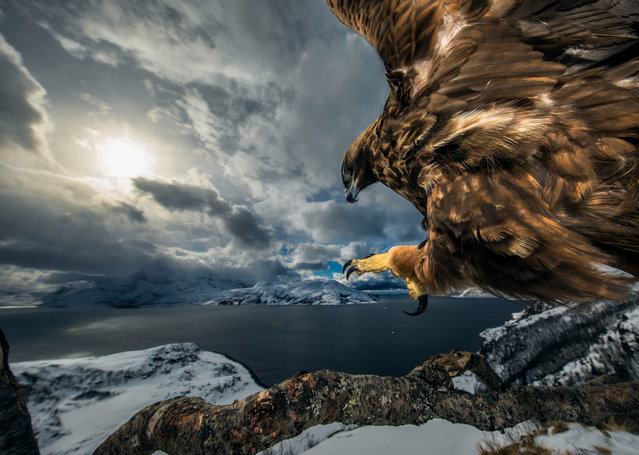
Birds behaviour winner: Land of the Eagle by Audun Rikardsen, Norway. High on a ledge, on the coast near his home in northern Norway, Rikardsen carefully positioned an old tree branch that he hoped would make a perfect golden eagle lookout. To this, he bolted a tripod head with a camera, flashes and motion sensor attached, and built himself a hide a short distance away. From time to time, he left road‑kill carrion nearby. Very gradually – over the next three years – a golden eagle got used to the camera and started to use the branch regularly to survey the coast below. (Photo by Audun Rikardsen/2019 Wildlife Photographer of the Year)

Birds behaviour winner: Land of the Eagle by Audun Rikardsen, Norway. High on a ledge, on the coast near his home in northern Norway, Rikardsen carefully positioned an old tree branch that he hoped would make a perfect golden eagle lookout. To this, he bolted a tripod head with a camera, flashes and motion sensor attached, and built himself a hide a short distance away. From time to time, he left road‑kill carrion nearby. Very gradually – over the next three years – a golden eagle got used to the camera and started to use the branch regularly to survey the coast below. (Photo by Audun Rikardsen/2019 Wildlife Photographer of the Year)
Details
17 Oct 2019 00:03:00
Galapagos – Rocking the Cradle: Four major ocean currents converge along the Galapagos archipelago, creating the conditions for an extraordinary diversity of animal life, April 25, 2016. The islands are home to at least 7,000 flora and fauna species, of which 97 percent of the reptiles, 80 percent of the land birds, 50 percent of the insects and 30 percent of the plants are endemic. The local ecosystem is highly sensitive to the changes in temperature, rainfall and ocean currents that characterize the climatic events known as El Niño and La Niña. These changes cause marked fluctuations in weather and food availability. Many scientists expect the frequency of El Niño and La Niña to increase as a result of climate change, making the Galapagos a possible early-warning location for its effects. (Photo by Thomas P. Peschak for National Geographic/World Press Photo)

Galapagos – Rocking the Cradle: Four major ocean currents converge along the Galapagos archipelago, creating the conditions for an extraordinary diversity of animal life, April 25, 2016. The islands are home to at least 7,000 flora and fauna species, of which 97 percent of the reptiles, 80 percent of the land birds, 50 percent of the insects and 30 percent of the plants are endemic. (Photo by Thomas P. Peschak for National Geographic/World Press Photo)
Details
16 Apr 2018 00:01:00


A Galapagos Tortoise shell is used as a foot rest at Heathrow Airport's Animal Reception Centre on January 25, 2011 in London, England. Many animals pass through the centre's doors ranging from exotic animals such as snow leopards and elephants, snakes and crocodiles, to the more common such as cats and dogs. In 2010 alone the centre processed approximately 10,500 cats and dogs, 1,300 birds, 105,000 day old chicks, 246,000 reptiles, 230 horses and 29 million fish. Most animals are part of zoo transfer schemes, the pet trade, or are pets in transit. (Photo by Dan Kitwood/Getty Images)
Details
21 Mar 2011 12:30:00


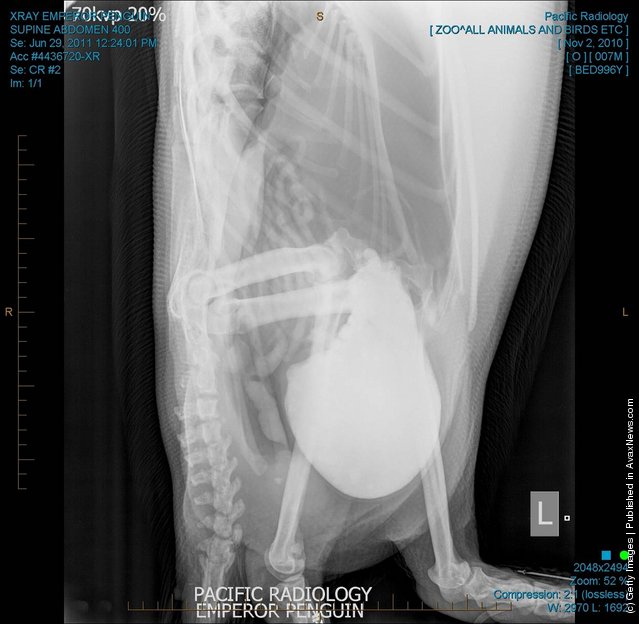
“Happy Feet” the emperor penguin that washed up on the Kapiti Coast last week, undergoes a medical examination at Wellington Zoo on June 29, 2011 in Wellington, New Zealand. The young penguin landed on NZ shores last week, after traveling over 3,000 kilometres from the antarctic. The ill penguin was operated on at Wellington Zoo several times this week to remove sand and sticks from it's stomach with hopes it will recover fully. A team of experts is likely to decide today, whether the bird will remain in captivity in New Zealand, or be transported back the the antarctic. (Photo by Hagen Hopkins/Getty Images)
Details
29 Jun 2011 11:26:00
Baby Flamingoes

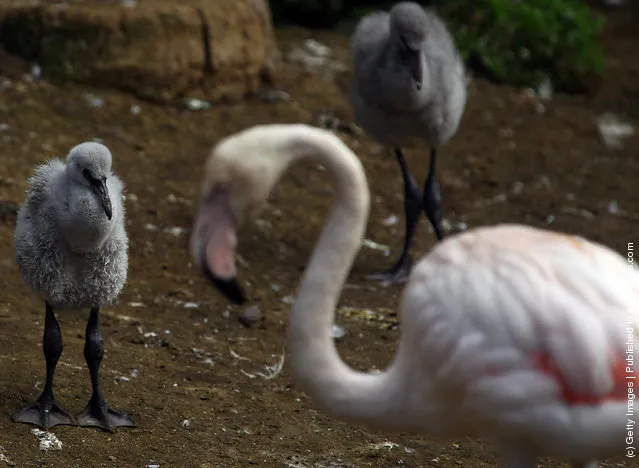
One of the nine baby flamingos born at Bristol Zoo stands with the adults as they feed together on August 19, 2011 in Bristol, England. Nine flamingo chicks have hatched at Bristol Zoo Gardens in the last three months – the biggest number the Zoo has ever had. The chicks, which are Greater Flamingoes from Africa and southern Europe and range in age from four weeks to three months old, take the Zoo's total flock to 38 birds. (Photo by Matt Cardy/Getty Images)
Details
21 Aug 2011 11:09:00