A woman holds a child as she stands near rubble and damages following an earthquake in Gaziantep, Turkey on February 7, 2023. (Photo by Suhaib Salem/Reuters)
A mountain hare shakes off rain from its fur, in Findhorn Valley, Moray, Scotland in the second decade of August 2024. In summer, the hare’s coat is a grey-brown colour with a tinge of blue, making them hard to spot against the heather moorland. In winter, it changes to almost completely white for camouflage in the snow. (Photo by Will Hall/Solent News)
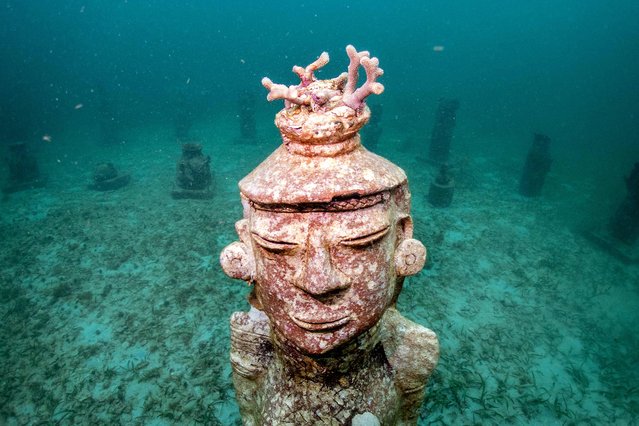
Coral grows in a sculpture at the MUSZIF underwater museum in Isla Fuerte, Bolivar department, Colombia, on May 22, 2024. In the Colombian Caribbean an underwater museum protects coral reefs threatened by tourism and climate change. (Photo by Luis Acosta/AFP Photo)
An Indian woman dressed as Hindu Goddess Kali participates in a “Shivratri” procession in Allahabad, India, Thursday, Feb. 27, 2014. “Shivaratri”, or the night of Shiva, is dedicated to the worship of Lord Shiva, the Hindu god of death and destruction. (Photo by Rajesh Kumar SinghAP Photo)
The official name for this tiny speck of land – the size of 12 football pitches – is Hashima, but few call it that. In English, its most commonly used name means “Battleship Island” and, viewed from a certain angle offshore, its silhouette is uncannily dreadnought in nature. It was a mining facility until 1974, when it was abandoned to the elements, before partially reopening as a tourist attraction in 2009. Photo: A decades-old television. (Photo by Mark C. O'Flaherty)
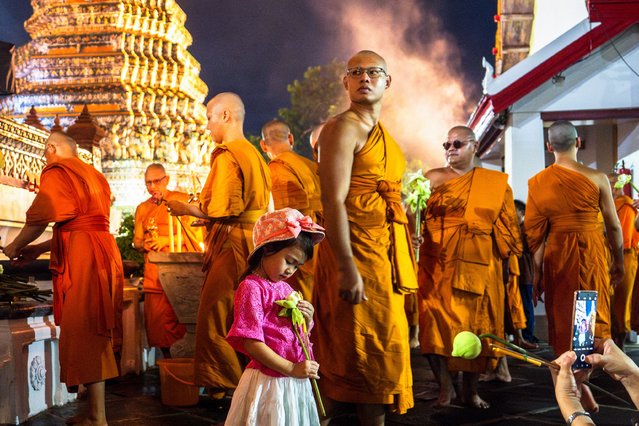
A young worshipper holds a lotus flower as Buddhist monks gather at Wat Arun Buddhist temple during Asaha Bucha day in Bangkok on July 20, 2024. (Photo by Chanakarn Laosarakham/AFP Photo)
In this Friday, February 1, 2019, photo, Filipino-Chinese display piggy banks at the start of celebrations leading to next week's Lunar New Year in Chinatown, Manila, Philippines. This year is the Year of the Earth Pig on the Lunar calendar and is supposed to represent abundance, diligence and generosity. (Photo by Bullit Marquez/AP Photo)
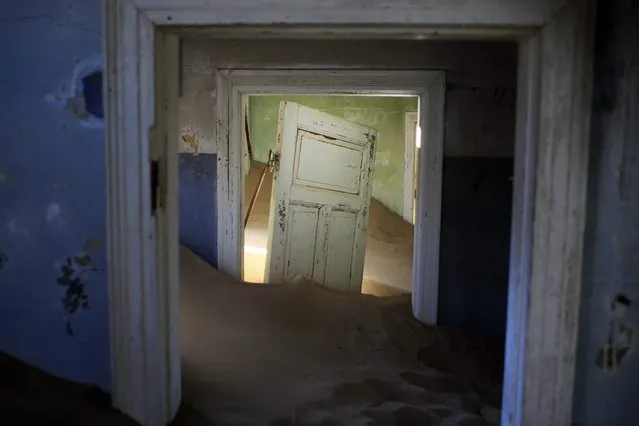
In this July 23, 2013 photo, sand fills an abandoned house in Kolmanskop, Namibia. Kolmanskop, was a diamond mining town south of Namibia, build in 1908 and deserted in 1956. SInce then, the desert slowly reclaims its territory, with sand invading the buildings where 350 German colonists and more than 800 local workers lived during its hay-days of the 1920s. (Photo by Jerome Delay/AP Photo)