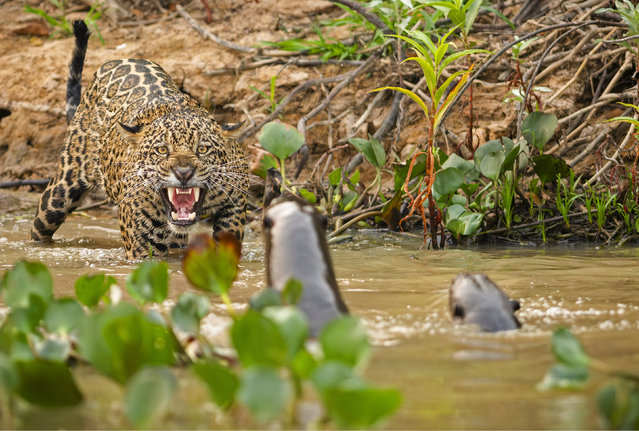
A jaguar eyes up a group of otters from a riverbank in Porto Jofre, North Pantanal, Brazil early November 2024. (Photo by Octavio Campos Salles/Solent News)
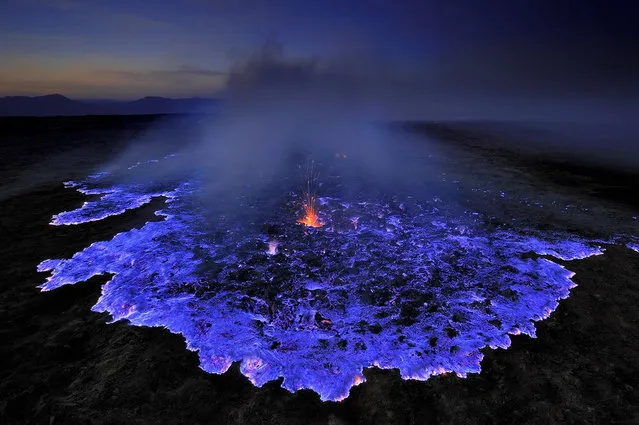
Located in East Java, Indonesia, Kawah Ijen is a volcano is home to the largest acidic crater lake in the world. What turns the waters of the lake in the 1 km caldera its beautiful turquoise color are the highly sulfuric gases emitted from the volcano underneath.
Members of the Palestinian Hamas security forces show their skills as they take part in a graduation ceremony in Gaza City on January 22, 2017. (Photo by Mahmud Hams/AFP Photo)
A skier in a festive costume attempts to cross a pool of water at the foot of a ski slope while competing in the annual Gornoluzhnik amateur event to mark the end of the ski season at the Bobrovy Log ski resort in the suburbs of the Siberian city of Krasnoyarsk, Russia, April 14, 2019. (Photo by Ilya Naymushin/Reuters)
Julien MacDonald and Izabel Goulart backstage at Julien Macdonald presents Julien x Gabriela show during Spring Summer 2020 London Fashion Week in London, United Kingdom on September 16, 2019. (Photo by Backgrid USA)
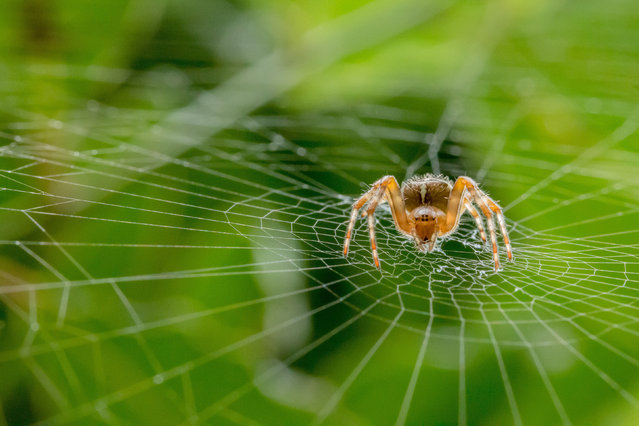
Hidden Britain category winner. Garden Spider by Alan Smith from Reading, Berkshire. (Photo by Alan Smith/British Wildlife Photography Awards/PA Wire Press Association)
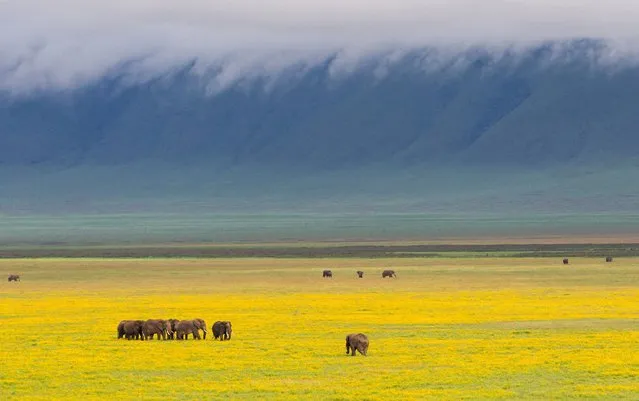
Ngorongoro Crater (Tanzania). At 610m deep and 260 sq km, this is the largest unflooded caldera in the world. A blue-green vision from above it's a haven for engangered wildlife and Maasai livestock. The crater was formed three million years ago when a giant volcano, which could have been as high as Kilimanjaro, exploded and collapsed. The caldera formed the concentric fractures in the crust cracked down to a magma reservoir deep underground. (Photo by John Bryant/Getty Images)