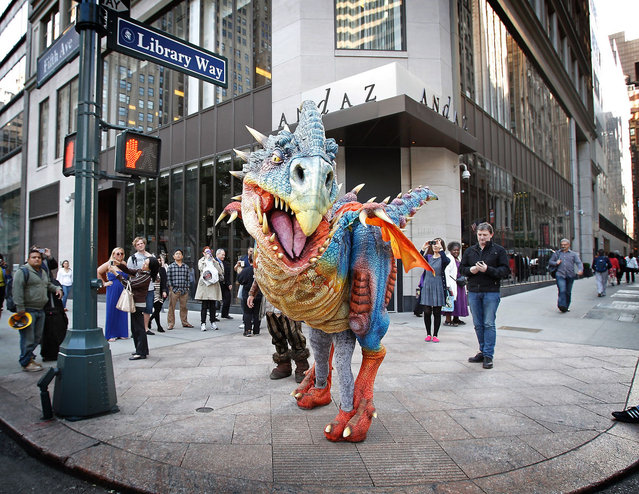
The Baby Nager dragon, from DreamWorks’ new “How to Train Your Dragon” Live Spectacular touring musical, shows off it’s colors outside of the New York Public Library. (Photo by Mark Von Holden)
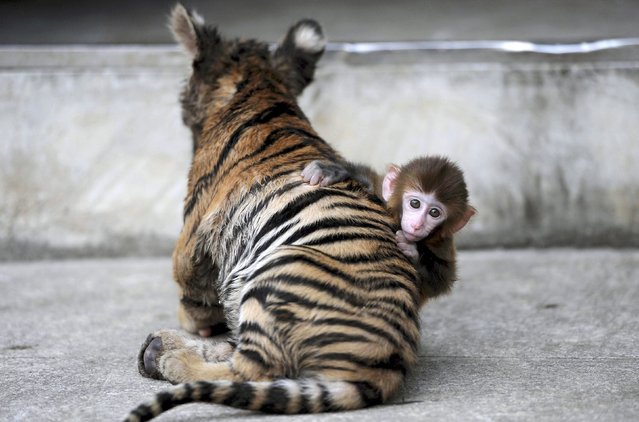
A baby rhesus macaque (Macaca mulatta) looks up as it plays with a tiger cub at a zoo in Hefei, Anhui province, August 2, 2012. (Photo by Jianan Yu/Reuters)
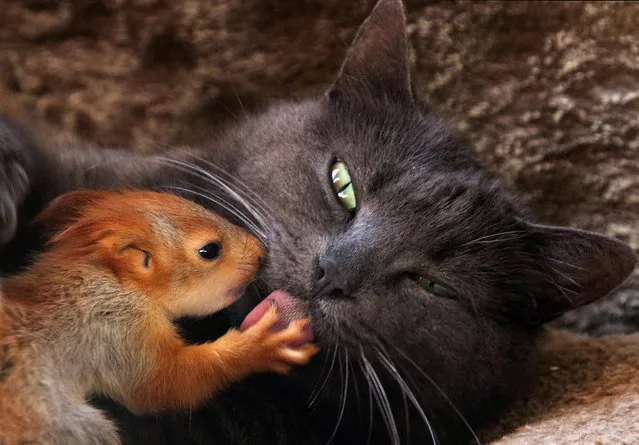
Pusha the cat, which adopted four bereaved baby squirrels and currently feeds and lives with them, lies at a local park of miniatures in Bakhchisaray, Crimea on April 25, 2019. (Photo by Alexey Pavlishak/Reuters)
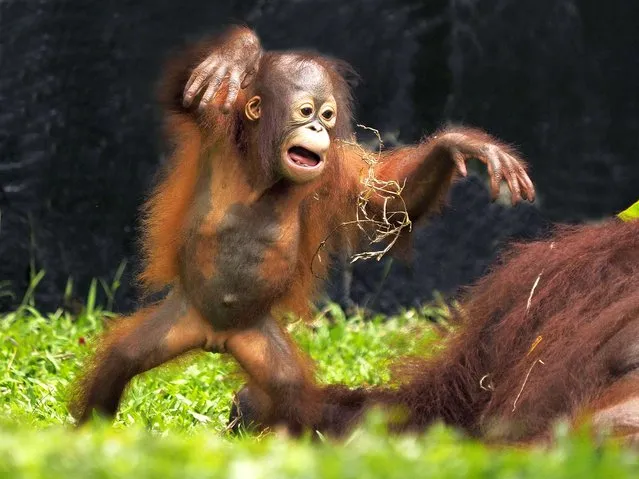
A baby orangutan called Barney shows off his dancing at Ragunan Zoo in Jakarta, Indonesia in the first decade of November 2023. (Photo by Syahrul Ramadan/Media Drum Images)
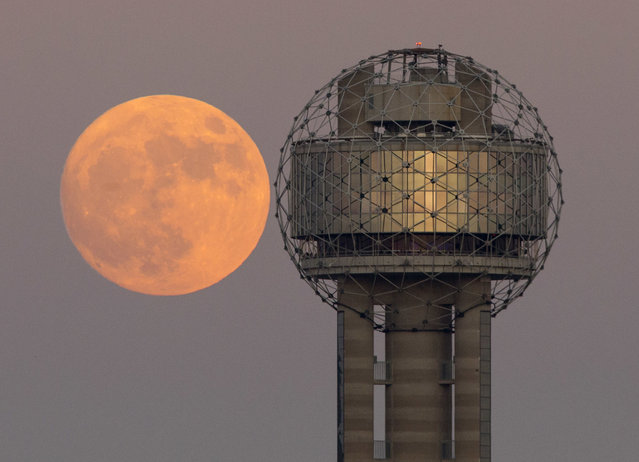
The moon rises behind Reunion Tower in downtown Dallas, Sunday evening, November 13, 2016. On Monday the supermoon will be the closest full moon to earth since 1948, and it won't be as close again until 2034. (Photo by Tom Fox/The Dallas Morning News via AP Photo)
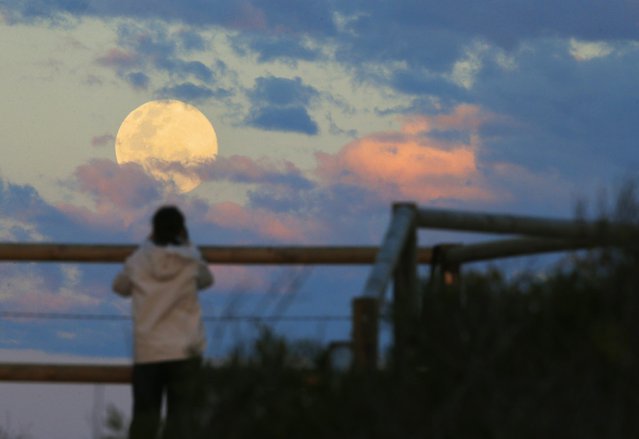
Sydney resident Virginia Maddock watches the supermoon rise off the Sydney beachside suburb of Wanda, August 10, 2014. Sunday’s moon was at its closest approach to Earth, appearing bigger and brighter than any other moon this year. The moon was 221,765 miles away and looked 16 percent larger and 30 percent brighter than usual. (Photo by Jason Reed/Reuters)
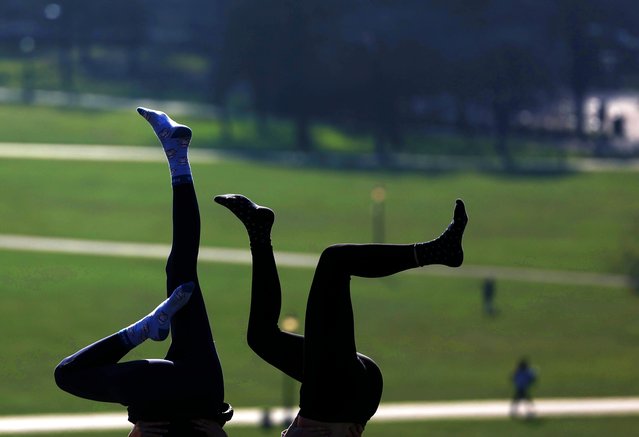
People exercise in Primrose Hill in London, Britain, 20 March 2025. The first day of spring in the UK astronomically occurs on the vernal equinox where earth's axis is not tilted towards or away from the sun, resulting in an equal amount of day and night on all latitudes. (Photo by Neil Hall/EPA/EFE)
The aurora borealis, or the northern lights occur over Derwentwater, near Keswick, England, Thursday October 8, 2015. The northern lights are the result of collisions between gaseous particles in the Earth's atmosphere with charged particles released from the sun. (Photo by Owen Humphreys/PA Wire via AP Photo)