Loading...
Done
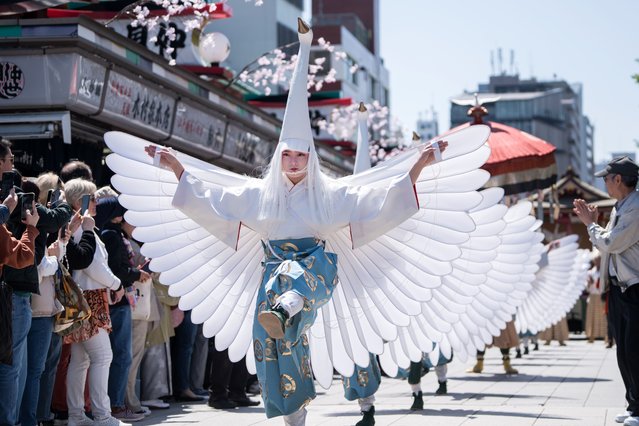
Dancers perform during the Shirasagi-no Mai, or White Heron Dance, at the Sensoji Temple on April 09, 2023 in Tokyo, Japan. The parade, which originated in the 8th-12th century in Kyoto, was revived in 1968 to celebrate Tokyo's 100th Anniversary and to wish for peace. The dance is now held twice a year, in April and November, at the Sensoji Temple in Asakusa, one of Tokyo's most popular tourist destinations for foreign visitors. (Photo by Tomohiro Ohsumi/Getty Images)

Dancers perform during the Shirasagi-no Mai, or White Heron Dance, at the Sensoji Temple on April 09, 2023 in Tokyo, Japan. The parade, which originated in the 8th-12th century in Kyoto, was revived in 1968 to celebrate Tokyo's 100th Anniversary and to wish for peace. The dance is now held twice a year, in April and November, at the Sensoji Temple in Asakusa, one of Tokyo's most popular tourist destinations for foreign visitors. (Photo by Tomohiro Ohsumi/Getty Images)
Details
25 Apr 2023 03:32:00
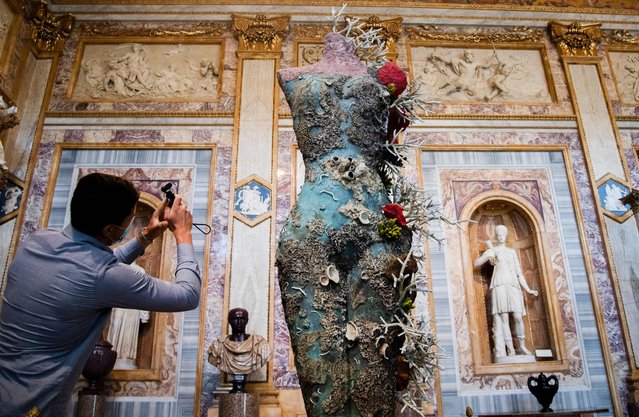
A visitor takes photos of “Grecian Nude” by British artist Damien Hirst, as part of the exhibition “Archaeology Now” at Galleria Borghese in Rome on June 07, 2021. The exhibition, running through June 08 – November 07, 2021, features over 80 works from Hirst’s Treasures from the Wreck of the Unbelievable series, displayed throughout the museum alongside ancient masterpieces. (Photo by Tiziana Fabi/AFP Photo)

A visitor takes photos of “Grecian Nude” by British artist Damien Hirst, as part of the exhibition “Archaeology Now” at Galleria Borghese in Rome on June 07, 2021. The exhibition, running through June 08 – November 07, 2021, features over 80 works from Hirst’s Treasures from the Wreck of the Unbelievable series, displayed throughout the museum alongside ancient masterpieces. (Photo by Tiziana Fabi/AFP Photo)
Details
13 Jun 2021 07:32:00
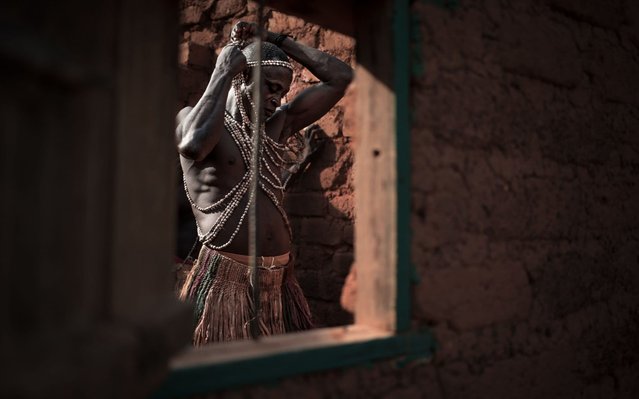
A Broto dancer prepares himself in a disused house of Bambari, in the centre of Central African Republic, before performing on March 14, 2019. The Broto, belonging to the Banda ethnic group, are known for their traditional dances accompanied by heavy horns made of tree roots. Today this tradition falls into disuse and its history is now forgotten by the new generations. (Photo by Florent Vergnes/AFP Photo)

A Broto dancer prepares himself in a disused house of Bambari, in the centre of Central African Republic, before performing on March 14, 2019. The Broto, belonging to the Banda ethnic group, are known for their traditional dances accompanied by heavy horns made of tree roots. Today this tradition falls into disuse and its history is now forgotten by the new generations. (Photo by Florent Vergnes/AFP Photo)
Details
05 Apr 2019 00:01:00
An NHS worker walks past a banner supporting NHS staff outside Salford Royal Hospital on March 22, 2020 in Manchester, UK. Coronavirus (COVID-19) has spread to at least 182 countries, claiming over 13,069 lives and infecting more than 308,592 people. There have now been 5,018 diagnosed cases in the UK and 233 deaths. (Photo by Anthony Devlin/Getty Images)

An NHS worker walks past a banner supporting NHS staff outside Salford Royal Hospital on March 22, 2020 in Manchester, UK. Coronavirus (COVID-19) has spread to at least 182 countries, claiming over 13,069 lives and infecting more than 308,592 people. There have now been 5,018 diagnosed cases in the UK and 233 deaths. (Photo by Anthony Devlin/Getty Images)
Details
24 Mar 2020 00:05:00
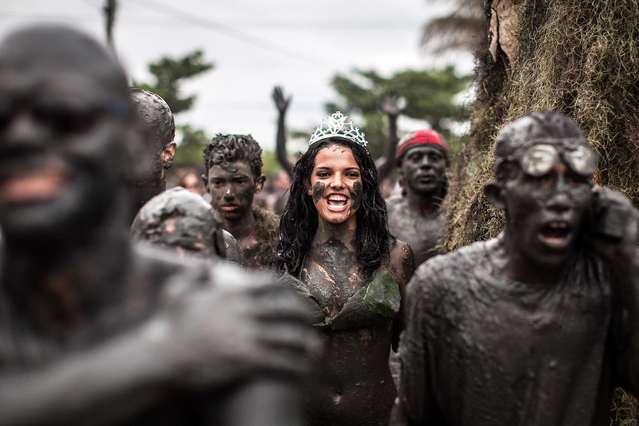
Revelers participate in the traditional Bloco da Lama (Mud block) carnival in Parati, Rio de Janeiro State, Brazil, on February 9, 2013. The event, which was begun by two men in a playful manner in 1986, has now become a traditional carnival in which participants disguised as primitives with rags, lianas or skulls and bones, dive in the mud. (Photo by Victor Moriyama/AFP Photo)

Revelers participate in the traditional Bloco da Lama (Mud block) carnival in Parati, Rio de Janeiro State, Brazil, on February 9, 2013. The event, which was begun by two men in a playful manner in 1986, has now become a traditional carnival in which participants disguised as primitives with rags, lianas or skulls and bones, dive in the mud. (Photo by Victor Moriyama/AFP Photo)
Details
12 Feb 2013 14:10:00
Revelers dance at a Jacarezinho samba school practice session ahead of Carnival celebrations on February 16, 2014 in Rio de Janeiro, Brazil. The Jacarezinho “favela” was previously controlled by drug traffickers and is now occupied by the city's Police Pacification Unit (UPP). Carnival officially begins February 28, but pre-Carnival celebrations are already underway. (Photo by Mario Tama/Getty Images)

Revelers dance at a Jacarezinho samba school practice session ahead of Carnival celebrations on February 16, 2014 in Rio de Janeiro, Brazil. The Jacarezinho “favela” was previously controlled by drug traffickers and is now occupied by the city's Police Pacification Unit (UPP). Carnival officially begins February 28, but pre-Carnival celebrations are already underway. (Photo by Mario Tama/Getty Images)
Details
19 Feb 2014 11:01:00
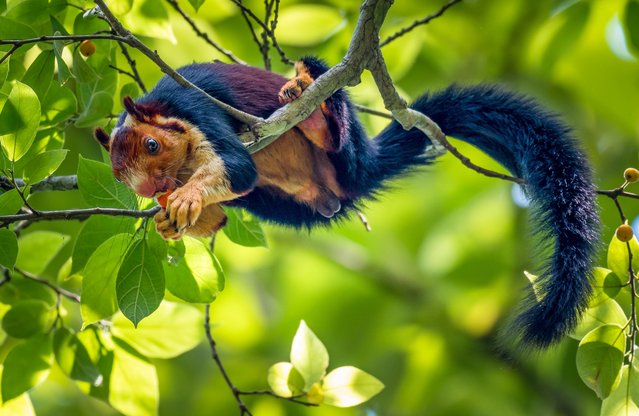
Its main predators are the birds of prey and the leopard. The Giant Squirrel is mostly active in the early hours of the morning and in the evening, resting in the midday. They are typically solitary animals that only come together for breeding. (Photo by Kaushik Vijayan/South West News Service)

The Malabar Giant squirrel – double the size of their grey relatives and measuring up to 36 inches (91.5 cm) from head to tail – lives deep in the forests of India. The athletic animals can leap an incredible 20 feet (6 m) between trees. Photographer Kaushik Vijayan, 39, snapped the animals in their native habit to produce these stunning images. Kaushik, from Kerala State, India, said: “Up until that point I had never heard about a squirrel like that or seen one. The sight was an absolute feast for my eyes. The squirrels fascinated me and I got excited to capture this beauty on my camera”. (Photo by Kaushik Vijayan/South West News Service)
Details
04 Apr 2019 00:03:00
Brtukan. “Being a girl of colour in a society where the majority of the people are white, I have had to get used to all the different ways people approach me. From being asked what kind of rap music you listen to and how you wash your hair, to getting told, “you don’t sound black”, “you’re pretty for a black girl” or “you’re not that black so it’s OK”, as if being black is such a bad thing”. (Photo by Lisa Minogue/The Guardian)

As part of FLAIR Melbourne – a Flinders Lane art festival – Melbourne’s Lisa Minogue presents stylised photographic portraits of Australian women of colour, their faces painted vibrantly to accentuate their individuality and encourage the viewer to study each face more closely. Minogue asked each woman the same question: “What do the words “coloured girl” mean to you?”. (Photo by Lisa Minogue/The Guardian)
Details
17 Aug 2016 11:16:00