Loading...
Done
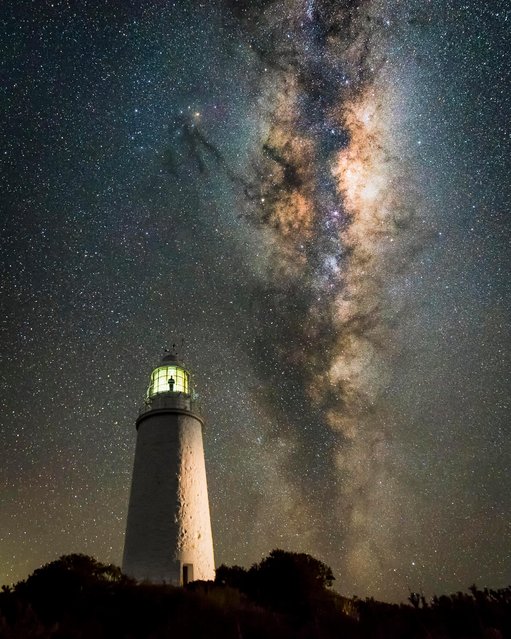
The Milky Way rises above an isolated lighthouse in Tasmania. Shot by James Stone of Australia. (Photo by James Stone/Astronomy Photographer of the Year 2018)

The competition is run by Royal Observatory Greenwich sponsored by Insight Investment and in association with BBC Sky at Night Magazine. This year astrophotographers from 91 countries sent in more than 4,200 spectacular entries. Here: The Milky Way rises above an isolated lighthouse in Tasmania. Shot by James Stone of Australia. (Photo by James Stone/Astronomy Photographer of the Year 2018)
Details
20 Jul 2018 00:05:00
Bangladeshi day labourers carry baskets of coal from a cargo ship in Gabtoli, Dhaka on January 2, 2022. They are earning around $1 every 30 baskets of coal unloaded from the ship. (Photo by Piyas Biswas/SOPA Images/Rex Features/Shutterstock)

Bangladeshi day labourers carry baskets of coal from a cargo ship in Gabtoli, Dhaka on January 2, 2022. They are earning around $1 every 30 baskets of coal unloaded from the ship. (Photo by Piyas Biswas/SOPA Images/Rex Features/Shutterstock)
Details
27 Jan 2022 07:07:00
A woman walks depicting a scene from the Iranian national epic poem “Shahnameh” in Tehran on August 5, 2025. (Photo by Atta Kenare/AFP Photo)

A woman walks depicting a scene from the Iranian national epic poem “Shahnameh” in Tehran on August 5, 2025. (Photo by Atta Kenare/AFP Photo)
Details
16 Aug 2025 03:14:00
On August 31, 2012, a long filament of solar material that had been hovering in the sun's atmosphere, the corona, erupted out into space at 4:36 p.m. EDT. The coronal mass ejection, or CME, traveled at over 900 miles per second. The CME did not travel directly toward Earth, but did connect with Earth's magnetic environment, or magnetosphere, causing aurora to appear on the night of Monday, September 3. (Photo by NASA/GSFC/SDO)

On August 31, 2012, a long filament of solar material that had been hovering in the sun's atmosphere, the corona, erupted out into space at 4:36 p.m. EDT. The coronal mass ejection, or CME, traveled at over 900 miles per second. The CME did not travel directly toward Earth, but did connect with Earth's magnetic environment, or magnetosphere, causing aurora to appear on the night of Monday, September 3. (Photo by NASA/GSFC/SDO via The Atlantic)
Details
14 Sep 2012 09:01:00
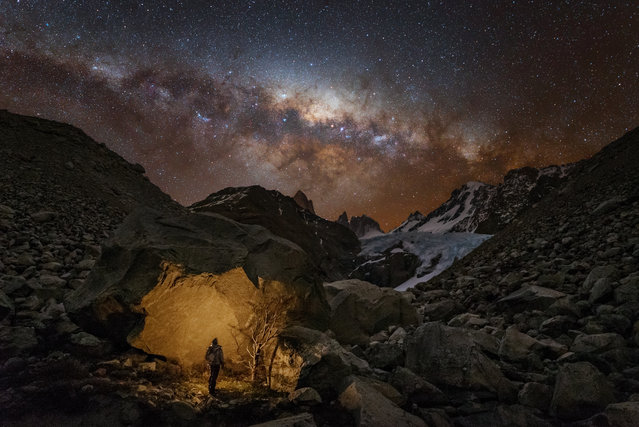
“People and Space”. Winner: Wanderer in Patagonia by Yuri Zvezdny (Russia) A lone stargazer stares up at the stars of our galaxy, the Milky Way, as they stretch across the night sky over the glacier “White Stones” (Piedras Blancas) in the Los Glaciares National Park, Argentina. El Chaltén, Santa Cruz Province, Argentina, 27 September 2016 iOptron Sky-Tracker mount, Sony A7S camera, 18 mm f/2.8 lens, ISO 5000, 30-second exposure Wanderer in Patagonia. (Photo by Yuri Zvezdny/Insight Astronomy Photographer of the Year 2017)

“People and Space”. Winner: Wanderer in Patagonia by Yuri Zvezdny (Russia) A lone stargazer stares up at the stars of our galaxy, the Milky Way, as they stretch across the night sky over the glacier “White Stones” (Piedras Blancas) in the Los Glaciares National Park, Argentina. El Chaltén, Santa Cruz Province, Argentina, 27 September 2016 iOptron Sky-Tracker mount, Sony A7S camera, 18 mm f/2.8 lens, ISO 5000, 30-second exposure Wanderer in Patagonia. (Photo by Yuri Zvezdny/Insight Astronomy Photographer of the Year 2017)
Details
18 Sep 2017 07:09:00
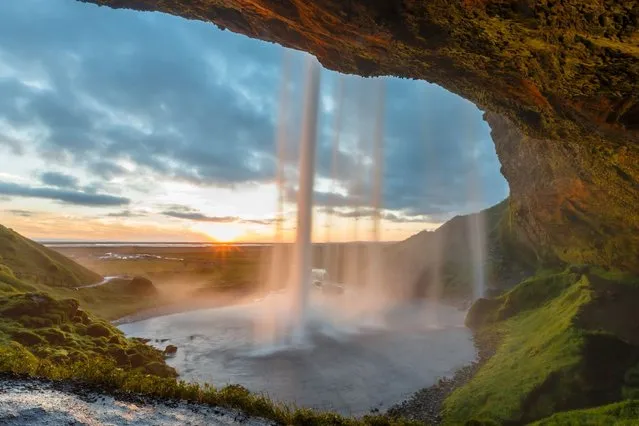
Seljalandsfoss waterfall, located in Iceland. (Photo by HotSpot Media)

Seljalandsfoss waterfall, located in Iceland. Seljalandsfoss is one of the most famous waterfalls of Iceland. This waterfall of the river Seljalandsá drops 60 metres (200 ft) over the cliffs of the former coastline. It's possible to go behind the waterfall. (Photo by HotSpot Media)
Details
16 Apr 2014 12:54:00
A man prays to mourn victims of the March 11, 2011, earthquake and tsunami in front of a ship brought ashore by the disaster in Kesennuma, Miyagi Prefecture, Japan.  (Photo by Kyodo via Reuters)

A man prays to mourn victims of the March 11, 2011, earthquake and tsunami in front of a ship brought ashore by the disaster in Kesennuma, Miyagi Prefecture, Japan. (Photo by Kyodo via Reuters)
Details
13 Mar 2013 12:30:00
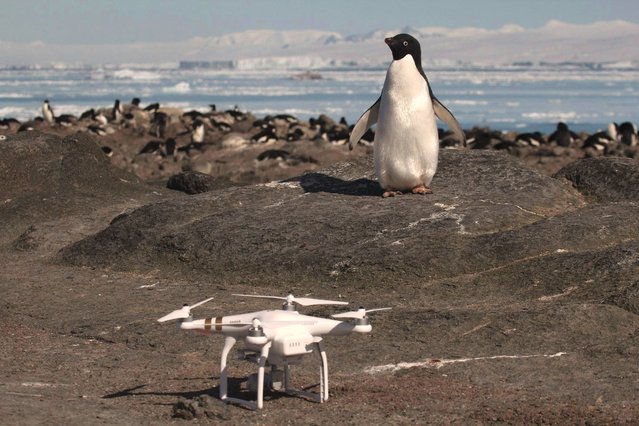
This undated handout photograph released by Stony Brook University/ Louisiana State University on March 2, 2018, shows an Adélie penguin (R) looking at a drone at breeding colony on Heroina Island, Danger Islands, Antarctica. A thriving “hotspot” of some 1.5 million Adelie penguins has been discovered on the remote Danger Islands in the east Antarctic, surprised scientists announced on March 2, 2018. (Photo by Rachael Herman/AFP Photo/Louisiana State University AND Stony Brook University)

This undated handout photograph released by Stony Brook University/ Louisiana State University on March 2, 2018, shows an Adélie penguin looking at a drone at breeding colony on Heroina Island, Danger Islands, Antarctica. A thriving “hotspot” of some 1.5 million Adelie penguins has been discovered on the remote Danger Islands in the east Antarctic, surprised scientists announced on March 2, 2018. (Photo by Rachael Herman/AFP Photo/Louisiana State University AND Stony Brook University)
Details
04 Mar 2018 00:03:00