Loading...
Done
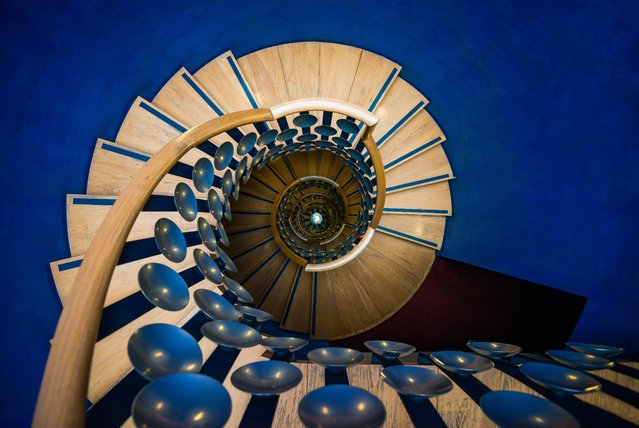
It’s enough to make your head spin. The photographer Katherine Young set out to shoot spiral staircases in London, England to great effect, including this shot she calls the Downward Spiral Part III. (Photo by Katherine Young/Rex Features/Shutterstock)

It’s enough to make your head spin. The photographer Katherine Young set out to shoot spiral staircases in London, England to great effect, including this shot she calls the Downward Spiral Part III. (Photo by Katherine Young/Rex Features/Shutterstock)
Details
16 Aug 2017 07:18:00


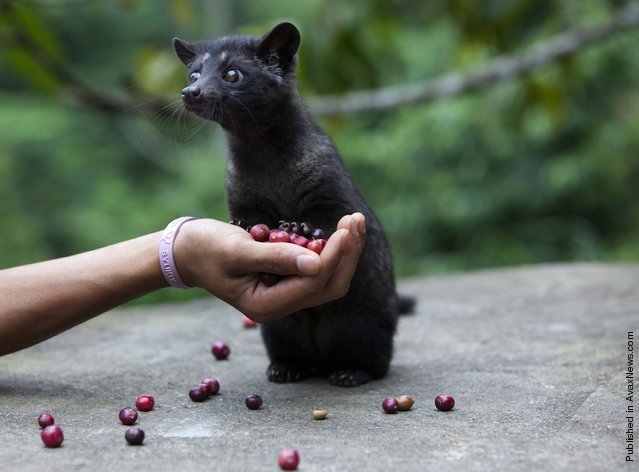
“Kopi luwak (Malay pronunciation), or civet coffee, is one of the world's most expensive and low-production coffee. It is made from the beans of coffee berries which have been eaten by the Asian Palm Civet (Paradoxurus hermaphroditus) and other related civets, then passed through its digestive tract. ...
Details
19 Mar 2011 18:41:00
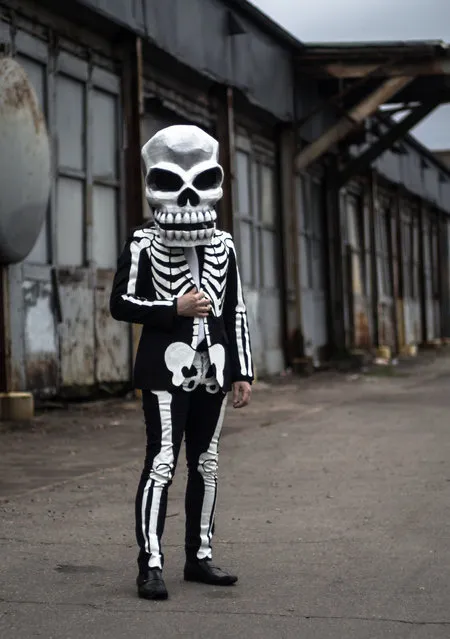
“The Skeleton Krewe 2013 – Manning”. (Kevin O'Mara)

“The Skeleton Krewe was founded in 1999 by Christopher Kirsch. Inspired by the early days of Carnival before tractors and floats replaced walking processions, the Krewe has become one of New Orleans' premier marching clubs. The Krewe began actively marching as a small group of friends, but has grown to 40 active members”. – The Skeleton Krewe. Photo: “The Skeleton Krewe 2013 – Manning”. (Photo by Kevin O'Mara)
Details
29 Oct 2013 11:56:00
“Milk Moustaches”. (Photo and caption by Ben Torode)

“Milk Moustaches”. (Photo and caption by Ben Torode)
Details
01 Nov 2013 12:02:00
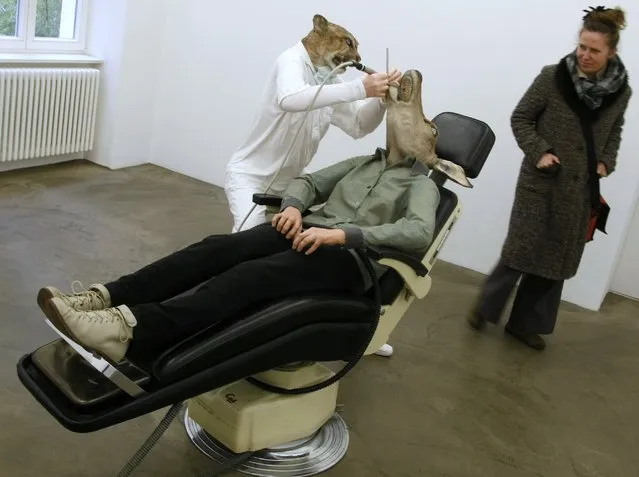
A visitor passes behind the sculpture “Puma-Dentist” made with plastic, wax and original heads of a puma and a hind by Austrian artist Deborah Sengl during an exhibition at the art gallery Deschler in Berlin April 15, 2008. (Photo by Fabrizio Bensch/Reuters)

A visitor passes behind the sculpture “Puma-Dentist” made with plastic, wax and original heads of a puma and a hind by Austrian artist Deborah Sengl during an exhibition at the art gallery Deschler in Berlin April 15, 2008. (Photo by Fabrizio Bensch/Reuters)
Details
11 Mar 2014 07:55:00
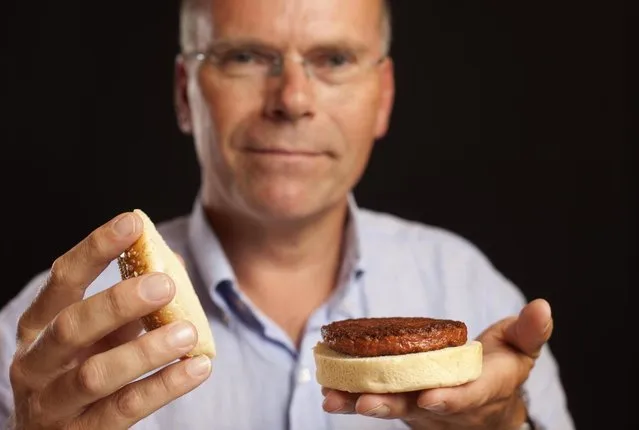
In this handout image provided by Ogilvy, a burger made from cultured beef, which has been developed by Professor Mark Post of Maastricht University in the Netherlands (pictured) is shown to the media during a press conference on August 5, 2013 in London, England. Cultured Beef could help solve the coming food crisis and combat climate change with commercial production of Cultured Beef beginning within ten to twenty years. (Photo by David Parry via Getty Images)

In this handout image provided by Ogilvy, a burger made from cultured beef, which has been developed by Professor Mark Post of Maastricht University in the Netherlands (pictured) is shown to the media during a press conference on August 5, 2013 in London, England. The in-vitro burger, cultured from cattle stem cells, the first example of what its creator says could provide an answer to global food shortages and help combat climate change, was fried in a pan and tasted by two volunteers. The burger is the result of years of research by Dutch scientist Mark Post, a vascular biologist at the University of Maastricht, who is working to show how meat grown in petri dishes might one day be a true alternative to meat from livestock.The meat in the burger has been made by knitting together around 20,000 strands of protein that has been cultured from cattle stem cells in Post's lab. (Photo by David Parry)

Details
06 Aug 2013 08:48:00
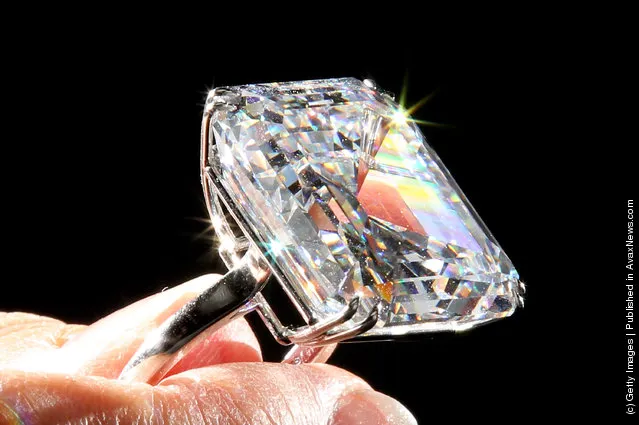
A rare 52.82-carat white diamond ring

A Sotheby's employee holds a rare 52.82-carat white diamond ring at Sotheby's auction house on April 12, 2010 in London, England. Price: 7 million USD. (Photo by Dan Kitwood/Getty Images)
Details
05 Oct 2011 13:21:00
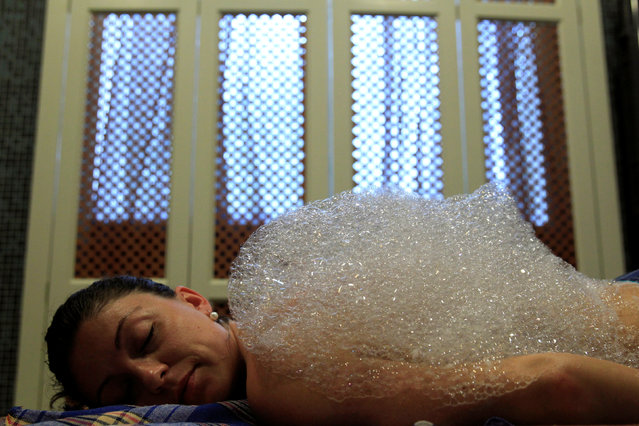
A woman is having a massage at the Lukacs Bath in Budapest, Hungary June 28, 2016. (Photo by Bernadett Szabo/Reuters)

A woman is having a massage at the Lukacs Bath in Budapest, Hungary June 28, 2016. Hungary's capital owes its popularity as a tourist destination partly to its numerous hot springs and bathing culture which have drawn visitors to the area since Roman times. Bath houses range from large, ornate 19th-century buildings like the Gellert and the Szechenyi to tiny Ottoman Turkish-era hamams, some of them more than 500 years old. (Photo by Bernadett Szabo/Reuters)
Details
20 Jul 2016 10:05:00