Loading...
Done
A Tusken Raider with a cat. (Photo by Rohit Saxena/Caters News)

A humane society have drafted in Star Wars characters to help find adoptable animals new homes. The Ottawa Humane Society in Ontario, Canada, used the recognisable cosplay figures to adorably interact with the likes of dogs, cats and guinea pigs. Photographed by Rohit Saxena, the series featured a stormtrooper, a Tusken Raider and Garindan. Those photographed were members of the 501st Capital City Garrison, a Star Wars costuming group in Eastern Ontario. Here: a Tusken Raider with a cat. (Photo by Rohit Saxena/Caters News)
Details
13 May 2015 11:59:00
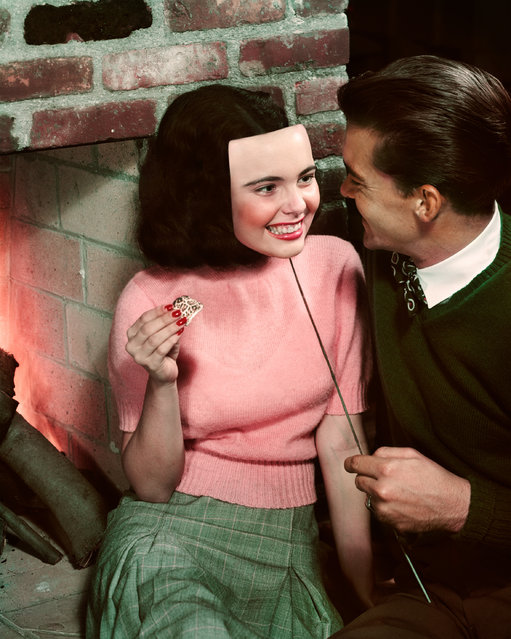
“Untitled #5”. “Family scenes, vacation souvenirs, everyday life, suspended anywhere between truth and fiction. It is hard to figure out whether they are spontaneous or entirely staged”. (Photo by Weronika Gęsicka/The Guardian)

In Weronika Gęsicka’s unsettling images, American archive photography gets distorted into scenes that are both nightmarish yet somehow entirely plausible. Gęsicka is a guest artist at the Circulations festival for young European photographers, Paris, until 5 March. Here: “Untitled #5”. (Photo by Weronika Gęsicka/The Guardian)
Details
23 Jan 2017 10:15:00
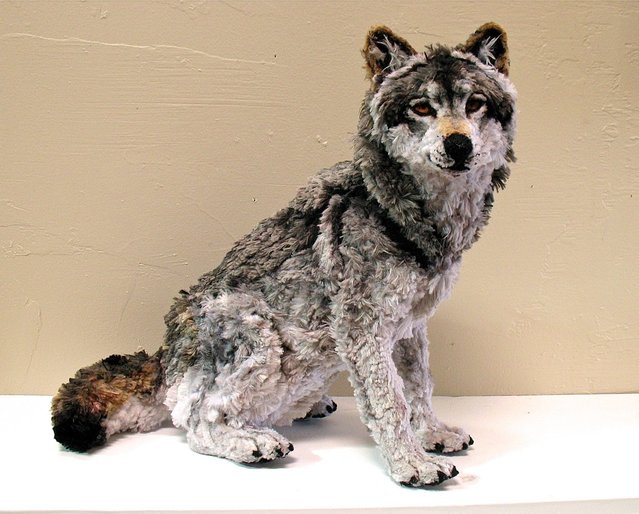
New Pipe Cleaner Wolf. (Photo by Lauren Ryan)

“These are the mind-bending sculptures that take up to 40 hours to create – as they're made entirely from pipe cleaners. The fuzzy flexible figures are made entirely from the tobacco cleaning tools – which are now more commonly found strewn across nurseries and art classrooms – to construct the incredible life-like animals”. – Caters News. Photo: New Pipe Cleaner Wolf. (Photo by Lauren Ryan)
Details
20 Nov 2013 08:17:00
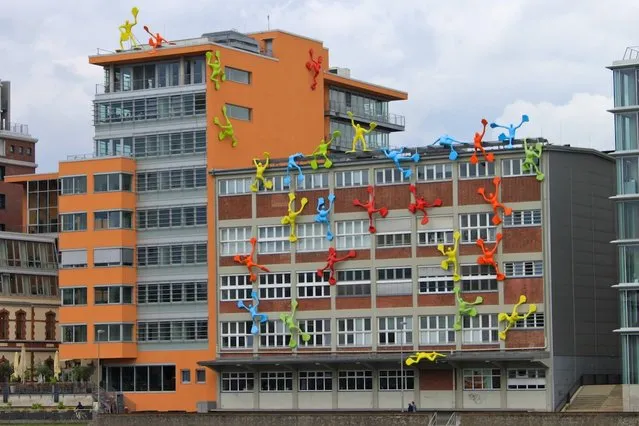
Flossis By Rosalie

Flossis by the artist Rosalie are known far beyond the boundaries of Dьsseldorf, Germany. In this city on the Rhine, the Flossis became famous. Many buildings’ outer walls are decorated with these figures. Flossis by Rosalie come in different variants of small to large and they are popular among young and old. Flossis are made of resin and resist temperatures under -15 degrees. Below that, they should be brought to the warm inside of the building. The currently most sold Flossi, is the “type I” in red, like shown in the following illustration.
Details
12 Jun 2013 12:30:00
German-born American engineer Dr Wernher von Braun (1912 - 1977) with a model of the Explorer orbiting space satellite which he designed, 1958

“Wernher Magnus Maximilian Freiherr von Braun (March 23, 1912 – June 16, 1977) was a German-born rocket scientist, aerospace engineer, space architect, and one of the leading figures in the development of rocket technology in Nazi Germany during World War II and, subsequently, the United States”. – Wikipedia

Photo: German-born American engineer Dr. Wernher von Braun with a model of the Explorer orbiting space satellite which he designed. (Photo by Keystone/Getty Images). 1958
Details
22 Mar 2012 11:18:00
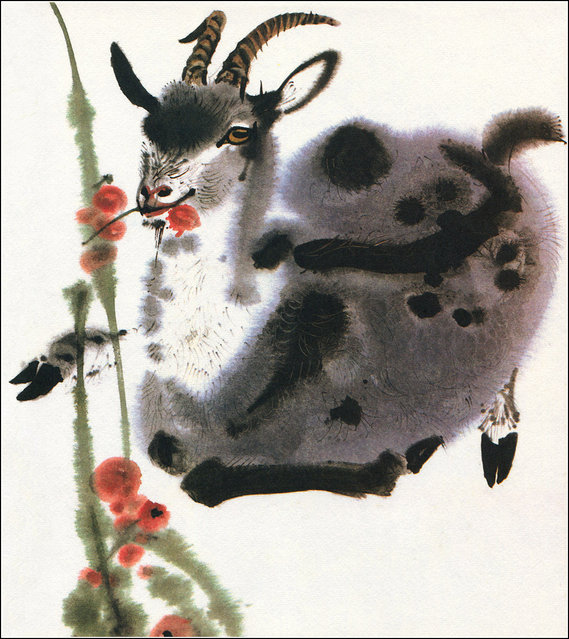
Alfred Könner, “Bilderzoo” by Illustrator Mirko Hanák

Mirko Hanák was born in 1921 in Prague, Czech Republic and worked as a painter, graphic designer and illustrator. His specialties were animals and human figures that were full of life and fun. He also had a firm grasp on composition as his paintings were so well balanced despite his casual fluid line. He was working on “Charlotte's Web” the movie when he tragically died at the height of his career from leukemia in 1971.
Details
18 Mar 2013 10:13:00
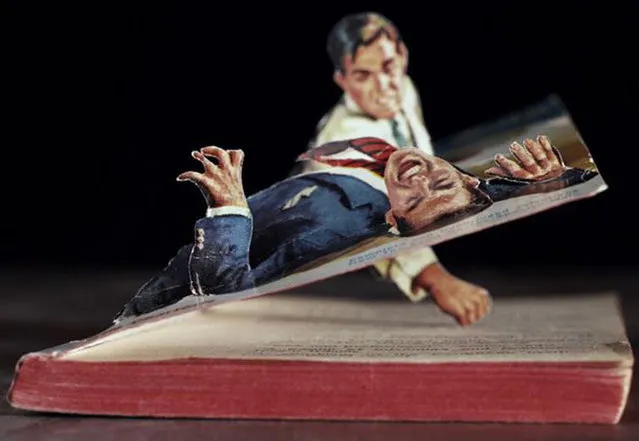
Book Art by Thomas Allen

American photographer Thomas Allen constructs witty and clever dioramas using figures cut from the covers of old pulp paperbacks. Using salacious pulp art drawing’s of the ’40s and ’50s that covered books such as ” I Married a Dead Man” and ” Marihuana Girl’, Allen constructs one set of pictures up close while obscuring another, and in the process creates a different context. Each piece is given a brand new storyline, though never quite strays from their cheeky origins.
Details
05 Dec 2012 13:01:00
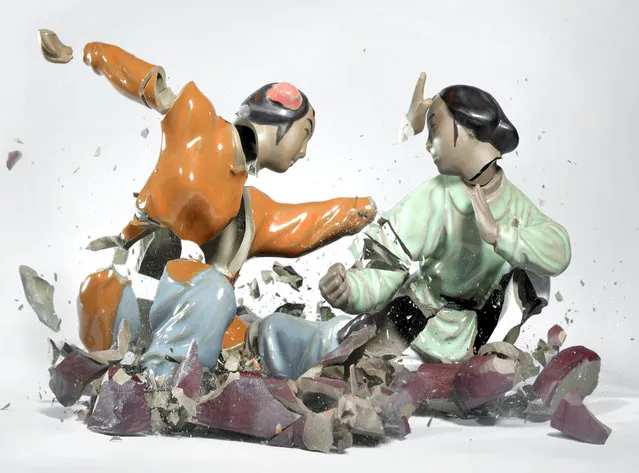
Porcelain Figurines By Martin Klimas

From a height of three meters, porcelain figurines are dropped on the ground, and the sound they make when they hit trips the shutter release. The result: razor-sharp images of disturbing beauty—temporary sculptures made visible to the human eye by high-speed photography technology. The porcelain statuette bursting into pieces isn't what really captures the attention; the fascination lies in the genesis of a dynamic figure that replaces the static pose. In contrast to the inertness of the intact kitsch figurines Klimas started out with, the photographs of their destruction possess a powerfully narrative character.
Details
21 Apr 2014 12:59:00