Loading...
Done
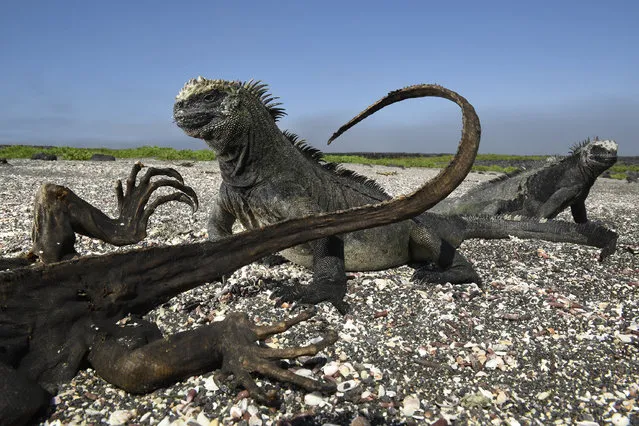
Galapagos – Rocking the Cradle: Four major ocean currents converge along the Galapagos archipelago, creating the conditions for an extraordinary diversity of animal life, April 25, 2016. The islands are home to at least 7,000 flora and fauna species, of which 97 percent of the reptiles, 80 percent of the land birds, 50 percent of the insects and 30 percent of the plants are endemic. The local ecosystem is highly sensitive to the changes in temperature, rainfall and ocean currents that characterize the climatic events known as El Niño and La Niña. These changes cause marked fluctuations in weather and food availability. Many scientists expect the frequency of El Niño and La Niña to increase as a result of climate change, making the Galapagos a possible early-warning location for its effects. (Photo by Thomas P. Peschak for National Geographic/World Press Photo)

Galapagos – Rocking the Cradle: Four major ocean currents converge along the Galapagos archipelago, creating the conditions for an extraordinary diversity of animal life, April 25, 2016. The islands are home to at least 7,000 flora and fauna species, of which 97 percent of the reptiles, 80 percent of the land birds, 50 percent of the insects and 30 percent of the plants are endemic. (Photo by Thomas P. Peschak for National Geographic/World Press Photo)
Details
16 Apr 2018 00:01:00


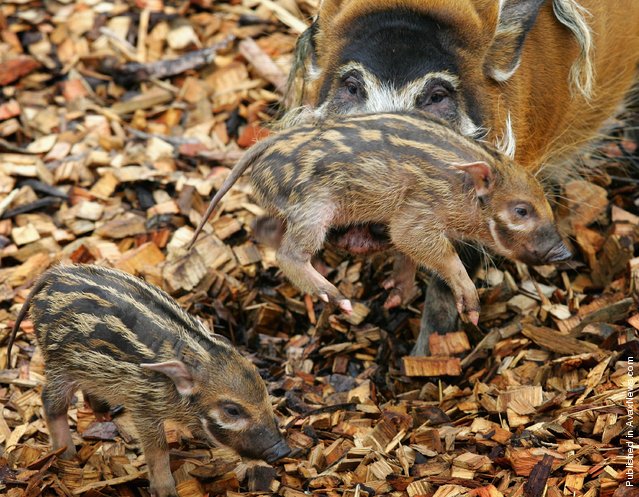
“The Red River Hog (Potamochoerus porcus), also known as the Bush Pig (but not to be confused with P. larvatus, common name “Bushpig”), is a wild member of the pig family living in Africa, with most of its distribution in the Guinean and Congolian forests. It is rarely seen away from rainforests, and generally prefers areas near rivers or swamps.

Red River Hogs eat grass, berries, roots, insects, molluscs, small vertebrates and carrion. They are capable of causing damage to plantations. Red River Hogs typically live in herds of 6-20 members led by a dominant boar. Sows rear 3-6 piglets at a time.”

Photo: Two 17 day old red river hoglet twins forage for food next to their mother Bahiti at London Zoo on August 23, 2007 in London, England. Red River hoglets inhabit the forests and swamps of West and Central Africa. The recent additions to the London Zoo pig pen have been eagerly awaited by zoo keepers. (Photo by Chris Jackson/Getty Images)
Details
18 Mar 2011 15:15:00


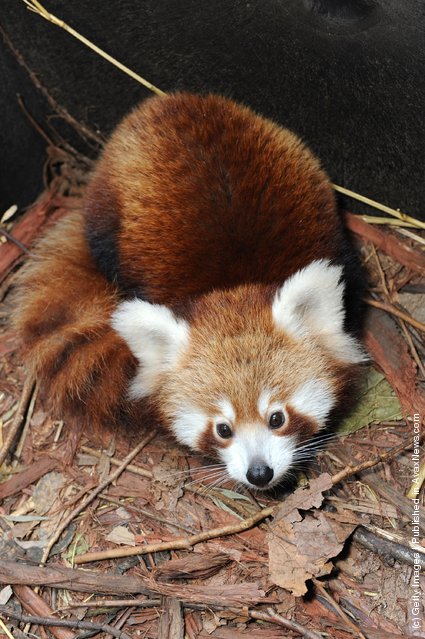
“The red panda (Ailurus fulgens, or shining-cat), is a small arboreal mammal native to the eastern Himalayas and southwestern China. It is the only species of the genus Ailurus. Slightly larger than a domestic cat, it has reddish-brown fur, a long, shaggy tail, and a waddling gait due to its shorter front legs. It feeds mainly on bamboo, but is omnivorous and may also eat eggs, birds, insects, and small mammals. It is a solitary animal, mainly active from dusk to dawn, and is largely sedentary during the day”. – Wikipedia

Photo: In this handout image provided by Taronga Zoo, Seba, a baby Red Panda, explores his new home at Taronga Zoo on April 7, 2011 in Sydney, Australia. The Red Panda cub was born at Christmas and is the 45th to be born at the zoo since 1977. (Photo by Peter Hardin/Taronga Zoo via Getty Images)
Details
07 Apr 2011 08:51:00
Revellers enjoy a night out in central Liverpool, northwest England, on December 30, 2020 before hightened Tier 3 restrictions closing hospitality venues, and bars indoor and outdoor socialising between households are imposed in the city amid surging cases of the novel coronavirus. Tighter coronavirus restrictions will be extended across England from on December 30 the British government announced, with a new Covid-19 variant blamed for a rapid surge in cases. Liverpool enters Tier 3, which closes hospitality venues, and bars indoor and outdoor socialising between households with the highest Tier 4 rules, which require all non-essential shops, hairdressers as well as leisure and entertainment venues to close, will now apply to more than 44 million people. (Photo by Oli Scarff/AFP Photo)

Revellers enjoy a night out in central Liverpool, northwest England, on December 30, 2020 before hightened Tier 3 restrictions closing hospitality venues, and bars indoor and outdoor socialising between households are imposed in the city amid surging cases of the novel coronavirus. (Photo by Oli Scarff/AFP Photo)
Details
01 Mar 2021 08:47:00
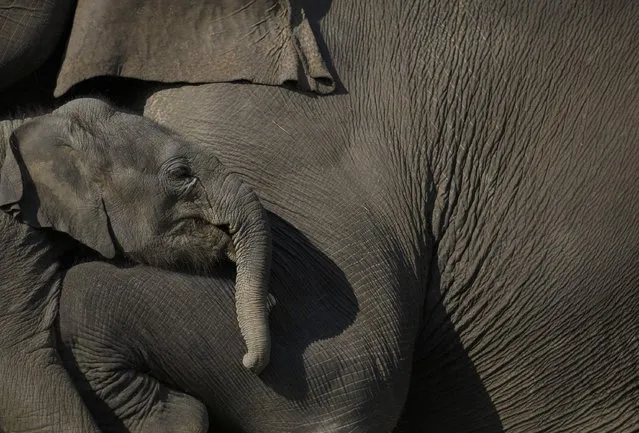
A one and a half months old baby elephant stands close to its mother at Chitwan National Park in Chitwan, south of Kathmandu December 30, 2014. (Photo by Navesh Chitrakar/Reuters)

A one and a half months old baby elephant stands close to its mother at Chitwan National Park in Chitwan, south of Kathmandu December 30, 2014. (Photo by Navesh Chitrakar/Reuters)
Details
01 Jan 2015 13:45:00
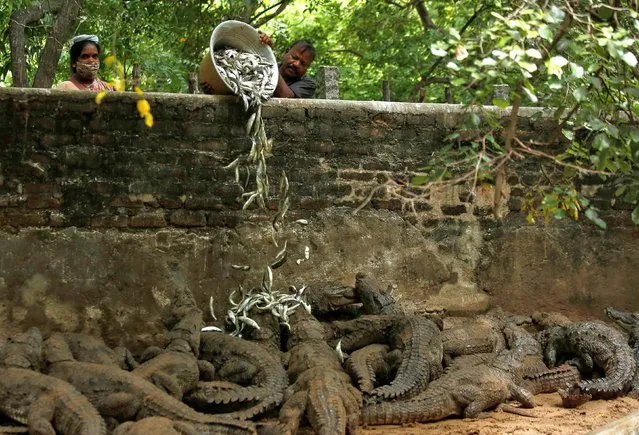
Zoo keepers feed crocodiles in their enclosure at the Madras Crocodile Bank, closed due to the outbreak of coronavirus disease (COVID-19), in Mahabalipuram, India, August 3, 2020. (Photo by P. Ravikumar/Reuters)

Zoo keepers feed crocodiles in their enclosure at the Madras Crocodile Bank, closed due to the outbreak of coronavirus disease (COVID-19), in Mahabalipuram, India, August 3, 2020. (Photo by P. Ravikumar/Reuters)
Details
18 Aug 2020 00:05:00
Members of an electoral commission destroy unused ballots, after polling stations closed on the final day of the presidential election in Saint Petersburg, Russia on March 17, 2024. (Photo by Anton Vaganov/Reuters)

Members of an electoral commission destroy unused ballots, after polling stations closed on the final day of the presidential election in Saint Petersburg, Russia on March 17, 2024. (Photo by Anton Vaganov/Reuters)
Details
25 Mar 2024 06:57:00
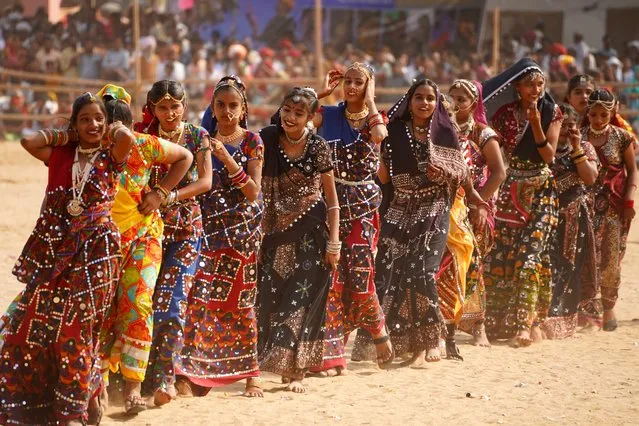
Rajasthani Artist During Closing ceremony of annual Camel Fair in Pushkar, India on November 8, 2022. (Photo by Stringer/Anadolu Agency via Getty Images)

Rajasthani Artist During Closing ceremony of annual Camel Fair in Pushkar, India on November 8, 2022. (Photo by Stringer/Anadolu Agency via Getty Images)
Details
23 Nov 2022 04:16:00