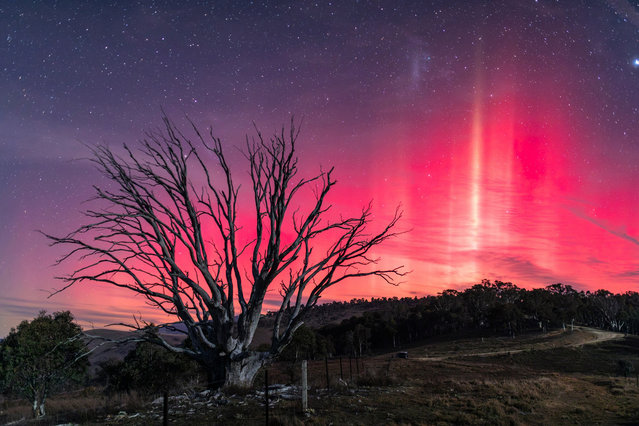
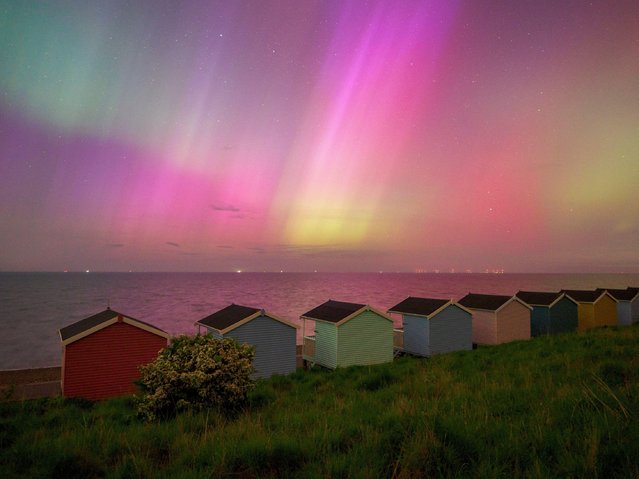
Paul Kerr was able to capture this stunning vista of the aurora australis from Canberra, New Zealand on June 1, 2025. (Photo by Paul Kerr/Hold Still Photography)
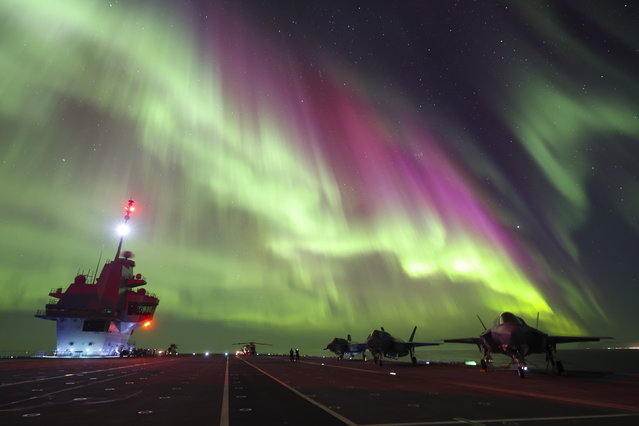
In this photo provided by Britain's Ministry of Defense, on Monday, March 4, 2024, F-35B Lightning jets are parked at a flight deck of HMS Prince of Wales aircraft carrier of the Royal Navy, under the northern lights (Aurora Borealis) near the coast of Norway, Sunday, March 3, 2024. (Photo by UK Ministry of Defence via AP Photo)
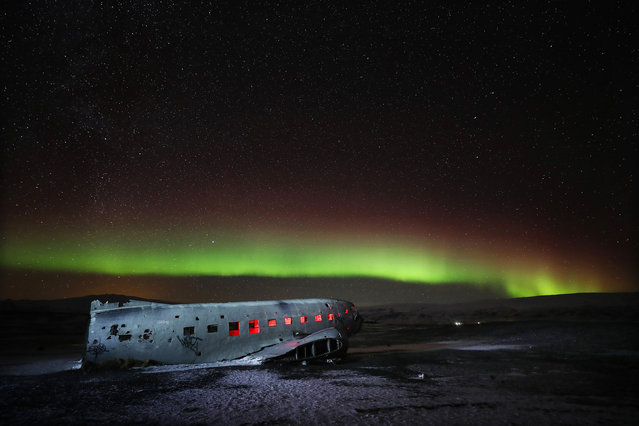
Aurora Borealis, or Northern Lights, shine over the plane wreck of a US Navy airplane – a Douglas Super DC-3 – on the Black Beach in Solheimasandur, south Iceland on January 18, 2018. (Photo by Owen Humphreys/PA Images via Getty Images)
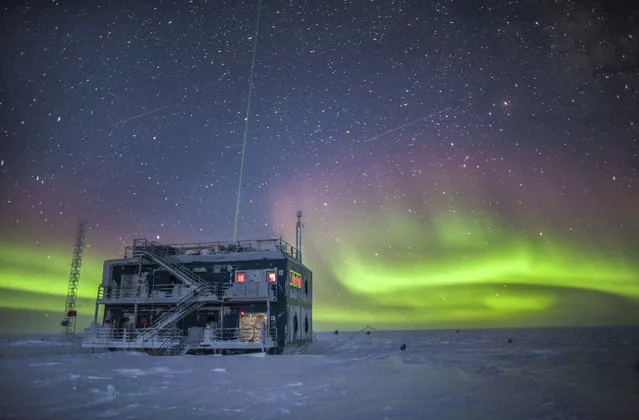
This undated photo provided by NOAA in May 2018 shows aurora australis near the South Pole Atmospheric Research Observatory in Antarctica. When a hole in the ozone formed over Antarctica, countries around the world in 1987 agreed to phase out several types of ozone-depleting chemicals called chlorofluorocarbons (CFCs). Production was banned, emissions fell and the hole shriveled. But according to a study released on Wednesday, May 16, 2018, scientists say since 2013, there’s more of a banned CFC going into the atmosphere. (Photo by Patrick Cullis/NOAA via AP Photo)
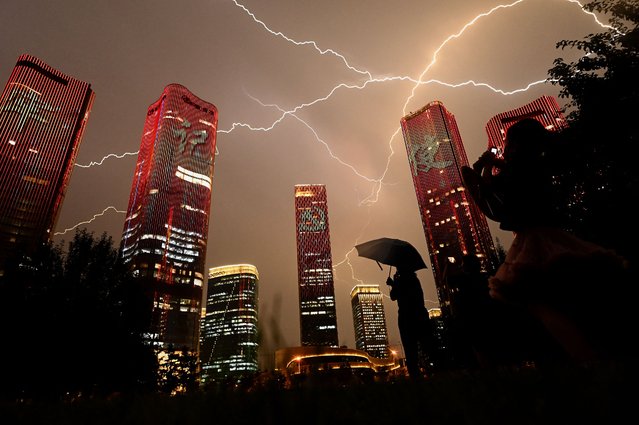
People look at buildings displaying a light show on the eve of the 100th anniversary of the Chinese Communist Party in Beijing on June 30, 2021. (Photo by Noel Celis/AFP Photo)