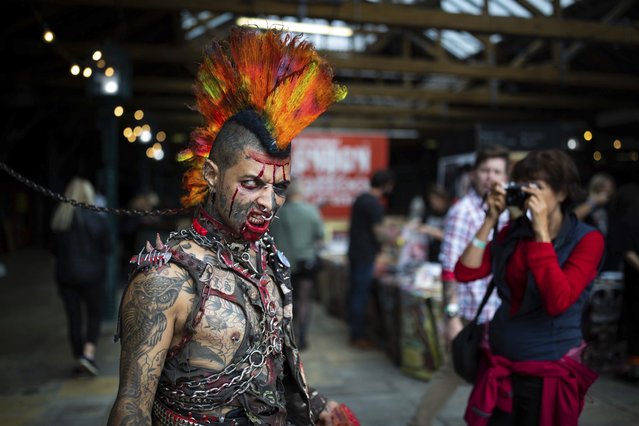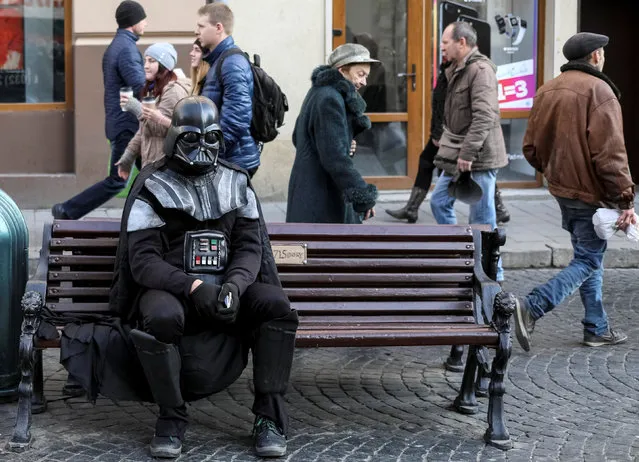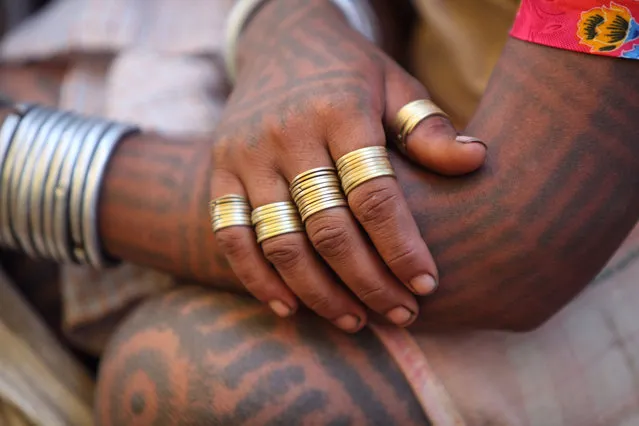
Zombie Punk stands for a photo during the International tattoo convention at Tobacco Dock in east London, Friday, September 27, 2019. (Photo by Aaron Chown/PA Wire Press Association via AP Photo)
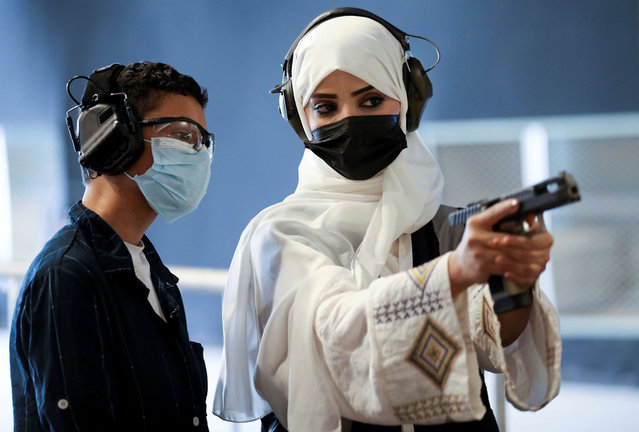
Saudi female firearm trainer, Mona Al Khurais, teaches a Saudi boy on safe usage of weapons at the Top-Gun shooting range in Riyadh, Saudi Arabia, October 28, 2021. (Photo by Ahmed Yosri/Reuters)
Protesters begin to gather ahead of the UK Student Climate Network's Global Climate Strike at Millbank in London, England on September 20, 2019. (Photo by Gareth Fuller/PA Images via Getty Images)
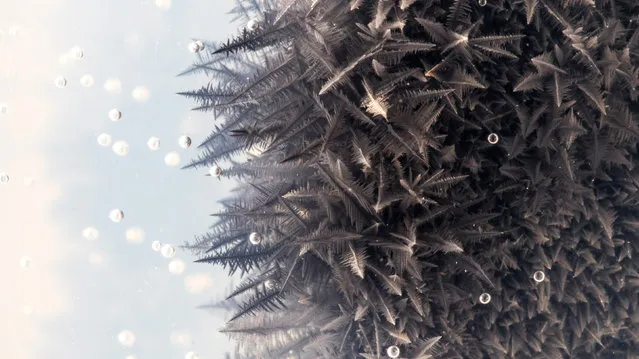
These beautiful shots may look like works of modern art – but they are actually close-ups of chemical reactions. The works were snapped with the help of a group of scientists from the University of Science and Technology of China (USTC) in Anhui, China. Here: Zinc reacting with lead nitrate in a soft gel to form lead crystals. (Photo by Yan Liang/Caters News)
Kanphitcha Sungsuk, 21, (C), lines up with young men to speak to officers during an army draft held at a school in Klong Toey, the dockside slum area in Bangkok, Thailand, April 6, 2017. Thailand is widely seen as a paradise for gay and transgender people, but many complain of being treated as second-class citizens and the obligation to respond to the draft can be a nightmare when they turn 21. (Photo by Athit Perawongmetha/Reuters)
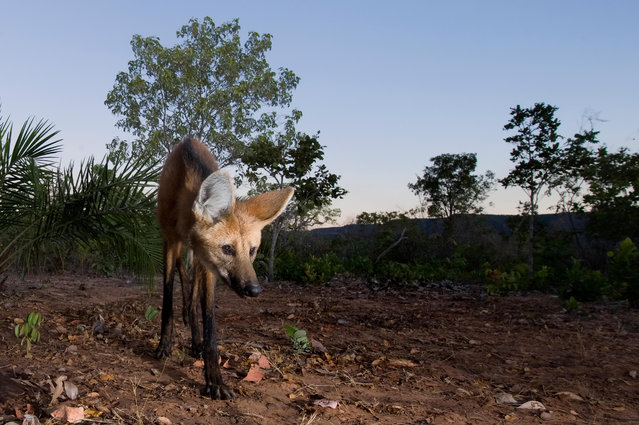
Global wildlife populations will decline by 67% by 2020 unless urgent action is taken to reduce human impact on species and ecosystems, warns the biennial Living Planet Index report from WWF (World Wide Fund for Nature) and ZSL (Zoological Society of London). From elephants to eels, here are some of the wildlife populations most affected by human activity. Here: The maned wolf is among the large mammals in the Brazilian Cerrado that are threatened by the increasing conversion of grasslands into farmland for grazing and growing crops. (Photo by Ben Cranke/Nature Picture Library/Alamy Stock Photo)