Loading...
Done
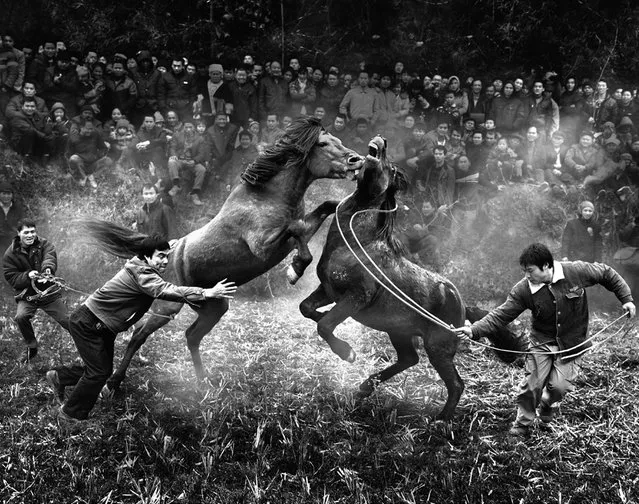
Horse Fighting In China

It’s a tradition that dates back hundreds of years, where two stallions fight over a female to ring the Chinese new year. And when it’s the Year of the Horse, the fights are considered to be even more significant. They’re held in small villages across southern China and have been condemned by animal rights groups, including Hong-Kong based Animals Asia. But those who participate in the events defend the fights and insist they take care of the animals.
Details
02 Apr 2014 23:59:00
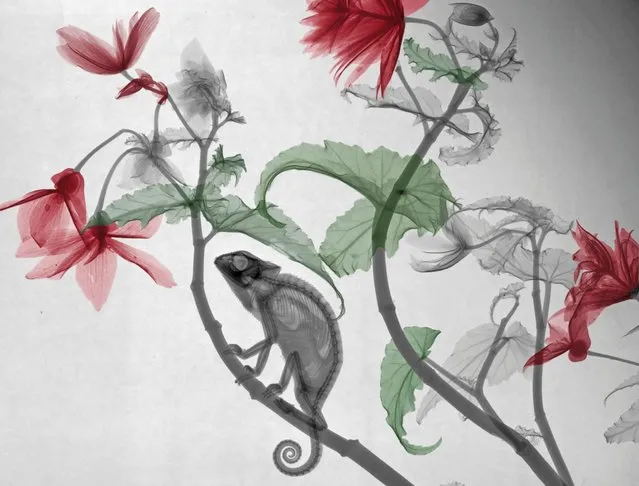
“Chameleon and Begonia”. (Photo by Arie van't Riet)

Physicist Arie van't Riet uses a series of duel X-ray cameras to capture flowers, plants and small animals in living dioramas. The x-rays are then finished and colorized in Photoshop. Giving way to some breathtaking nature scenes. Photo: “Chameleon and Begonia”. (Photo by Arie van't Riet)
Details
13 Mar 2014 05:45:00
City Of The Dead In Dargavs, North Ossetia

Dargavs is a small necropolis outside the village of Dargavs in North Ossetia-Alania. It comprises 99 different tombs and crypts. It is often called city of the dead. Some sources say the oldest of the crypts dates back to the 12th century, though others say the oldest crypt dates back to 14th century and some say it dates to the 16th century. At the back of the complex there is a tower, though the top of it is destroyed.
Details
11 Oct 2014 10:41:00
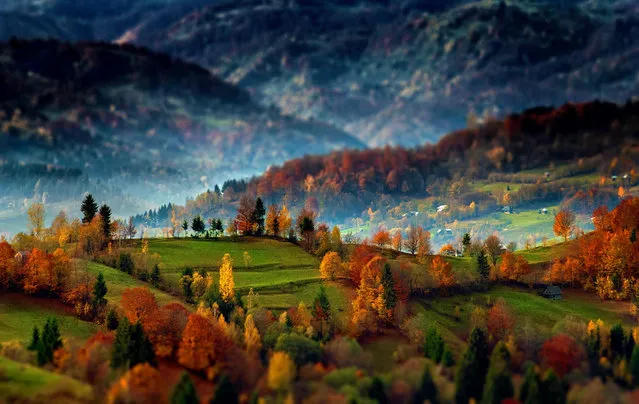
The Beautiful Landscapes By Alex Robciuc

They say the great photographers are out of bed before sunrise and always late for dinner. Photographer Alex Robciuc does just that; waking at 5 AM to capture the gorgeous morning light spilling over a small county in Transylvania, Romania. This dedication to early rising and sticking around for the "perfect light" has offered Alex some seriously beautiful landscape images.
Details
24 Jun 2015 08:26:00
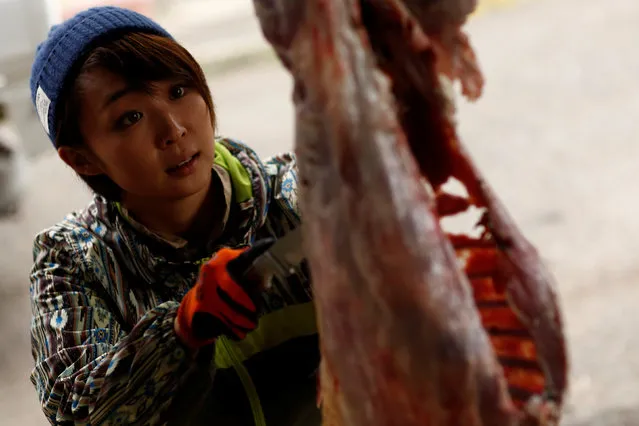
Hunter Chiaki Kodama guts a deer in a shed in Oi, Fukui Prefecture, Japan, November 17, 2016. (Photo by Thomas Peter/Reuters)

Hunter Chiaki Kodama guts a deer in a shed in Oi, Fukui Prefecture, Japan, November 17, 2016. A small but growing number of Japanese women enter the male-dominated world of hunting, where it was once taboo for men to even speak to a woman before going on a hunt. (Photo by Thomas Peter/Reuters)
Details
24 Dec 2016 09:55:00
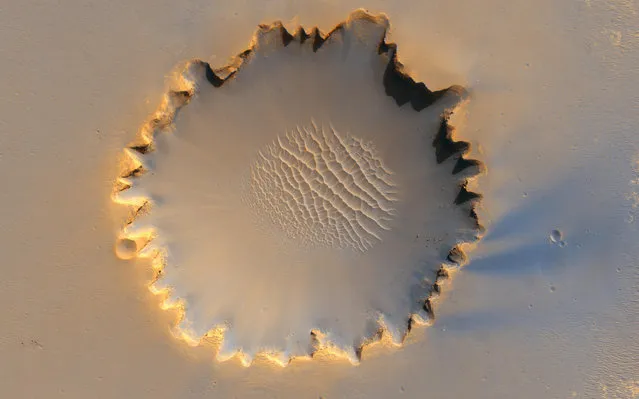
NASA's rover Opportunity visits Victoria Crater, viewed from orbit by the High Resolution Imaging Science Experiment on NASA's Mars Reconnaissance Orbiter in october of 2006. Opportunity is a small dot on the crater's lip, at top right. Opportunity first reached the crater's rim on September 27, 2006. (Photo by NASA/JPL-Caltech/University of Arizona/The Atlantic)

“NASA's Mars rover Opportunity just celebrated its ninth anniversary on Mars – a mission that was originally meant to last just 90 days...” – The Atlantic. Photo: NASA's rover Opportunity visits Victoria Crater, viewed from orbit by the High Resolution Imaging Science Experiment on NASA's Mars Reconnaissance Orbiter in october of 2006. Opportunity is a small dot on the crater's lip, at top right. Opportunity first reached the crater's rim on September 27, 2006. (Photo by NASA/JPL-Caltech/University of Arizona via The Atlantic)


Details
14 Feb 2013 10:58:00
Baby Fennec Fox

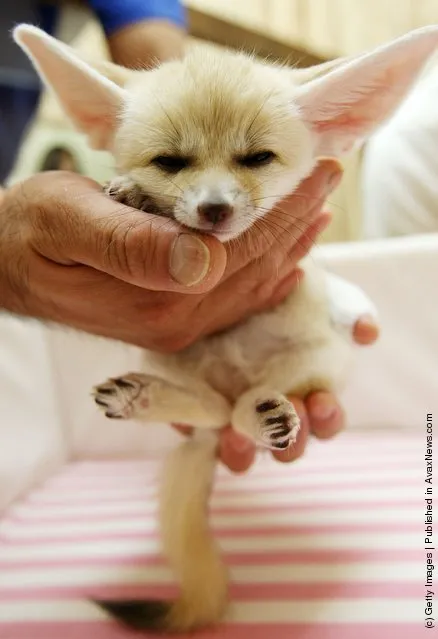
“The fennec fox is a small nocturnal fox found in the Sahara of North Africa. Its most distinctive feature is unusually large ears. The name “fennec” comes from the Arabic word for fox, and the species name zerda has a Greek origin that refers to its habitat. The fennec is the smallest species of canid in the world; coat, ears and kidney functions have adapted to a high-temperature, low-water, desert environment. In addition, its hearing is sensitive enough to hear prey moving underground”. – Wikipedia

Photo: A Baby Fennec is seen at Sunshine International Aquarium on June 24, 2009 in Tokyo, Japan. The small nocturnal fox babies were born on May 17 2009. (Photo by Junko Kimura/Getty Images)
Details
16 Sep 2011 12:02:00
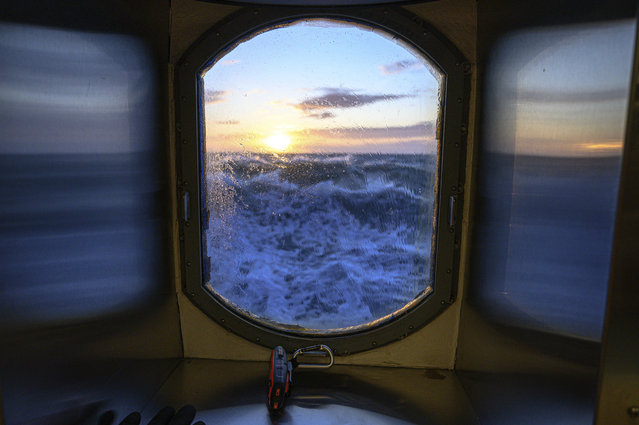
This November 8, 2019, photo provided by John Guillote shows a view from the main lab of the Sikuliaq in the Chukchi Sea. University of Washington scientists onboard the research vessel are studying the changes and how less sea ice will affect coastlines, which already are vulnerable to erosion because increased waves delivered by storms. More erosion would increase the chance of winter flooding in villages and danger to hunters in small boats. (Photo by John Guillote via AP Photo)

This November 8, 2019, photo provided by John Guillote shows a view from the main lab of the Sikuliaq in the Chukchi Sea. University of Washington scientists onboard the research vessel are studying the changes and how less sea ice will affect coastlines, which already are vulnerable to erosion because increased waves delivered by storms. More erosion would increase the chance of winter flooding in villages and danger to hunters in small boats. (Photo by John Guillote via AP Photo)
Details
26 Aug 2021 08:22:00