Loading...
Done
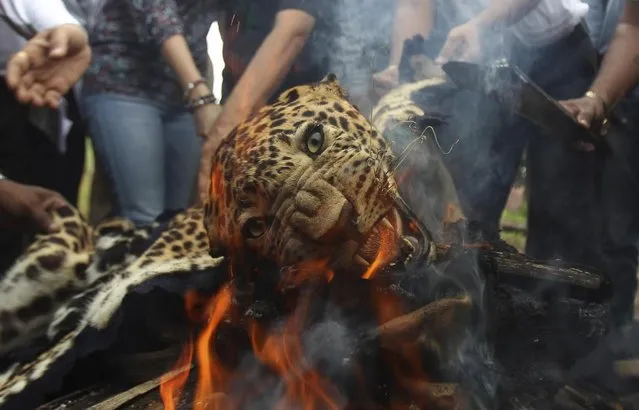
A leopard skin burns as Indian officials and activists burn wildlife contraband including tiger and leopard skins, and bones as part of a campaign to save the tiger in Mumbai, India, Tuesday, July 30, 2013. Despite conservation efforts, tiger numbers in India have declined due to rampant poaching of the cats for their valuable pelts and body parts that are highly prized in traditional Chinese medicine. (Photo by Rafiq Maqbool/AP Photo)

A leopard skin burns as Indian officials and activists burn wildlife contraband including tiger and leopard skins, and bones as part of a campaign to save the tiger in Mumbai, India, Tuesday, July 30, 2013. Despite conservation efforts, tiger numbers in India have declined due to rampant poaching of the cats for their valuable pelts and body parts that are highly prized in traditional Chinese medicine. (Photo by Rafiq Maqbool/AP Photo)
Details
01 Aug 2013 10:50:00
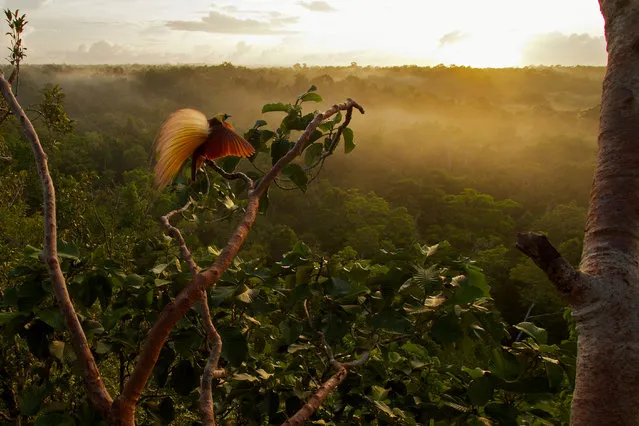
A greater bird of paradise (Paradisaea apoda) displaying in Badigaki Forest, Wokam Island (Aru Islands, Indonesia). Found here in Aru and on adjacent New Guinea, the greater bird of paradise represents about 40 different species of birds of paradise that depend on intact rainforest across the New Guinea region spanning eastern Indonesia and Papua New Guinea. With more than 80% of forest cover still intact, this region represents the largest remaining block of rainforest in the entire Asia-Pacific. (Photo by Tim Laman/naturepl.com/LDY Agency)

A greater bird of paradise (Paradisaea apoda) displaying in Badigaki Forest, Wokam Island (Aru Islands, Indonesia). Found here in Aru and on adjacent New Guinea, the greater bird of paradise represents about 40 different species of birds of paradise that depend on intact rainforest across the New Guinea region spanning eastern Indonesia and Papua New Guinea. With more than 80% of forest cover still intact, this region represents the largest remaining block of rainforest in the entire Asia-Pacific. (Photo by Tim Laman/naturepl.com/LDY Agency)
Details
14 Nov 2021 05:57:00
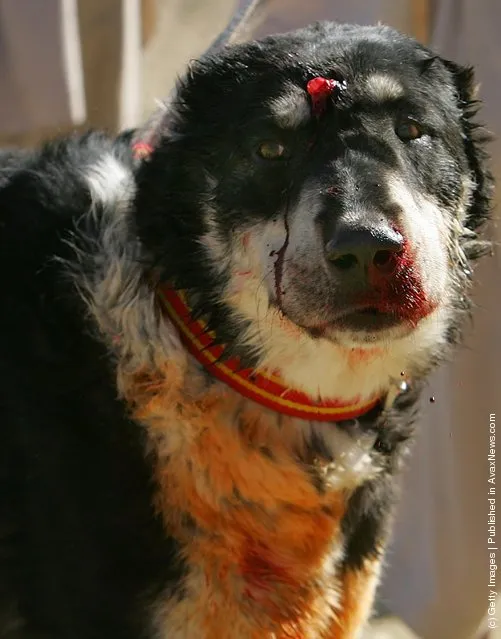
Afghan Dog Fighting

“Dog fighting is a form of blood sport in which game dogs are made to fight, sometimes to the death. It is illegal in most developed countries. Dog fighting is used for entertainment and may also generate revenue from stud fees, admission fees and gambling”. – Wikipedia

Photo: A bloody Afghan dog is bleeding with many wounds after he lost a dog fight November 24, 2006 in Kabul, Afghanistan. While the Afghan government is trying to ban the violent use of dogs for fighting, the unofficial sport remains a regular weekly event. Afghan dog fighting is popular among Afghan men who gamble on the dogs making upwards of 15,000 Afghanie (300 USD). (Photo by Paula Bronstein/Getty Images)
Details
07 Aug 2011 11:47:00
A man wearing a face mask as a precaution against the coronavirus, walks past in front of an advertisement of an opera performance outside of a theater in Seoul, South Korea, Wednesday, March 3, 2021. (Photo by Lee Jin-man/AP Photo)

A man wearing a face mask as a precaution against the coronavirus, walks past in front of an advertisement of an opera performance outside of a theater in Seoul, South Korea, Wednesday, March 3, 2021. (Photo by Lee Jin-man/AP Photo)
Details
18 Mar 2021 09:23:00
This image released by Twentieth Century Fox shows Kristen Stewart in a scene from “Underwater”. (Photo by Alan Markfield/Twentieth Century Fox via AP Photo)

This image released by Twentieth Century Fox shows Kristen Stewart in a scene from “Underwater”. (Photo by Alan Markfield/Twentieth Century Fox via AP Photo)
Details
10 Jan 2020 00:03:00
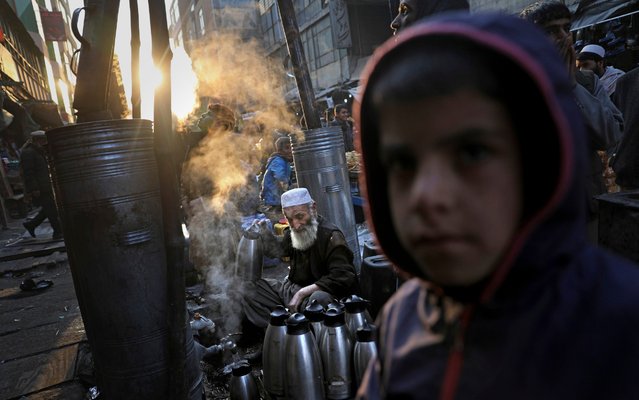
Afghan tea seller Farooq Shah, center, fills kettles with tea for customers at a market place in Kabul, Afghanistan, Wednesday, December 4, 2019. (Photo by Altaf Qadri/AP Photo)

Afghan tea seller Farooq Shah, center, fills kettles with tea for customers at a market place in Kabul, Afghanistan, Wednesday, December 4, 2019. (Photo by Altaf Qadri/AP Photo)
Details
26 Mar 2020 00:05:00
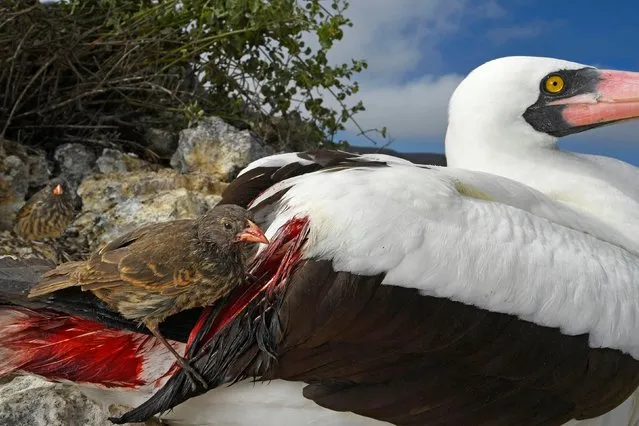
Bloodthirsty by Thomas P Peschak, Germany/South Africa — winner, Behaviour: birds. When rations run short on Wolf Island, in the remote northern Galápagos, the sharp-beaked ground finches become vampires. Their sitting targets are Nazca boobies and other large birds. The finches rely on a scant diet of seeds and insects, which regularly dries up, so they drink blood to survive. ‘I’ve seen more than half a dozen finches drinking from a single Nazca booby,’ says Tom. Rather than leave their nests the boobies tolerate the vampires, and the blood loss doesn’t seem to cause permanent harm. (Photo by Thomas P Peschak/2018 Wildlife Photographer of the Year)

Bloodthirsty by Thomas P. Peschak, Germany/South Africa — winner, Behaviour: birds. When rations run short on Wolf Island, in the remote northern Galápagos, the sharp-beaked ground finches become vampires. Their sitting targets are Nazca boobies and other large birds. The finches rely on a scant diet of seeds and insects, which regularly dries up, so they drink blood to survive. ‘I’ve seen more than half a dozen finches drinking from a single Nazca booby,’ says Tom. Rather than leave their nests the boobies tolerate the vampires, and the blood loss doesn’t seem to cause permanent harm. (Photo by Thomas P. Peschak/2018 Wildlife Photographer of the Year)
Details
19 Oct 2018 00:05:00
A reveler performs during the Myths and Legends parade in Medellin, Antioquia department, Colombia on December 8, 2018. (Photo by Joaquín Sarmiento/AFP Photo)

A reveler performs during the Myths and Legends parade in Medellin, Antioquia department, Colombia on December 8, 2018. (Photo by Joaquín Sarmiento/AFP Photo)
Details
11 Dec 2018 08:05:00