Loading...
Done
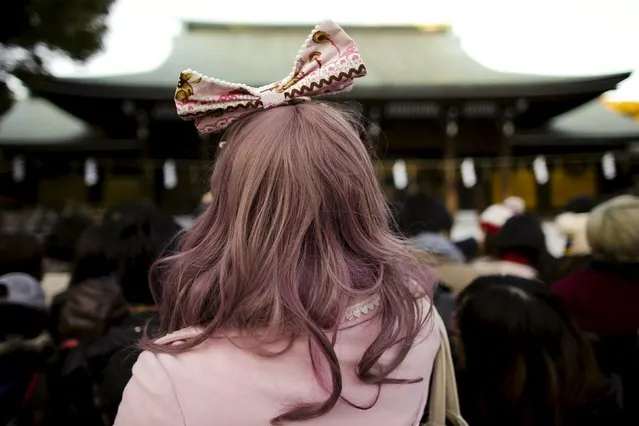
A woman arrives at the Shinto Meiji Shrine to pray on the first day of the new year in Tokyo, Japan, January 1, 2016. (Photo by Thomas Peter/Reuters)

A woman arrives at the Shinto Meiji Shrine to pray on the first day of the new year in Tokyo, Japan, January 1, 2016. (Photo by Thomas Peter/Reuters)
Details
03 Jan 2016 08:05:00
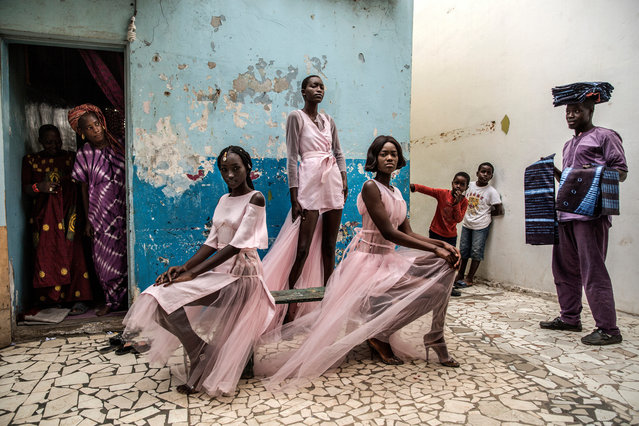
Portraits single nominee: Dakar fashion, by Finbarr O’Reilly. Curious residents and a street vendor selling material look on as models Diarra Ndiaye, Ndeye Fatou Mbaye and Malezi Sakho wear outfits by the Senegalese designer Adama Paris in the Medina neighbourhood of Senegal’s capital, Dakar. (Photo by Finbarr O’Reilly/World Press Photo 2019)

Portraits single nominee: Dakar fashion, by Finbarr O’Reilly. Curious residents and a street vendor selling material look on as models Diarra Ndiaye, Ndeye Fatou Mbaye and Malezi Sakho wear outfits by the Senegalese designer Adama Paris in the Medina neighbourhood of Senegal’s capital, Dakar. (Photo by Finbarr O’Reilly/World Press Photo 2019)
Details
23 Feb 2019 00:03:00


The New York Fashion Week is one of the most trending topics nowadays in the fashion world. This fantastic event happens twice a year, once in February, and next in September. The current version of the event of this February is going on with an entire focus on coming up collections for autumn or winter. You would be able to buy such up-to-the-minute apparels from the premium high street stores like New Look.

Just have a look!
Details
26 Feb 2018 15:00:00
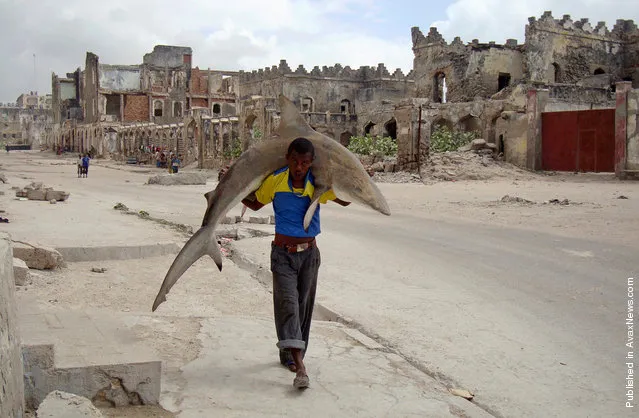
In this photo provided by World Press Photo, the 1st Prize Daily Life Single of the 2011 World Press Photo Contest by Omar Feisal, Somalia, Reuters, shows a man carrying a shark through the streets of Mogadishu, Somalia, Sept. 23, 2010

In this photo provided by World Press Photo, the 1st Prize Daily Life Single of the 2011 World Press Photo Contest by Omar Feisal, Somalia, Reuters, shows a man carrying a shark through the streets of Mogadishu, Somalia, September 23, 2010. (AP Photo/Omar Feisal/Reuters)
Details
08 Apr 2012 14:15:00


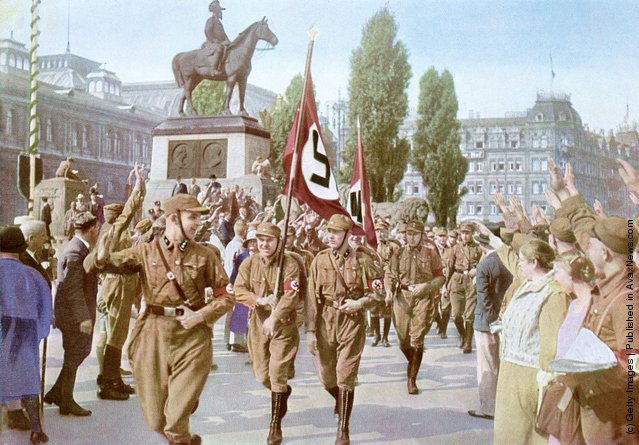
“Horst Ludwig Wessel (October 9, 1907 – February 23, 1930) was a German Nazi activist who was made a posthumous hero of the Nazi movement following his violent death in 1930. He was the author of the lyrics to the song “Die Fahne hoch” (“The Flag On High”), usually known as Horst-Wessel-Lied (“The Horst Wessel Song”), which became the Nazi Party anthem and, de facto, Germany's co-national anthem from 1933 to 1945”. – Wikipedia

Photo: German Nazi activist Horst Wessel (left) at the head of a parade of S.A. stormtroopers, or “brownshirts”, in Nuremberg, Germany, 1929. (Photo by Hulton Archive/Getty Images)
Details
08 Jul 2011 09:38:00
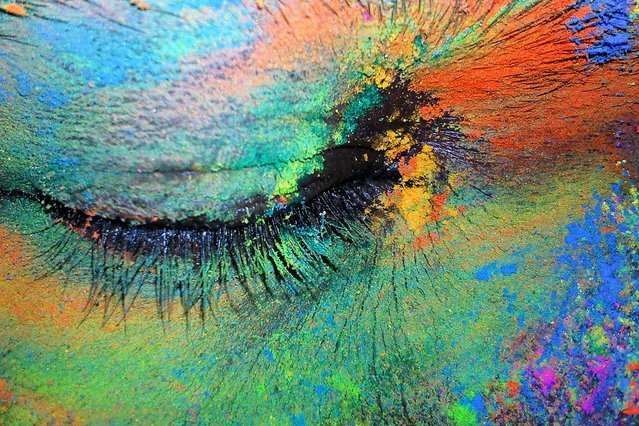
This close-up image – of a Holi Festival celebrant in Vrindivan, India, coated in neon-colored powder – was submitted to National Geographic’s Your Shot in the last week of March. On April 1 we published it on our Daily News site, along with seven other bright scenes captured during the Hindu spring Festival of Colors. (Photo by Tinto Alencherry/National Geographic)

This close-up image – of a Holi Festival celebrant in Vrindivan, India, coated in neon-colored powder – was submitted to National Geographic’s Your Shot in the last week of March. On April 1 we published it on our Daily News site, along with seven other bright scenes captured during the Hindu spring Festival of Colors. (Photo by Tinto Alencherry/National Geographic)
Details
06 Jan 2014 12:30:00
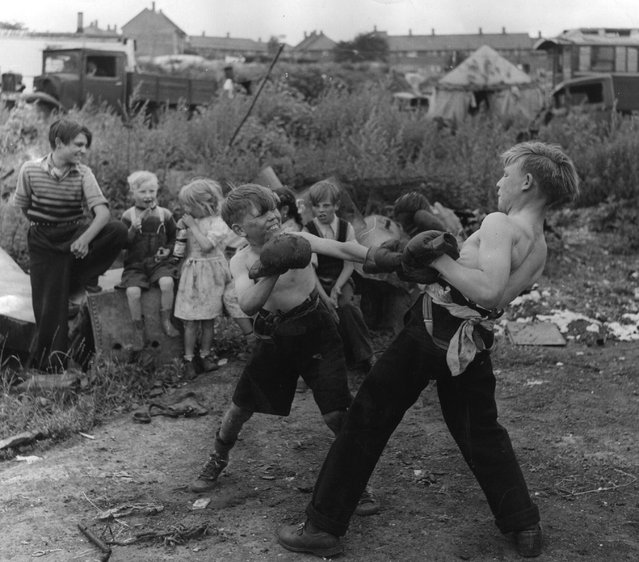
The unromantic gypsies. Children boxing in a gypsy camp in Kent, England on July 1, 1951. Like all boys these gypsy lads like to try their hand at boxing. Encouraged by their friends they fight it out on Corke's Meadow. Few Romanies now live a life of wandering romance. Most are like the three hundred squatters of Corke's Meadow, Kent, which is part of a “gypsy problem” that involves about 100,000 today. Of those about 25,000 can be rightly called gypsies, the rest are Mumpers and Posh-rats and Hobos. Corke's Meadow has both kinds. “Picture Post” cameraman Bert Hardy photographs the Corke's Meadow gypsies in their encampment. (Photo by Hulton-Deutsch Collection/Corbis via Getty Images)

The unromantic gypsies. Children boxing in a gypsy camp in Kent, England on July 1, 1951. Like all boys these gypsy lads like to try their hand at boxing. Encouraged by their friends they fight it out on Corke's Meadow. Few Romanies now live a life of wandering romance. Most are like the three hundred squatters of Corke's Meadow, Kent, which is part of a “gypsy problem” that involves about 100,000 today. Of those about 25,000 can be rightly called gypsies, the rest are Mumpers and Posh-rats and Hobos. Corke's Meadow has both kinds. “Picture Post” cameraman Bert Hardy photographs the Corke's Meadow gypsies in their encampment. (Photo by Hulton-Deutsch Collection/Corbis via Getty Images)
Details
12 Mar 2017 00:01:00
Nature, singles winner: Frogs with their legs severed struggle to the surface, surrounded by frogspawn, after being thrown back into the water in Covasna, Romania. (Photo by Bence Mate/World Press Photo 2019)

Nature, singles winner: Frogs with their legs severed struggle to the surface, surrounded by frogspawn, after being thrown back into the water in Covasna, Romania. (Photo by Bence Mate/World Press Photo 2019)
Details
13 Apr 2019 00:03:00