Loading...
Done
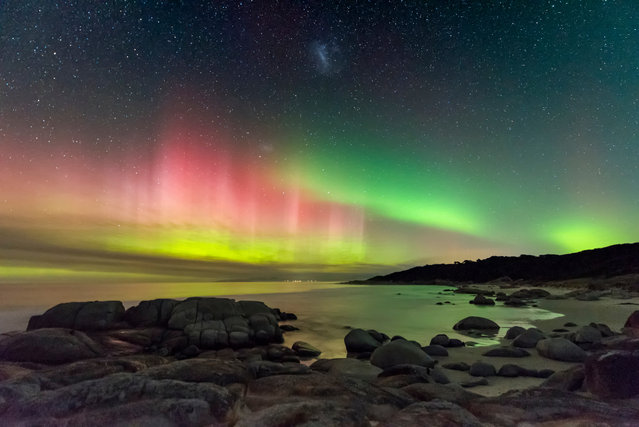
Aurora Australis from Beerbarrel Beach, by James Stone. Runner Up: Aurorae. (Photo by James Stone/Astronomy Photographer of the Year)

Aurora Australis from Beerbarrel Beach, by James Stone. Runner Up: Aurorae. (Photo by James Stone/Astronomy Photographer of the Year)
Details
14 Sep 2019 00:05:00
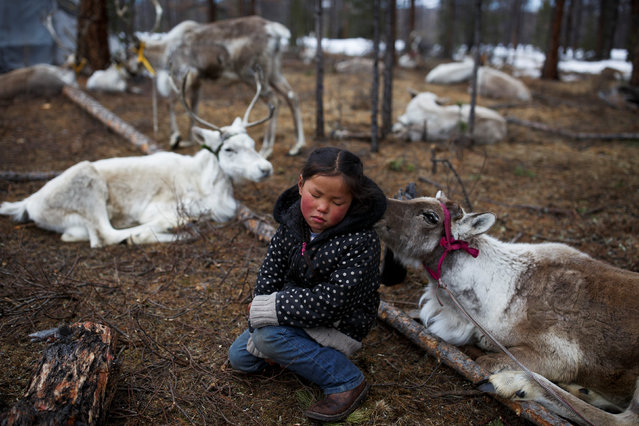
Tsetse, six-year-old daughter of Dukha herder Erdenebat Chuluu, sits among her family's reindeer in a forest near the village of Tsagaannuur, Khovsgol aimag, Mongolia, April 21, 2018. (Photo by Thomas Peter/Reuters)

Tsetse, six-year-old daughter of Dukha herder Erdenebat Chuluu, sits among her family's reindeer in a forest near the village of Tsagaannuur, Khovsgol aimag, Mongolia, April 21, 2018. Nyamaa is an ethnic Darkhad, herders of northern Mongolia who have historically inhabited the steppe that borders the Taiga forests. (Photo by Thomas Peter/Reuters)
Details
26 May 2018 00:03:00
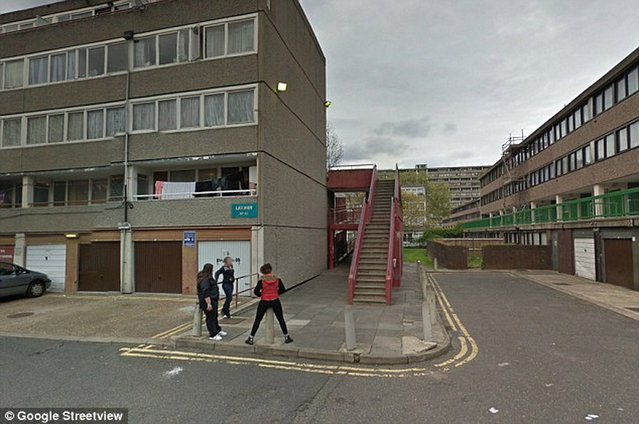
Bad Part of Town By Google Street View

Take a walk on the wild side around some of the most down right dangerous places in the world - and all without leaving your desk, courtesy of Google Street View. Since 2007, Google's amazing technology has given people the chance to visit the Eiffel Tower, peer out over San Francisco's Golden Gate Bridge or walk along a beach in the Bahamas. But as well as mapping the tourist-friendly hotspots, Google also ventured into places you really wouldn't want to find yourself. Here is a collection of some the most notorious areas captured by the infamous roaming camera cars from around the UK and the world.
Details
03 Oct 2013 11:05:00
Coliseum, Rome. (Photo by Richard Silver)

Richard Silver's photographs show us the world's biggest sights like Machu Picchu in Peru or Copacabana in Brazil. His photos, however, are not simply depictions of the landmarks but planned, artistic visual constructions that, with their playful combinations of sharpness and blur, create new worlds of experience. Photo: Coliseum, Rome. (Photo by Richard Silver)
Details
04 May 2013 11:19:00
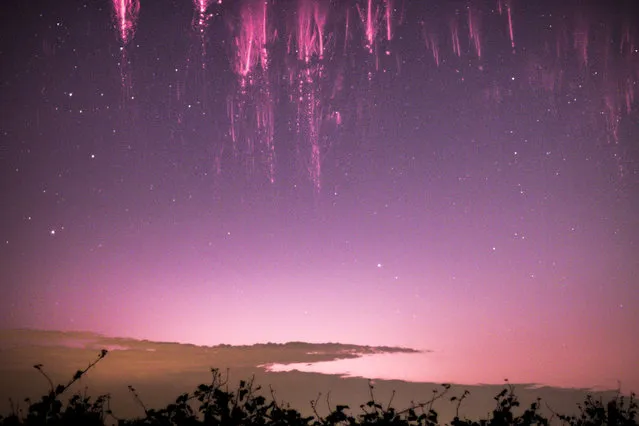
These spectacular pictures show the incredible moment a rare natural phenomenon happens in the night sky. Red sprite lightning lasts only a millisecond and takes place high above a tunderstorm cloud.The breathtaking flashes of light are caused by huge electrical discharges of lightning in the sky. Marko Korosec, 32, was lucky enough to catch these sprites on camera after months of trying. Mr Korosec, from Sezana in Slovenia, took the shots whilst he was following storms in Vivaro, Italy. (Photo by Marko Korosec/Solent News/SIPA Press)

These spectacular pictures show the incredible moment a rare natural phenomenon happens in the night sky. Red sprite lightning lasts only a millisecond and takes place high above a tunderstorm cloud.The breathtaking flashes of light are caused by huge electrical discharges of lightning in the sky. Marko Korosec, 32, was lucky enough to catch these sprites on camera after months of trying. Mr Korosec, from Sezana in Slovenia, took the shots whilst he was following storms in Vivaro, Italy. (Photo by Marko Korosec/Solent News/SIPA Press)
Details
05 Oct 2014 12:09:00
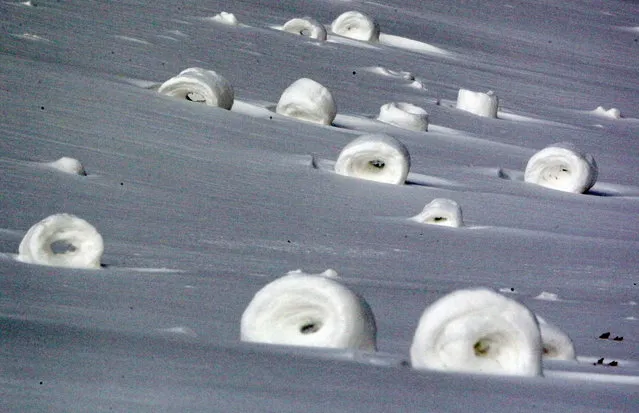
In this January 27, 2014 photo, snow rollers dot a lot at the northwest corner of Olive and North Main streets in Akron, Ohio. The snow balls are formed naturally when high winds push snow across a hill. (Photo by Michael Chritton/AP Photo/Akron Beacon Journal)

In this January 27, 2014 photo, snow rollers dot a lot at the northwest corner of Olive and North Main streets in Akron, Ohio. The snow balls are formed naturally when high winds push snow across a hill. (Photo by Michael Chritton/AP Photo/Akron Beacon Journal)
Details
02 Feb 2014 09:43:00
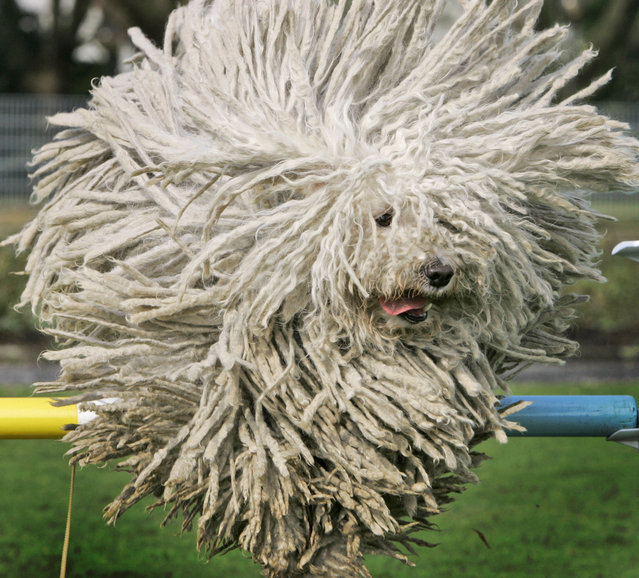
Hungarian Puli sheep dog, Fee, jumps over a hurdle during a preview for a pedigree dog  show in Dortmund on Thursday April 24, 2008. (Photo by Frank Augstein/AP Photo)

Hungarian Puli sheep dog, Fee, jumps over a hurdle during a preview for a pedigree dog show in Dortmund on Thursday April 24, 2008. (Photo by Frank Augstein/AP Photo)
Details
03 Sep 2015 12:49:00


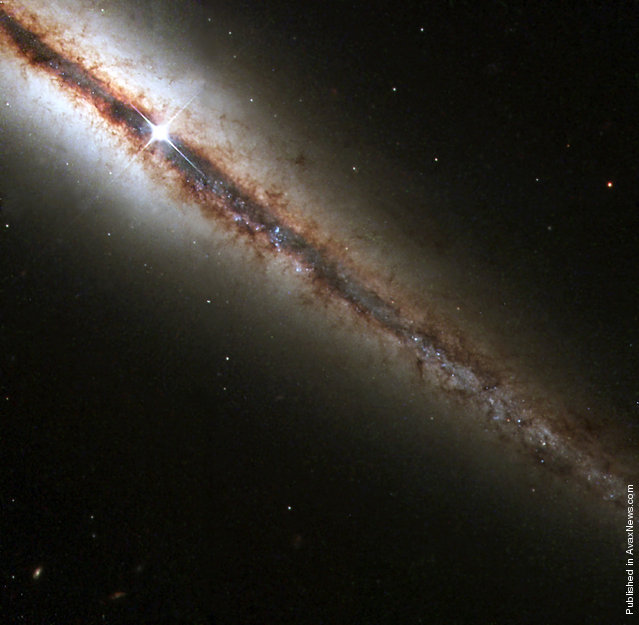
An image produced by the Hubble telescope of the perfectly “edge-on” galaxy, or NGC 4013, March 1, 2001. This new Hubble picture reveals, with great detail, huge clouds of dust and gas extending along, as well as far above, the galaxy's main disk. NGC 4013 is a spiral galaxy, similar to the Milky Way, lying some 55 million light-years from Earth in the direction of the constellation Ursa Major. Viewed face-on, it would look like a nearly circular pinwheel, but NGC 4013 happens to be seen edge-on from our vantage point. Even at 55 million light-years, the galaxy is larger than Hubble's field of view, and the image shows only a little more than half of the object, albeit with unprecedented detail. (Photo Courtesy of NASA/Newsmakers)
Details
28 Feb 2015 22:33:00