Loading...
Done
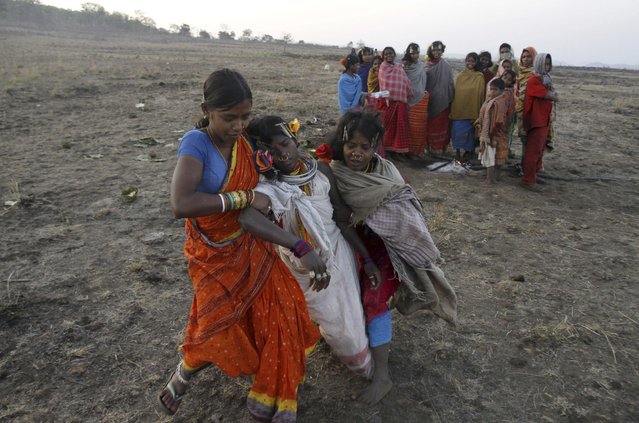
A member of India’s Dongria tribe faints in trance during the two-day long Niyamraja Festival atop the Niyamgiri hills near Lanjigarh in Kalahandi district, Orissa state, India, Sunday, February 22, 2015. Every year, members of this indigenous group celebrate this festival sacrificing animals and birds in worship of their deity. (Photo by Biswaranjan Rout/AP Photo)

A member of India’s Dongria tribe faints in trance during the two-day long Niyamraja Festival atop the Niyamgiri hills near Lanjigarh in Kalahandi district, Orissa state, India, Sunday, February 22, 2015. Every year, members of this indigenous group celebrate this festival sacrificing animals and birds in worship of their deity. (Photo by Biswaranjan Rout/AP Photo)
Details
23 Feb 2015 12:33:00
Amanda and her cousin Amy, Valdese, North Carolina, 1990. (Photo by Mary Ellen Mark)

Mary Ellen Mark was an American photographer known for her photojournalism / documentary photography, portraiture, and advertising photography. She photographed people who were "away from mainstream society and toward its more interesting, often troubled fringes". Here: Amanda and her cousin Amy, Valdese, North Carolina, 1990. (Photo by Mary Ellen Mark)
Details
18 Nov 2015 08:04:00
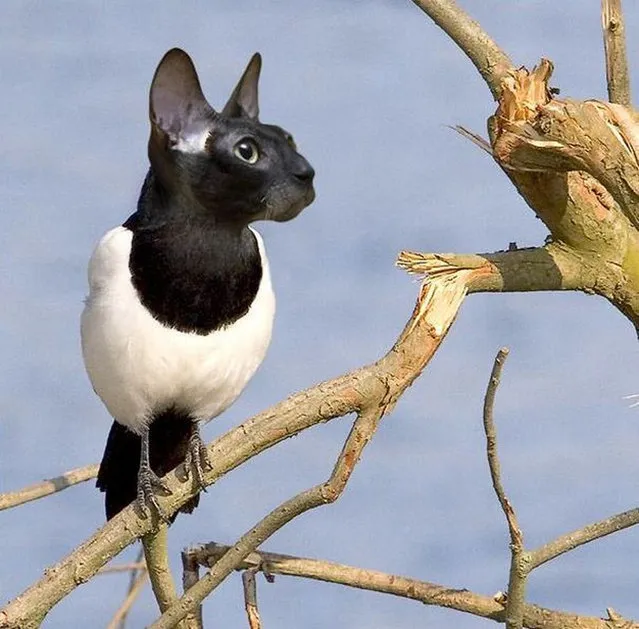
Impossible Animals By Jan Oliehoek. Part1

We’re showcasing photo-manipulation by Jan Oliehoek, a Dutch artist with a love for animals, photography and Photoshop. Oliehoek loves creating animal species that somehow never made it into our biology books, such as felines with rodent heads, lambs with the body of a squirrel, zebra rhinos and hippo-frogs! He’s currently having two of his pictures featured in Crazy Photography, an upcoming title from Vivays Publishing
Details
23 May 2013 11:34:00
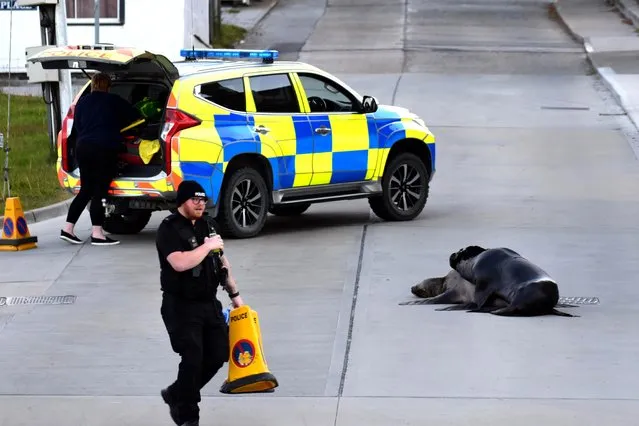
Police in Stanley, the Falklands capital, had to temporarily close a road after a pair of sea lions picked an awkward spot to get frisky on Sunday, December 5, 2021. (Photo by Genti Cena Photography/Triangle)

Police in Stanley, the Falklands capital, had to temporarily close a road after a pair of sea lions picked an awkward spot to get frisky on Sunday, December 5, 2021. (Photo by Genti Cena Photography/Triangle)
Details
19 Dec 2021 06:54:00
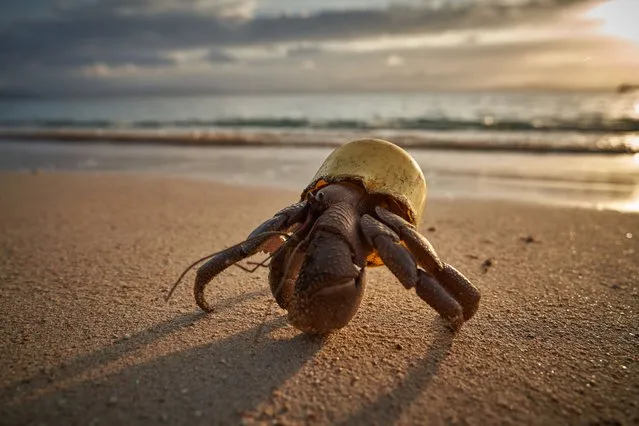
This shot, which was announced the winner by the on December 2, 2022 came top in the People and Nature category of the British Ecological Society’s Capturing Ecology photography competition. (Photo by British Ecological Society)

This shot, which was announced the winner by the on December 2, 2022 came top in the People and Nature category of the British Ecological Society’s Capturing Ecology photography competition. (Photo by British Ecological Society)
Details
06 Jan 2023 05:06:00
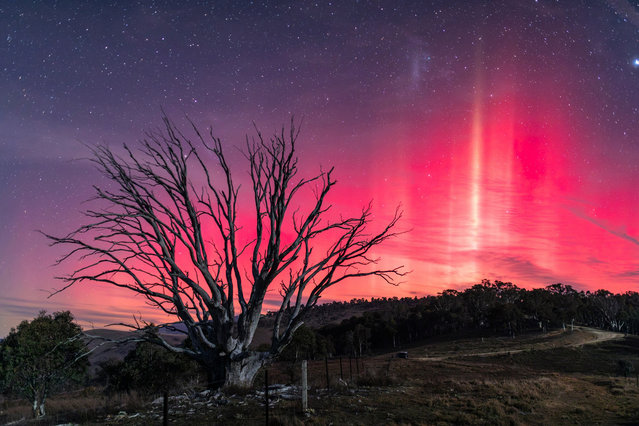
Paul Kerr was able to capture this stunning vista of the aurora australis from Canberra, New Zealand on June 1, 2025. (Photo by Paul Kerr/Hold Still Photography)

Paul Kerr was able to capture this stunning vista of the aurora australis from Canberra, New Zealand on June 1, 2025. (Photo by Paul Kerr/Hold Still Photography)
Details
22 Dec 2025 08:30:00
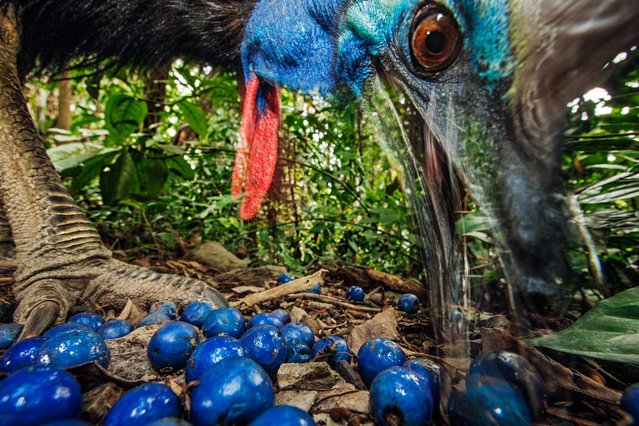
“Cassowaries are large, flightless birds related to emus and (more distantly) to ostriches, rheas, and kiwis”, writes Olivia Judson in the September issue of National Geographic magazine. (Photo by Christian Ziegler/National Geographic)

“Cassowaries are large, flightless birds related to emus and (more distantly) to ostriches, rheas, and kiwis”, writes Olivia Judson in the September issue of National Geographic magazine. How large? People-size: Adult males stand well over five foot five and top 110 pounds. Females are even taller, and can weigh more than 160 pounds. Dangerous when roused, they’re shy and peaceable when left alone. But even birds this big and tough are prey to habitat loss. The dense New Guinea and Australia rain forests where they live have dwindled. Today cassowaries might number 1,500 to 2,000. And because they help shape those same forests – by moving seeds from one place to another – “if they vanish”, Judson writes, “the structure of the forest would gradually change” too. (Photo by Christian Ziegler/National Geographic)
Details
06 Jan 2014 12:21:00
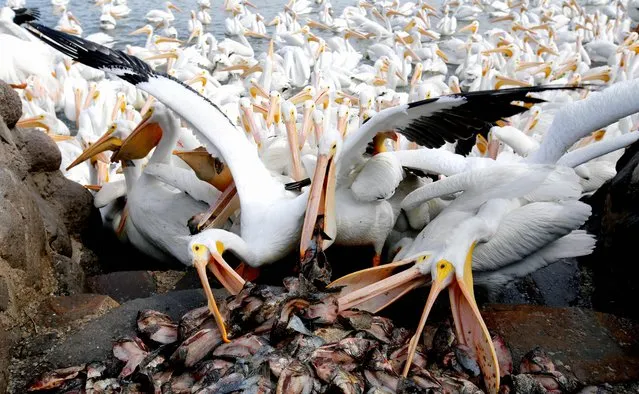
A pod of white pelicans, one of the largest birds in Canada and the US, are seen on the shore of the Chapala lagoon in Cojumatlan de Regules, Mexico, on January 28, 2022. White pelicans travel thousands of kilometers migrating from the cold temperatures of North America. (Photo by Ulises Ruiz/AFP Photo)

A pod of white pelicans, one of the largest birds in Canada and the US, are seen on the shore of the Chapala lagoon in Cojumatlan de Regules, Mexico, on January 28, 2022. White pelicans travel thousands of kilometers migrating from the cold temperatures of North America. (Photo by Ulises Ruiz/AFP Photo)
Details
06 Feb 2022 06:20:00