Loading...
Done
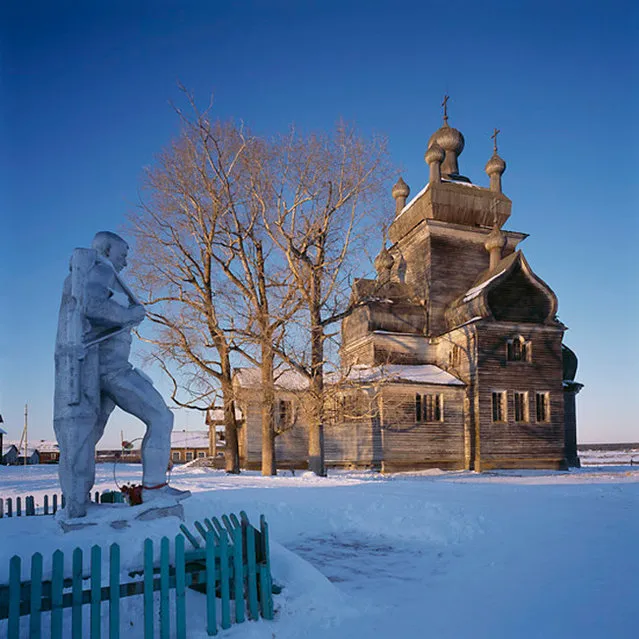
Wooden Churches - Travelling In The Russian North By Richard Davies Part 2

While communism, collectivism, worms, dry rot and casual looting failed to destroy the majestic wooden churches of Russia, it may be ordinary neglect that finally does them in. Dwindled now to several hundred remaining examples, these glories of vernacular architecture lie scattered amid the vastness of the world’s largest country. Just over a decade ago, Richard Davies, a British architectural photographer, struck out on a mission to record the fragile and poetic structures. Austerely beautiful and haunting, “Wooden Churches: Traveling in the Russian North” (White Sea Publishing; $132) is the result. Covering thousands of miles, Mr. Davies described how he and the writer Matilda Moreton tracked down the survivors from among the thousands of onion-domed structures built after Prince Vladimir converted to Christianity in 988.

See also: Wooden Churches Part1
Details
28 Nov 2013 12:13:00
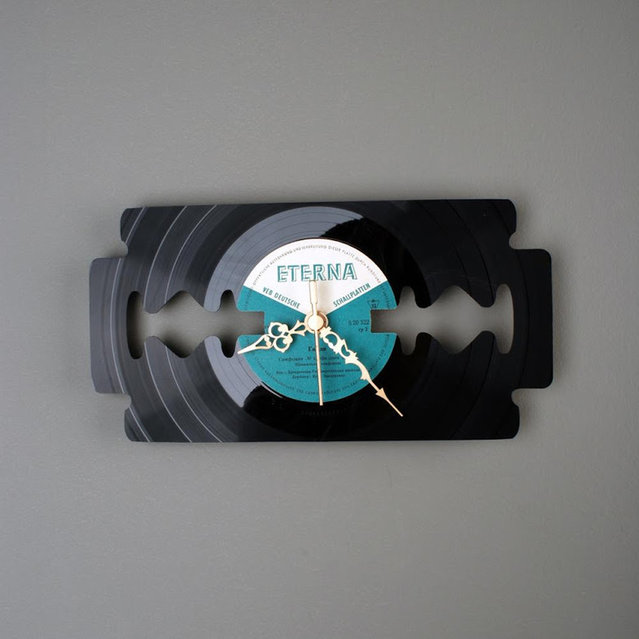
Vinyl Clock By Pavel Sidorenko Part 1

Pavel Sidorenko is an award winning Estonian designer who was born in 1980 in Tallinn and studied product design at Estonian Academy of Arts and Graduated in 2006. Not only does he incorporate pragmatic necessity, but also transmits an emotional qualities within the everyday environment. His fantastic collection of Re Vinyl designs are a result of upcycling a product fashioned from old vinyl records. Beautifully crafted and working with a range of themes from scenography to animal creatures, there is sure to be something for everyone with these stylish selection of recycled vinyl clocks!


See also:Part 2
Details
28 Feb 2014 08:55:00
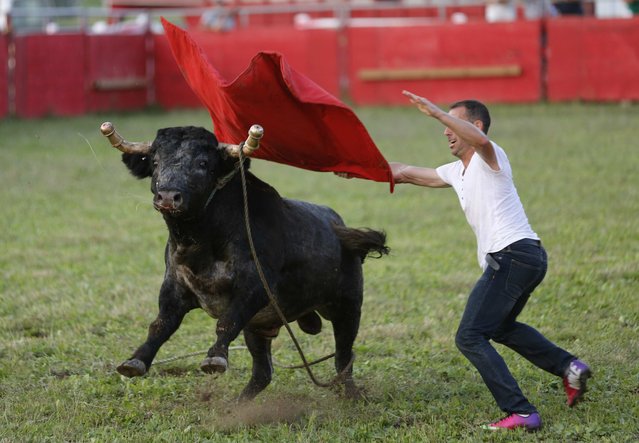
Matador Marco Espinola, who emigrated from the Azores two years ago, challenges a bull during an Azorean “tourada a corda” (bullfight by rope) in Brampton, Ontario August 15, 2015. (Photo by Chris Helgren/Reuters)

Matador Marco Espinola, who emigrated from the Azores two years ago, challenges a bull during an Azorean “tourada a corda” (bullfight by rope) in Brampton, Ontario August 15, 2015. Bulls in a tourada a corda are held by a rope controlled by a team of men to make sure the animal does not cause injury. Bulls are never killed, in contrast with bullfighting in Spain. The Portuguese population in Canada, numbering 429,000 in the 2011 census, mainly centers around Toronto with immigrants from the nine islands of the mid-Atlantic Azores archipelago. (Photo by Chris Helgren/Reuters)
Details
18 Aug 2015 13:39:00
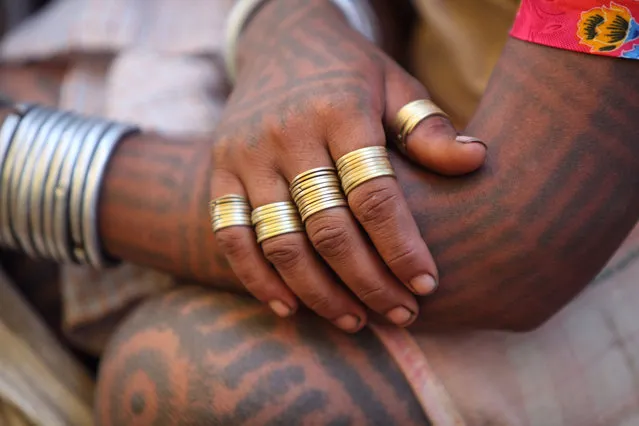
Once applied, the designs are washed using warm water and cow dung. Herbs are applied to promote faster healing. (Photo by Ronny Sen/WaterAid/The Guardian)

For more than 2,000 years, women from the Baiga tribe in the highland district of Dindori, in central India’s Madhya Pradesh state, have been tattooed. Sumintra, 25, from Bona village, has the markings across her forehead, legs and arms. The women who work as tattoo artists are knowledgable about the different types of designs and pigments preferred by various tribes, and their meanings are passed to them by their mothers. The tattooing ‘season’ begins with the approach of winter. (Photo by Ronny Sen/WaterAid/The Guardian)
Details
19 Aug 2017 08:48:00
Wrestler Kairi Hojo jumps at her opponent  Mieko satomura during their Stardom female professional wrestling show at Korakuen Hall in Tokyo, Japan, July 26, 2015. (Photo by Thomas Peter/Reuters)

Wrestler Kairi Hojo jumps at her opponent Mieko satomura during their Stardom female professional wrestling show at Korakuen Hall in Tokyo, Japan, July 26, 2015. Professional women's wrestling in Japan means body slams, sweat, and garish costumes. But Japanese rules on hierarchy also come into play, with a culture of deference to veteran fighters. The brutal reality of the ring is masked by a strong fantasy element that feeds its popularity with fans, most of them men. (Photo by Thomas Peter/Reuters)
Details
08 Apr 2016 15:18:00


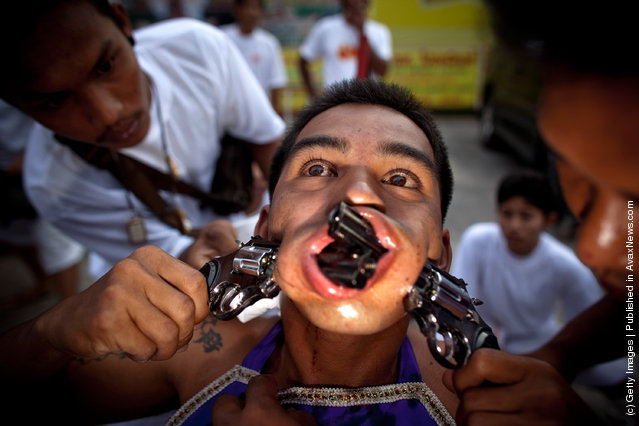
A devotee of the Chinese shrine of Samkong, pierces his cheeks with toy guns during a procession of Vegetarian Festival on October 11, 2010 in Phuket, Thailand. Ritual Vegetarianism in Phuket Island traces it roots back to the early 1800's. The festival begins on the first evening of the ninth lunar month and lasts for nine days. Participants in the festival perform acts of body piercing as a means of shifting evil spirits from individuals onto themselves and bring the community good luck. (Photo by Athit Perawongmetha/Getty Images)
Details
09 Jul 2011 11:55:00
A decades-old television. (Photo by Mark C. O'Flaherty)

The official name for this tiny speck of land – the size of 12 football pitches – is Hashima, but few call it that. In English, its most commonly used name means “Battleship Island” and, viewed from a certain angle offshore, its silhouette is uncannily dreadnought in nature. It was a mining facility until 1974, when it was abandoned to the elements, before partially reopening as a tourist attraction in 2009. Photo: A decades-old television. (Photo by Mark C. O'Flaherty)
Details
15 Jun 2014 11:24:00
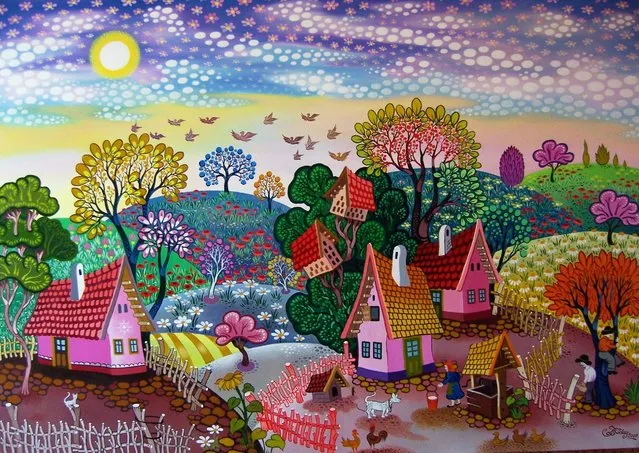
Painting By Koday Laszlo

Laszlo Koday was born in Hungary in 1945. In 1970 he began as a self-tought painter. The life and work of Henri Rousseau made a deep impression on him. His pictures are fairy tales expressed by pictorial means, human, animal and nature are equally important in them. There are bright, with unmixed pure colours, compositions wich spread calmness and gaiety. Kaday's works are know not only in Hungary but in many countries and are included in many private and public collections. His paintings can be found in galleries abroad, for example the GINA Gallery.
Details
23 Jul 2013 09:00:00