Loading...
Done
Mercedes-Benz Unimog Concept

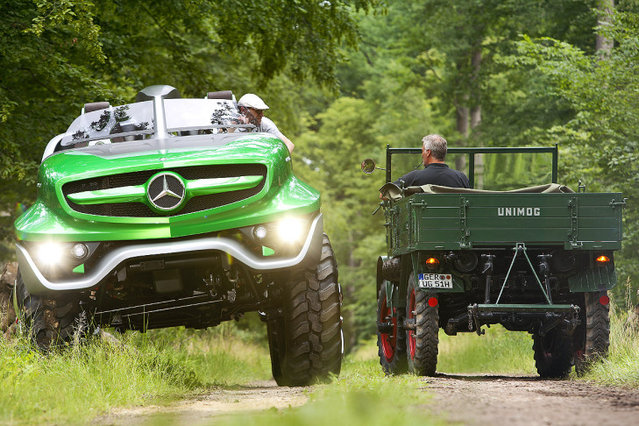
How much do things change in 60 years? Sometimes the best answer to that kind of question is a picture. Here you can see an original Unimog (right), built sometime between the start of production in 1948 and 1951, when Mercedes bought the operation in order to expand it enough to keep up with demand. On the left is a “60th Anniversary” Unimog design concept, celebrating not the actual birth of the Unimog, but its purchase by Mercedes. Needless to say, the contrast between the two is… breathtaking. And if you’re curious about the evolution of this hugely influential vehicle, if you can’t help wondering how it grew from a (relatively) tiny, spartan utility vehicle to a garish, Mercedes-starred behemoth.
Details
31 Oct 2012 11:24:00
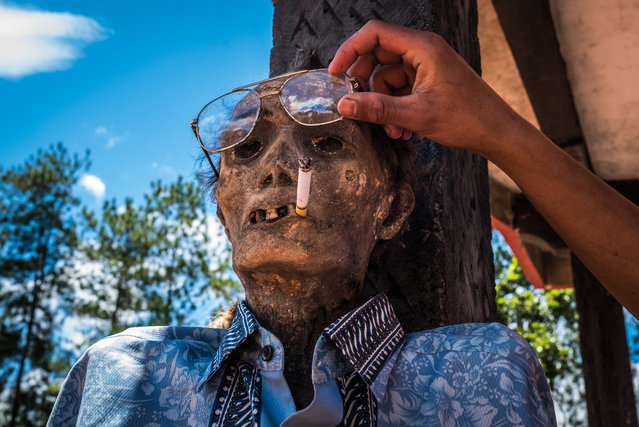
Todeng died in 2009. A young relative of his, Sam, lights him a cigarette and changes his glasses. (Photo by Claudio Sieber Photography/The Guardian)

For the Torajan people of Indonesia, death is part of a spiritual journey: families keep the mummified remains of their deceased relatives in their homes for years – and traditionally invite them to join for lunch on a daily basis – before they are eventually buried. Here: Todeng died in 2009. A young relative of his, Sam, lights him a cigarette and changes his glasses. (Photo by Claudio Sieber Photography/The Guardian)
Details
14 Oct 2017 09:34:00


“Why do you keep blowing the trumpet, young man?
You'd better lie in a coffin, young man!”

On that life-affirming note, let me congratulate you (yes, it's been a tough year, and the next one will be even tougher better). Happy New Year! And now disco.
Details
31 Dec 2022 06:59:00
An artist takes part in the festival “Statues en Marche” in Marche-en-Famenne, Belgium, July 20, 2019. (Photo by Yves Herman/Reuters)

An artist takes part in the festival “Statues en Marche” in Marche-en-Famenne, Belgium, July 20, 2019. Living statues are a common sight in many city centers, but it is rare to see such a diverse range of this peculiar form of street art for which performers must keep still for painfully long periods of time to create the desired illusion. (Photo by Yves Herman/Reuters)
Details
24 Jul 2019 00:01:00
Moon jellyfish and cross jellies. (Photo by David Hall)

David Hall’s photographs of scenery and creatures off the coast of Canada in the Pacific Northwest portray serenity under the water, which belie the extreme challenges he faces to get his images. For each shoot, Hall wears a dry suit, a neoprene body suit that covers all of his body but his head and traps air inside to keep him warm. Water temperature in Canada’s British Columbia typically ranges between 45 and 50 degrees Fahrenheit. Photo: Moon jellyfish and cross jellies. (Photo by David Hall)
Details
16 Sep 2014 12:57:00
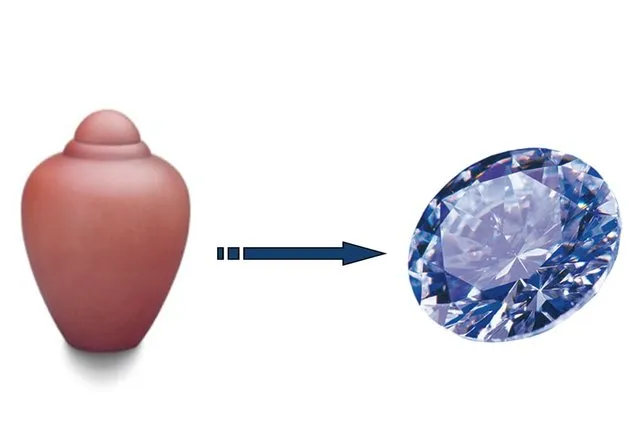
Swiss Company Turns People’s Ashes Into Diamonds

In the past people used to bury their loved ones or turn them into ashes. However, now there is a completely new possibility. Since having an urn with ashes in your house may be a bit weird, you may want to choose the option of turning your deceased relative into a diamond. Yes, diamond! You’ve heard us correctly. By using immense heat and pressure, the ashes you get after cremating a person can be turned into a real diamond. After this, the diamond can be left as it is, and stored in a jewelry box, or it can be used as a piece of jewelry, such as a ring or a pendant, allowing you to always keep your loved one close to your heart. (Photo by djd/Algordanza memorial diamonds)
Details
20 Oct 2014 08:52:00
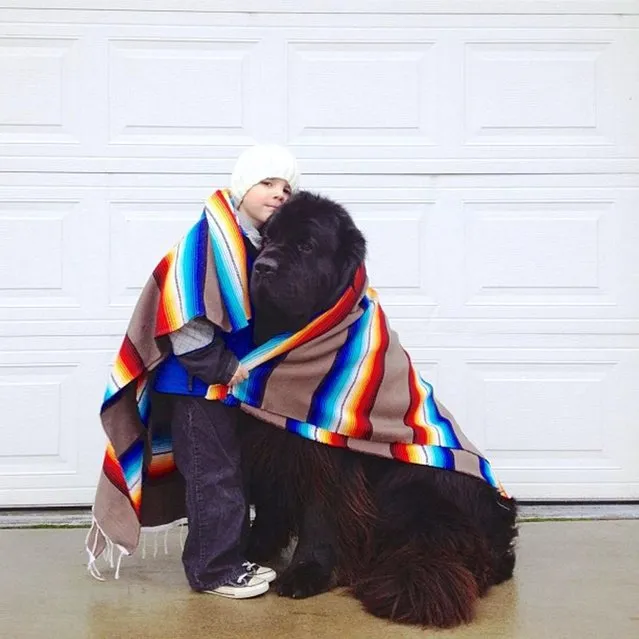
Hats off (or on) to Julian for sharing his blanket with his good buddy. Not that the furry beast needs it... (Photo by Stasha Becker/Rex Features)

Five-year-old Julian Becker and his 165 pound pet Newfoundland Max have been best buds around all their lives. To commemorate the friendship and to keep Julian's father, a Naval officer who is often away, in the loop, Julian's mom Stasha began taking photos. Photo: Hats off (or on) to Julian for sharing his blanket with his good buddy. Not that the furry beast needs it... (Photo by Stasha Becker/Rex Features)
Details
12 Apr 2013 11:29:00
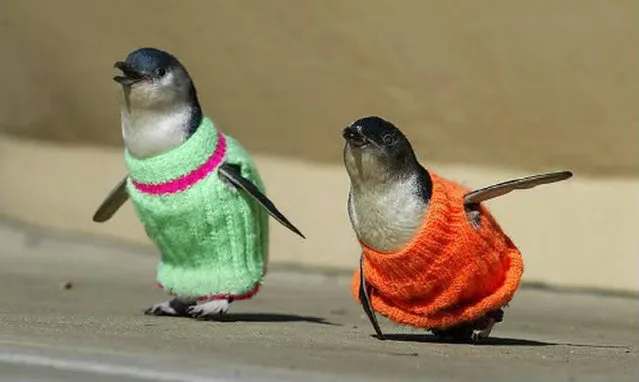
New Zealand Penguins in Need of Sweaters

Penguin sweaters, also known as penguin jumpers, are sweaters which are knitted for penguins that have been caught in oil slicks. When an oil spill affects penguins, they are dressed in knitted sweaters to stop them preening their feathers and to keep them warm, since the spilled oil destroys their natural oils. This also prevents them from poisoning themselves by ingesting the oil. The sweaters are removed and discarded as soon as the penguins can be washed. The original project has been completed, but the knitting pattern is still available on-line, as subsequent oil spills make it necessary. The extra sweaters are kept on behalf of the Wildlife Rescue Team.
Details
31 Oct 2012 13:06:00