Loading...
Done


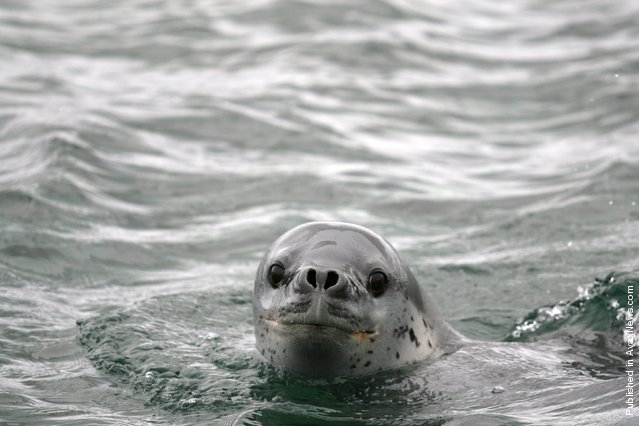
“The leopard seal (Hydrurga leptonyx), also referred to as the sea leopard, is the second largest species of seal in the Antarctic (after the southern elephant seal). It is most common in the southern hemisphere along the coast of Antarctica and on most sub-Antarctic islands, but can also be found on the coasts of southern Australia, Tasmania, South Africa, New Zealand, Lord Howe Island, Tierra del Fuego, the Cook Islands, and the Atlantic coast of South America. It can live twenty-six years, possibly more. Orcas and large sharks are the only natural predators of leopard seals”. – Wikipedia

Photo by: Gilad Rom; Source: Flickr
Details
13 Nov 2011 11:24:00
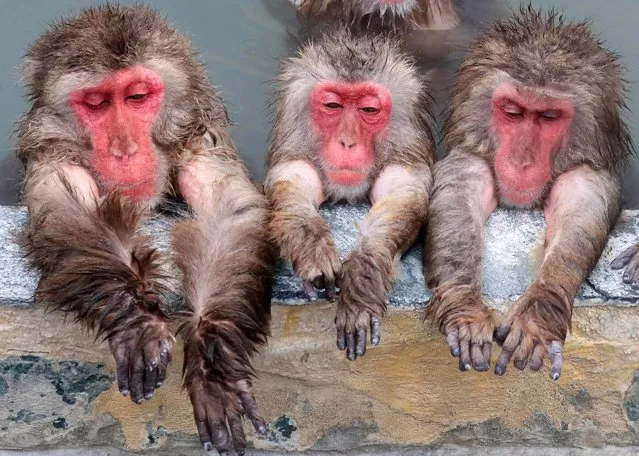
Japanese macaques are relaxed in an outdoor hot spring bath at Hakodate Tropical Botanical Garden on December 1, 2016 in Hakodate, Hokkaido, Japan. (Photo by The Asahi Shimbun via Getty Images)

Japanese macaques are relaxed in an outdoor hot spring bath at Hakodate Tropical Botanical Garden on December 1, 2016 in Hakodate, Hokkaido, Japan. The garden offers the hot spring treatment to macaques until May next year. (Photo by The Asahi Shimbun via Getty Images)
Details
02 Dec 2016 11:37:00
Jimmy Bryan of Phoenix, Ariz., gets the checkered victory flag at the Indiana State Fairgrounds September 17, 1955 as he wins the “Hoosier Hundred” for the second consecutive year. Bryan averaged 83.98 miles an hour for the 100-lap, 100-mile AAA big car race. (Photo by AP Photo)

Jimmy Bryan of Phoenix, Ariz., gets the checkered victory flag at the Indiana State Fairgrounds September 17, 1955 as he wins the “Hoosier Hundred” for the second consecutive year. Bryan averaged 83.98 miles an hour for the 100-lap, 100-mile AAA big car race. (Photo by AP Photo)
Details
18 Sep 2015 15:12:00
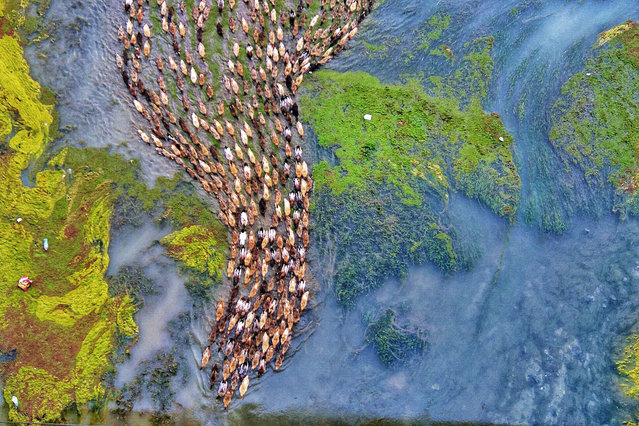
Ducks in the river Baral in Bangladesh. (Photo by Rafeur Rahman/Caters News Agency)

These photographs of hundreds of ducks following their leader down a river are truly mesmerizing. Rafeur Rahman of Bangladesh climbed a high bridge and saw hundreds of ducks apparently playing a game of follow the leader. More than 500 ducks live on the river, where the mosses and snails provide the perfect habitat. Here: Ducks in the river Baral in Bangladesh. (Photo by Rafeur Rahman/Caters News Agency)
Details
08 May 2018 00:05:00
Make Your Franklin By Martin Joubert Part 2

Though we have “In God we trust” written on our banknotes, we didn’t go as far as putting Jesus on them. Martin Joubert, however, decided to correct this injustice and placed the face of Jesus on one of his 100 dollar designs. Though some may view it as sacrilege, Jesus surely wouldn’t mind seeing his face on the banknote of one of the most pious nations in the world. In our opinion, however, the monopoly man is the most appropriate substitute for the Ben Franklin. (Photo by Martin Joubert)
Details
17 Dec 2014 11:46:00
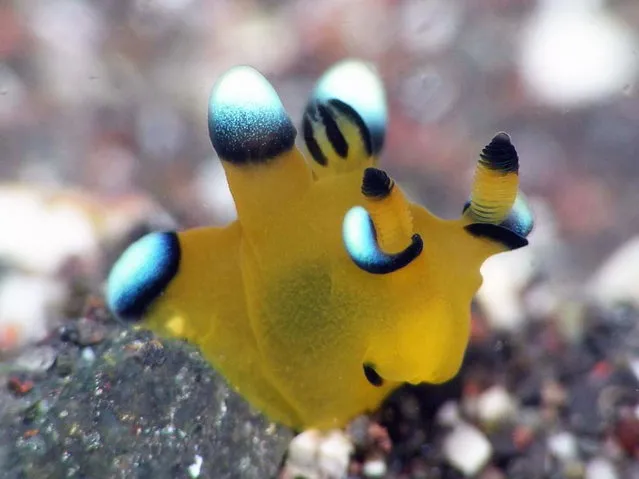
Thecacera Pacifica AKA Pikachu

If you ever wanted to meet a live Pikachu, you might have a hard time finding one. However, there is a creature on this Earth that kind of looks like one. That creature’s name is Thecacera pacifica and it is a species of a sea slug. These little critters can be found in the Indian Ocean from African coast to Indonesia and Vanuatu. Their vibrant orange and blue colors look gorgeous, making it look like some sort of anemone. Also, as you might have guessed from the striking colors of the sea slug, just like most of anemones, this creature is very toxic. Thus, keeping it as a pet isn’t an option.

Details
19 Dec 2014 12:51:00
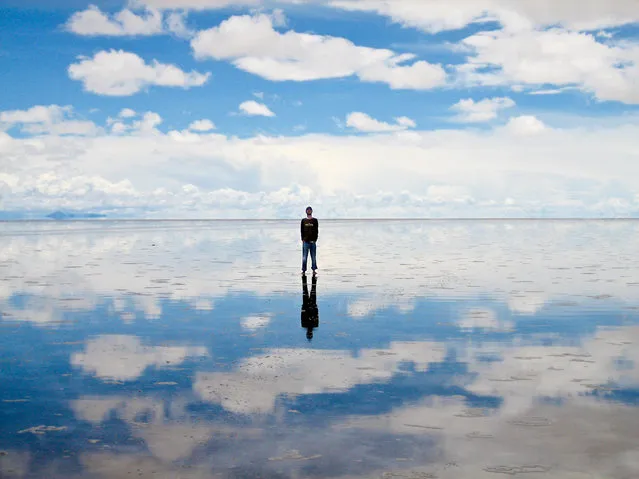
Salar de Uyuni

Salar de Uyuni (or Salar de Tunupa) is the world's largest salt flat at 10,582 square kilometers (4,086 sq mi). It is located in the Potosí and Oruro departments in southwest Bolivia, near the crest of the Andes, and is elevated 3,656 meters (11,995 ft) above mean sea level. The Salar was formed as a result of transformations between several prehistoric lakes. It is covered by a few meters of salt crust, which has an extraordinary flatness with the average altitude variations within one meter over the entire area of the Salar.
Details
04 Aug 2012 08:42:00
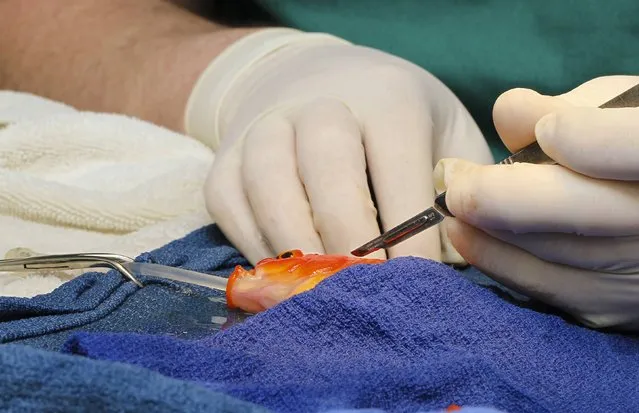
A 10-year-old pet goldfish named George undergoes veterinarian Tristan Rich's scalpel to remove a life-threatening head tumor in this handout picture taken September 11, 2014 and provided to Reuters by the Lort Smith Animal Hospital in Melbourne, Australia. (Photo by Reuters/Lort Smith Animal Hospital)

A 10-year-old pet goldfish named George undergoes veterinarian Tristan Rich's scalpel to remove a life-threatening head tumor in this handout picture taken September 11, 2014 and provided to Reuters by the Lort Smith Animal Hospital in Melbourne, Australia. In a 45-minute long procedure described by Rich as “fiddly”, the fish was sedated by water laced with anaesthetic, the tumour removed and the wound sealed with tissue glue followed by antibiotics and painkillers. (Photo by Reuters/Lort Smith Animal Hospital)
Details
16 Sep 2014 12:24:00