Loading...
Done
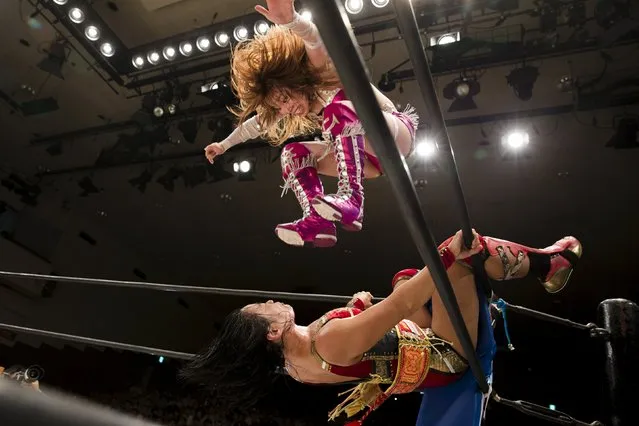
Wrestler Kairi Hojo jumps at her opponent  Mieko satomura during their Stardom female professional wrestling show at Korakuen Hall in Tokyo, Japan, July 26, 2015. (Photo by Thomas Peter/Reuters)

Wrestler Kairi Hojo jumps at her opponent Mieko satomura during their Stardom female professional wrestling show at Korakuen Hall in Tokyo, Japan, July 26, 2015. Professional women's wrestling in Japan means body slams, sweat, and garish costumes. But Japanese rules on hierarchy also come into play, with a culture of deference to veteran fighters. The brutal reality of the ring is masked by a strong fantasy element that feeds its popularity with fans, most of them men. (Photo by Thomas Peter/Reuters)
Details
08 Apr 2016 15:18:00
A decades-old television. (Photo by Mark C. O'Flaherty)

The official name for this tiny speck of land – the size of 12 football pitches – is Hashima, but few call it that. In English, its most commonly used name means “Battleship Island” and, viewed from a certain angle offshore, its silhouette is uncannily dreadnought in nature. It was a mining facility until 1974, when it was abandoned to the elements, before partially reopening as a tourist attraction in 2009. Photo: A decades-old television. (Photo by Mark C. O'Flaherty)
Details
15 Jun 2014 11:24:00
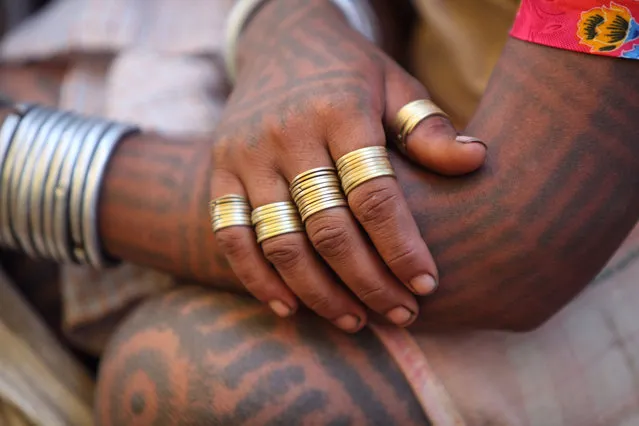
Once applied, the designs are washed using warm water and cow dung. Herbs are applied to promote faster healing. (Photo by Ronny Sen/WaterAid/The Guardian)

For more than 2,000 years, women from the Baiga tribe in the highland district of Dindori, in central India’s Madhya Pradesh state, have been tattooed. Sumintra, 25, from Bona village, has the markings across her forehead, legs and arms. The women who work as tattoo artists are knowledgable about the different types of designs and pigments preferred by various tribes, and their meanings are passed to them by their mothers. The tattooing ‘season’ begins with the approach of winter. (Photo by Ronny Sen/WaterAid/The Guardian)
Details
19 Aug 2017 08:48:00
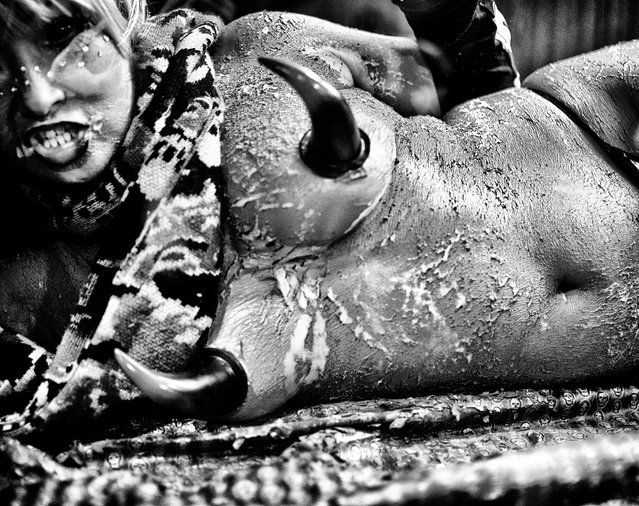
The underbelly of fetish parties has been exposed in photographs captured by Belgian photographer MagLau. The photographer dedicated three years to capturing the obsession with leather and chains, visiting fetish parties through Europe and Japan. The photographer told: “I just took pictures, always finding some beauty in the dark side”. He said that most people were happy to be photographed for the project, with the images included in a new book Fetish Ballad. Aiming to capture the candid moments, he said he never judged but instead wanted to simply observe and understand. Here: Picture from Fetish Ballad book. (Photo by MagLau/Laurent Muschel)

The underbelly of fetish parties has been exposed in photographs captured by Belgian photographer MagLau. The photographer dedicated three years to capturing the obsession with leather and chains, visiting fetish parties through Europe and Japan. The photographer told: “I just took pictures, always finding some beauty in the dark side”. He said that most people were happy to be photographed for the project, with the images included in a new book Fetish Ballad. Aiming to capture the candid moments, he said he never judged but instead wanted to simply observe and understand. Here: Picture from Fetish Ballad book. (Photo by MagLau/Laurent Muschel)
Details
16 Oct 2016 10:49:00
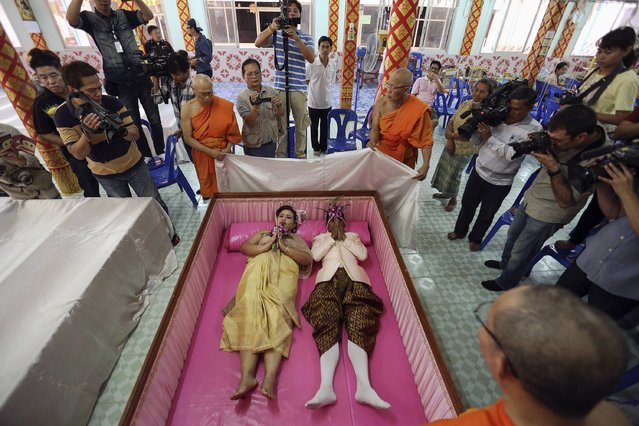
People take pictures and Buddhist monk chants as a groom and a bride lay inside a pink coffin during their wedding ceremony at Wat Takien temple in Nonthaburi province, on the outskirts of Bangkok February 14, 2015. (Photo by Damir Sagolj/Reuters)

People take pictures and Buddhist monk chants as a groom and a bride lay inside a pink coffin during their wedding ceremony at Wat Takien temple in Nonthaburi province, on the outskirts of Bangkok February 14, 2015. Ten Thai couples laid in the pink coffin starting 9:09 AM on Saturday during the wedding ceremony organised by the Buddhist temple on Valentine's Day. Couples believe laying briefly in the coffin will get rid of bad luck and usher happiness into their lives. (Photo by Damir Sagolj/Reuters)
Details
16 Feb 2015 13:36:00
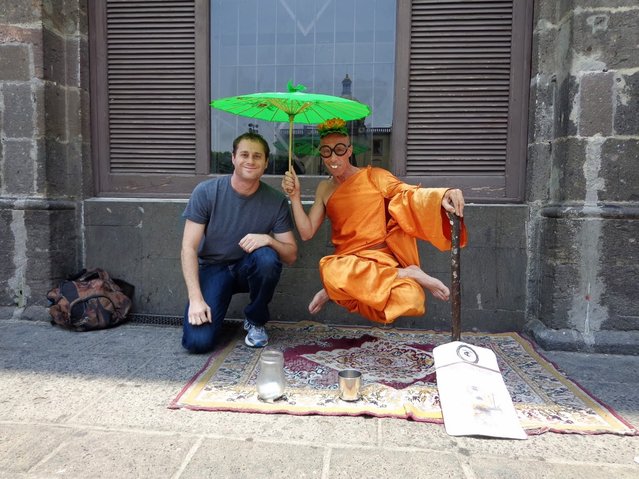
The Secret Of Levitation Street Yogis

Yogis and street performers have been simulating levitation with nifty contraptions forever. They appear to be held aloft via nothing but their preternatural mental prowess. But are really enjoying the benefits of basic physics just like the rest of us when we use a chair. However, just because it’s perfectly explainable doesn’t mean it isn’t nifty. I’m especially impressed by this 2-person version and am still trying to work out how exactly the chair they’re using is shaped at the base.


Details
28 Mar 2014 12:43:00
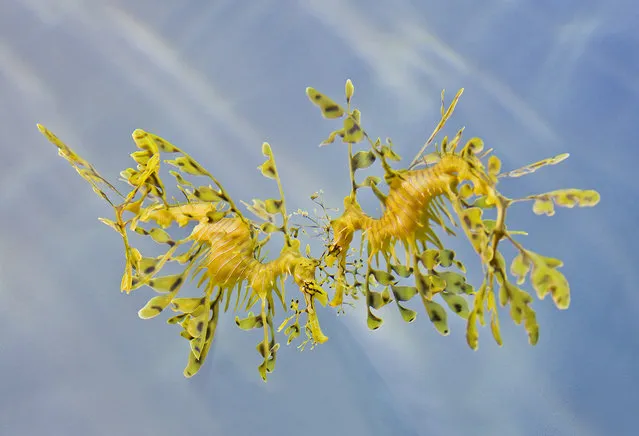
Leafy sea dragon

The leafy seadragon or Glauert's seadragon, Phycodurus eques, is a marine fish in the family Syngnathidae, which also includes the seahorses. It is the only member of the genus Phycodurus. It is found along the southern and western coasts of Australia. The name is derived from the appearance, with long leaf-like protrusions coming from all over the body. These protrusions are not used for propulsion; they serve only as camouflage. The leafy seadragon propels itself by means of a pectoral fin on the ridge of its neck and a dorsal fin on its back closer to the tail end. These small fins are almost completely transparent and difficult to see as they undulate minutely to move the creature sedately through the water, completing the illusion of floating seaweed.
Details
05 Sep 2012 08:51:00


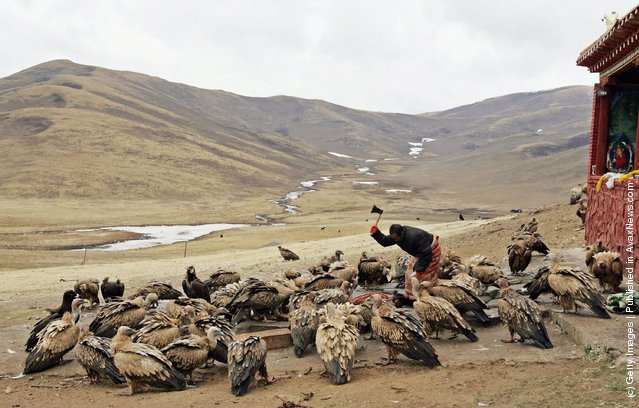
“Sky burial or ritual dissection was once a common funerary practice in Tibet wherein a human corpse is cut in specific locations and placed on a mountaintop, exposing it to the elements or the mahabhuta and animals – especially to birds of prey. The location of the sky burial preparation and place of execution are understood in the Vajrayana traditions as charnel grounds. In Tibet the practice is known as jhator, which literally means, «giving alms to the birds»”. – Wikipedia

Photo: A burial master chops bones of a body to feed vultures during a celestial burial ceremony on April 19, 2006 in Dari County of Guoluo Prefecture, Qinghai Province, northwest China. Celestial burial is a traditional funeral of Tibetan people, which began in the 7th century. (Photo by China Photos/Getty Images)
Details
18 Jun 2011 12:12:00