Loading...
Done
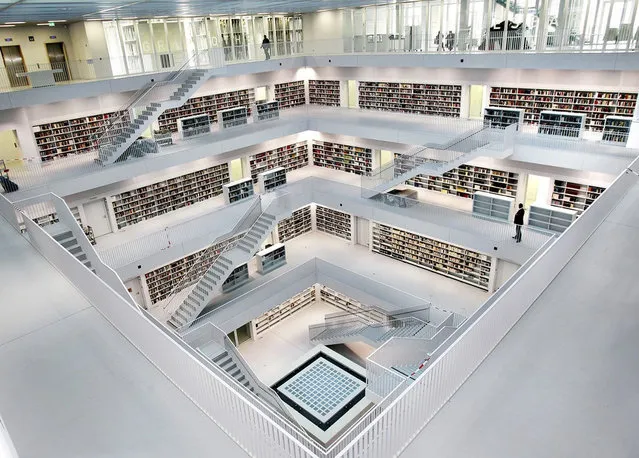
Stuttgart City Library

The city of Stuttgart, Germany has officially opened a marvelous new media center, the Stuttgart City Library. This cavernous white wonder is unobtrusive in design, where the books and visitors provide the color to an otherwise neutral environment. The visual center of the Stuttgart City Library is its grand atrium, a five-story open chamber that feels like the work of a modernist MC Esher. The interior is bright without direct lighting, it is warm without paint color and intimate yet open. This work by Yi Architects is a success in design, instantly one of the world’s most beautiful libraries
Details
30 Jan 2013 14:39:00
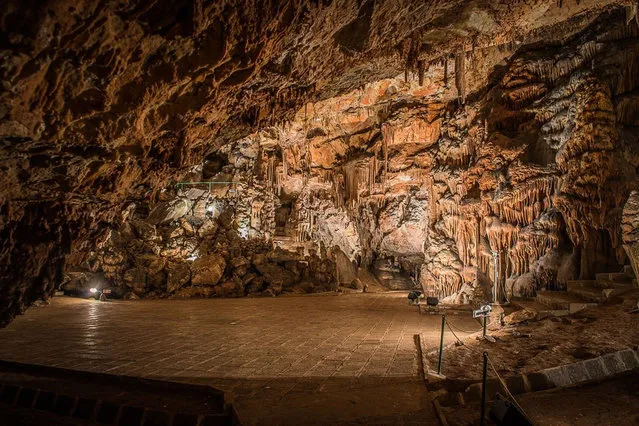
Saeva Dupka Cave

Saeva dupka (Bulgarian: Съева дупка) is a cave in Northern Bulgaria near the village of Brestnitsa, Lovech Province (43°2′N 24°11′E). Its five halls and 400 metres of corridors offer some of the most beautiful cave formations in the country. Besides that the cave has hosted many Choral music performances, thanks to the excellent acoustic conditions. Saeva dupka was named after two brothers Seyu and Sae who used it as a hiding place during the Ottoman occupation of Bulgaria. Recent excavations have showed the cave was inhabited since Roman times. Currently Saeva dupka is one of the 100 Tourist Sites of Bulgaria.
Details
20 Feb 2013 11:30:00
ROBOY: Tendon Driven Humanoid Robot

Roboy has a bright future, as he represents a completely new generation of robots. The pioneer project of the Artificial Intelligence Laboratory (AI Lab) of the University of Zurich started six months ago, with the target of developing one of the most modern humanoid robots within nine months. Now the robot has received a new face and is able to move his arms driven by maxon DC motors. On March 9, 2013, Roboy will be presented to the public at the “Robots on Tour” robotics exhibition held in Zurich on the 25th anniversary of the lab.
Details
06 Mar 2013 10:10:00


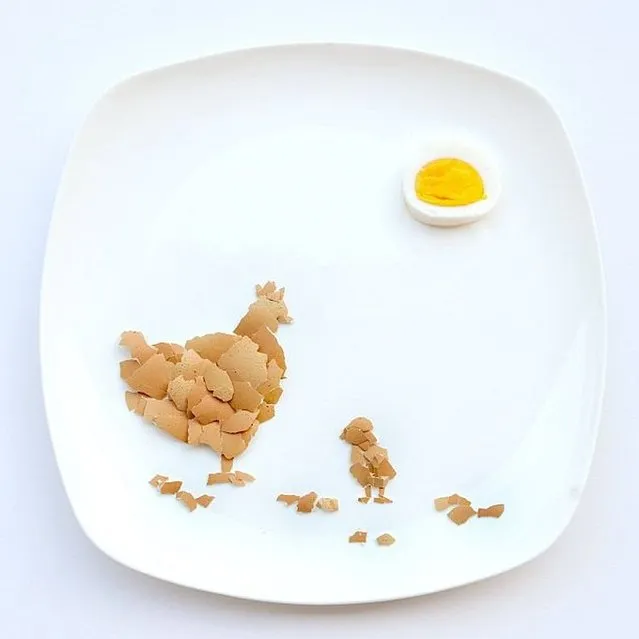
Hong Yi is a Malaysian architect and artist whose impressive portfolio includes work for Chicago’s Union Station, the Melbourne Hall of Music, and alternative medium portraits using coffee stains or tea bags. Her unorthodox approach to creation has led her to her most recent blog project. Over the course of 31 days, Hong Yi (who also goes by Red) will post art pieces made from food. So far, the pieces range from simpler ones of a watermelon sailboat to a complex recreation of Hokusai’s “The Great Wave.”
Details
29 Mar 2013 10:31:00


Are online casino games all fixed

Short answer: no.

I know, this answer was a little too short, so let me explain in a little more detail.

Imagine tossing a coin. Normally, any normal coin toss has two possible outcomes - heads or tails - with each one having a 50% chance of happening. Ideally, that is, because factors like the force of your finger tossing the coin, gravity, the wind, the moon phase and a passing TARDIS can all influence the outcome of the toss - but I have deviated from the subject.
Details
14 May 2014 07:28:00
“Blow Job”: Gale-force Wind Portraits by Tadao Cern

“In spring of 2010 I wanted to try something new and stopped being an architect. That 'something new' turned out to be photography. Wedding photography – to be exact. Today I travel around the world with my personal projects and commissions knowing that there is a lot more exiting stuff to be tried out. Don't be afraid to change something in your life, because for me that was one of the best decisions”. – Tadao Cern (Photo by Tadao Cern)
Details
19 May 2012 12:48:00
Snow Wall in Japan

The Tateyama Kurobe Alpine Route is an international mountain sightseeing route some 90 kilometers (56 miles) long. The route goes across the 3,000-meter-high North Alpine mountains, the so-called “roof of Japan,” and connects Toyama and Shinano Omachi. You can enjoy the panorama by taking a train, highland bus, trolley bus, cable car, and ropeway. Since the lines opened in June 1971, the Tateyama mountain area has been transformed from an isolated spot into one of the nation’s best sightseeing areas, where a million guests visit every year.
Details
27 Jul 2012 09:28:00
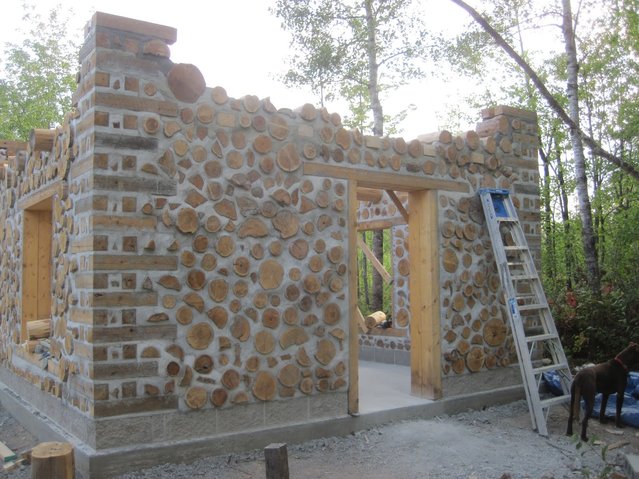
Cordwood Construction - Natural Building

Cordwood construction is a method of natural building that originated roughly one thousand years ago in Greece and Siberia. This method involves using pieces of wood that slightly protrude from the mortar, giving the walls an attractive appearance. Usually, the walls are made 12 to 24 inches thick. However, in some parts of Canada, the walls can be as thick as 36 inches. This method appeals to many people due to its ease of construction economy of resources. Cordwood Construction can be separated into two main types: mortar-insulation-mortar (M-I-M) and Throughwall. M-I-M is a more preferable and widely used choice as it allows for better insulating properties.
Details
27 Nov 2014 15:10:00