Loading...
Done


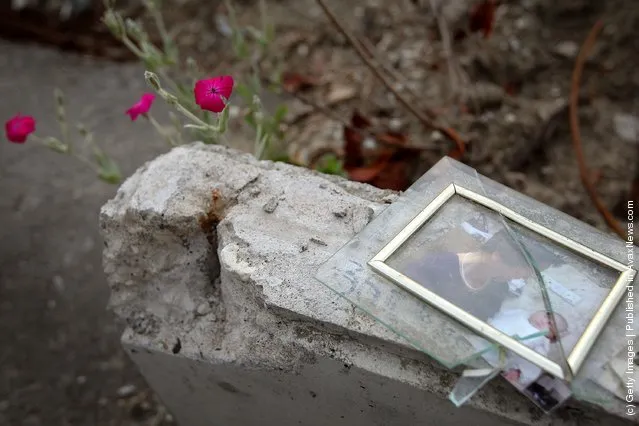
A broken picture frame is left in the tsunami-hit Arahama area, three months and two days after the magnitude 9.0 earthquake and subsequent tsunami on June 13, 2011 in Sendai, Miyagi, Japan. Japanese government has been struggling to deal with the earthquake and tsunami as well as the troubled Fukushima Daiichi Nuclear Power Plant. The fear on outbreak of virus infectious disease are mounting due to the humid rainy season on the corner and delay of the clearing the debris. (Photo by Kiyoshi Ota/Getty Images)
Details
14 Jun 2011 09:23:00


Rina Sawayama – XS (Official Video). Rina Sawayama is a Japanese-British singer, songwriter and model. Born in Niigata, she was raised from a young age in London, where she currently resides. Her debut extended play, Rina, was released in 2017, before her debut studio album, Sawayama, was released on 17 April 2020.
Details
28 Jul 2020 00:03:00
 This Teddy-Bear Toast Stamp

It looks like the cute teddybear-shaped food trend is continuing. A Japanese designer has come up with the most adorable way to enjoy toast. The clever invention is a toast stamp that seamlessly morphs your bread into a teddybear.
Details
03 Sep 2014 08:28:00
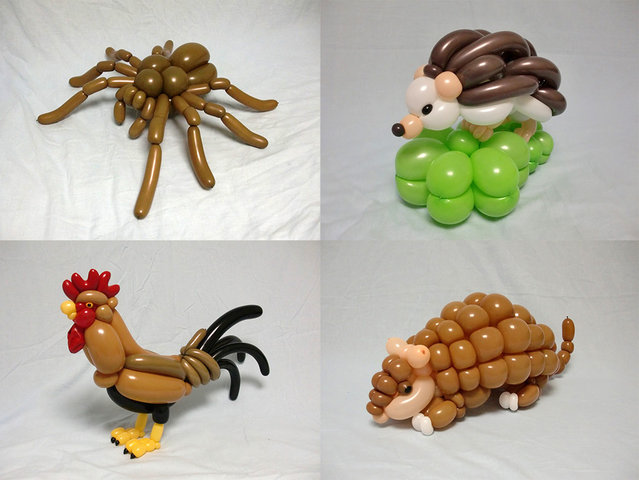
Balloon Sculptures By Masayoshi Matsumoto

25-year-old Masayoshi Matsumoto is a Japanese artist that creates incredible animals out of balloons. From birds to insects, the artist’s designs can involve dozens of variously sized balloons in an assortment of shapes. For more be sure to check out his creative artworks at the links below.
Details
09 Aug 2015 13:12:00
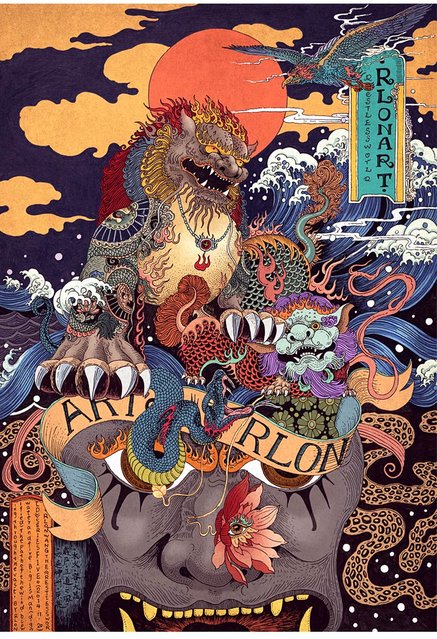
Colorful Illustrations By Rlon Wang

Through his series entitled Impetuous World Life, the Chinese artist and illustrator Rlon Wang, based in Shenzhen, reveals some beautiful and colorful illustrations inspired by nature and wildlife, playing with talent with the aesthetics and strength of ancient Japanese and Chinese prints.
Details
22 Aug 2015 14:59:00
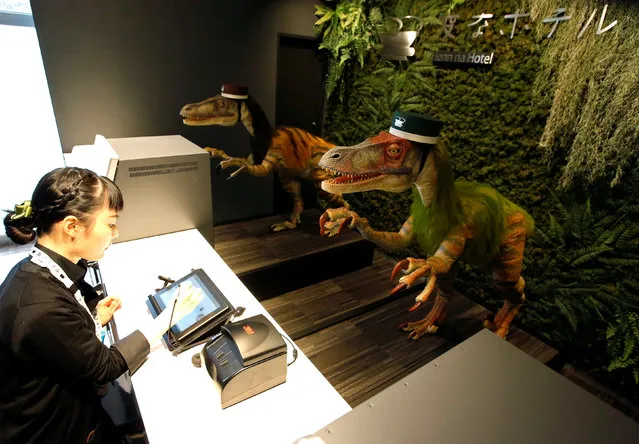
Dinosaur robots acting as receptionist greet a hotel employee demonstrating how to check-in to the hotel during a press preview for the newly-opening Henn na Hotel Maihama Tokyo Bay in Urayasu, east of Tokyo, Japan March 15, 2017. The reception desk is handled by robots that speak Japanese, English, Chinese and Korean, as well as porter robots that help guests carry luggage to their rooms. Tasks such as window-cleaning and vacuuming are also handled by robots. Japan's second robot-run hotel Henn na Hotel (“strange hotel” in Japanese) opened on March 15, 2017 as the robot-staffed hotel near Tokyo, operating company H.I.S. Co. said. (Photo by Issei Kato/Reuters)

Dinosaur robots acting as receptionist greet a hotel employee demonstrating how to check-in to the hotel during a press preview for the newly-opening Henn na Hotel Maihama Tokyo Bay in Urayasu, east of Tokyo, Japan March 15, 2017. The reception desk is handled by robots that speak Japanese, English, Chinese and Korean, as well as porter robots that help guests carry luggage to their rooms. Tasks such as window-cleaning and vacuuming are also handled by robots. Japan's second robot-run hotel Henn na Hotel (“strange hotel” in Japanese) opened on March 15, 2017 as the robot-staffed hotel near Tokyo, operating company H.I.S. Co. said. (Photo by Issei Kato/Reuters)
Details
16 Mar 2017 09:54:00
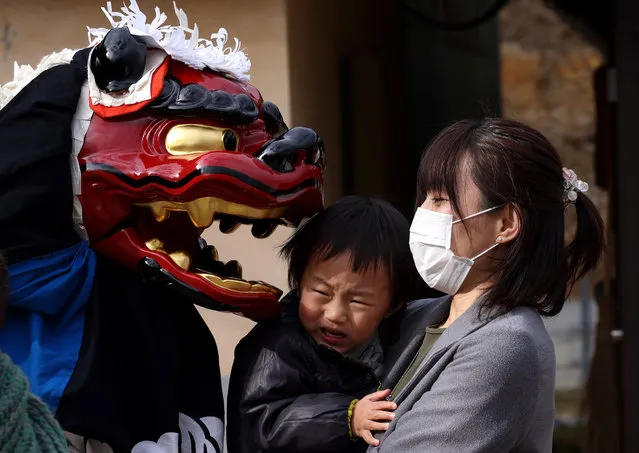
A performer wearing a lion mask performs the Ise Daikagura lion dance at the remote village of Yamanawa on February 08, 2021 in Ryuo, Japan. Ise Daikagura is a group of traditional Lion Dance performers who pray in front of farmers houses and businesses for good grain harvests and disease-free lives. Performers play sacred music using drums and flutes with two lion mask dancers. A lion mask is considered a symbol of God, who enters the house and performs in front of the Shinto God, a statue placed inside the house, mostly in the kitchen. These prayers are called “Kamodo Barai”. After the prayers, they are gifted with money, rice, sake and Japanese sweets from the householders. A group can travel for more than one hundred days to thousands of households and businesses throughout rural-villages in western Japan, and pray to those who are unable to visit the country’s most sacred shrine, the Grand Ise Shrine in Mie Prefecture. The group started its performance in the Edo era between 1603 to 1868 according to Japanese history. The Japanese government designated it as an important folk cultural national property in 1981. (Photo by Buddhika Weerasinghe/Getty Images)

A performer wearing a lion mask performs the Ise Daikagura lion dance at the remote village of Yamanawa on February 08, 2021 in Ryuo, Japan. Ise Daikagura is a group of traditional Lion Dance performers who pray in front of farmers houses and businesses for good grain harvests and disease-free lives. (Photo by Buddhika Weerasinghe/Getty Images)
Details
18 Feb 2021 09:27:00
In this June 29, 2015 photo, hairdresser Loavia Bienaime, 30, sits on her bed as she prepares to begin her day in the room her family occupies in an government office building that was damaged in the 2010 earthquake in Port-au-Prince, Haiti. Bienaime's husband, Jimmy Bellefleur, used his skill as an electrician to connect the abandoned building to the power grid, and has repaired broken televisions, fans, and a blender for the family to use. (Photo by Rebecca Blackwell/AP Photo)

In this June 29, 2015 photo, hairdresser Loavia Bienaime, 30, sits on her bed as she prepares to begin her day in the room her family occupies in an government office building that was damaged in the 2010 earthquake in Port-au-Prince, Haiti. Bienaime's husband, Jimmy Bellefleur, used his skill as an electrician to connect the abandoned building to the power grid, and has repaired broken televisions, fans, and a blender for the family to use. (Photo by Rebecca Blackwell/AP Photo)
Details
05 Aug 2015 13:21:00