Loading...
Done
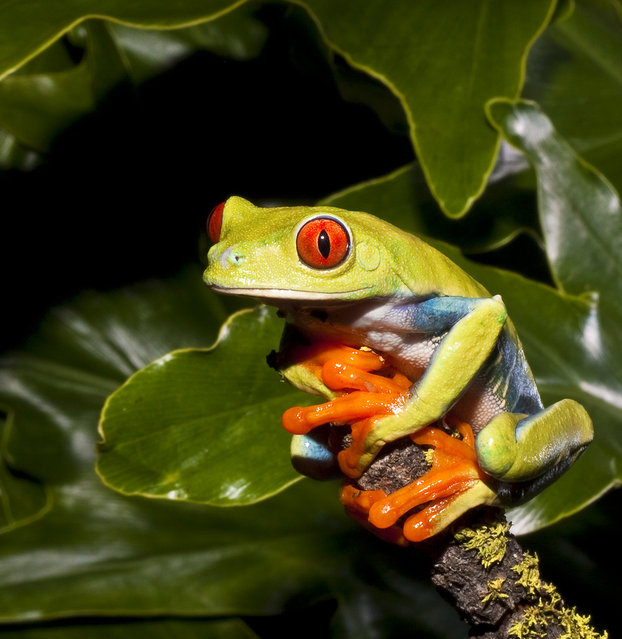
The Red-eyed Treefrog (Agalychnis callidryas)

“The Red-eyed Treefrog (Agalychnis callidryas) is an arboreal hylid native to Neotropical rainforests in Central America. Red-eyed tree frogs, as their name states, have red eyes with vertically narrowed noses, a vibrant green body with yellow and blue vertically striped sides, and orange or yellow webbed feet and toes”. – Wikipedia. (Photo by Donald Quintana)
Details
26 Jun 2012 10:13:00


Visitors enjoy watching the Blue Nemophila flowers bloom during the Golden Week holidays, at Hitachinaka Kaihin Park on May 02, 2010 in Hitachinaka, Ibaraki, Japan. Millions of nemophilas blossom across the “Miharashi No Oka” hill at Hitachi Seaside Park for the annual “Nemophila Harmony” flower festival. (Photo by Koichi Kamoshida/Getty Images)
Details
18 Apr 2011 10:13:00
President of sushi restaurant chain Sushi-Zanmai, Kiyoshi Kimura, displays a 222kg bluefin tuna at his main restaurant near Tokyo's Tsukiji fish market on January 5, 2013. The bluefin tuna was traded at 155.4 million yen (1.77 million USD) at the wholesale market, smashing a previous record. (Photo by Yoshikazu Tsuno/AFP Photo)

Japanese businessman Kiyoshi Kimura has paid 1.38 million euros ($1.76 million, or 155.4 million yen) for a blue fin tuna – more than three times the previous high – which he also set one year ago. The 222-kilogram fish will be served to Kimura’s customers. Blue fin tuna is annually sold in a traditional New Year’s auction. Japan consumes 80 percent blue fin tuna caught worldwide.

Photo: President of sushi restaurant chain Sushi-Zanmai, Kiyoshi Kimura, displays a 222kg bluefin tuna at his main restaurant near Tokyo's Tsukiji fish market on January 5, 2013. The bluefin tuna was traded at 155.4 million yen (1.77 million USD) at the wholesale market, smashing a previous record. (Photo by Yoshikazu Tsuno/AFP Photo)
Details
06 Jan 2013 13:26:00
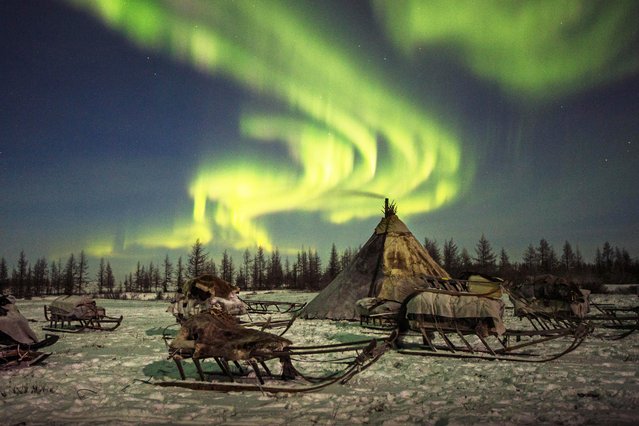
An empty camp is shown beneath a colourful sky in Siberia, December 2016. (Photo by Timothy Allen/Barcroft Productions)

A British photographer has captured life at the “edge of the world”. Timothy Allen, best known for his work on BBC's Human Planet, trekked through the freezing Siberian wilderness for 16 days as he joined part of an 800km migration of reindeer in the Yamal-Nenets region – a name that roughly translates to “edge of the world”. The stunning pictures feature the nomadic Nenets tribe, who drink blood to survive in -45°C temperatures. Timothy's epic journey, which will be revealed in an eight-minute documentary on Animal Planet USA, saw him travel across the bleak terrain of the frozen Ob River with the Nenets people in December last year. Here: An empty camp is shown beneath a colourful sky in Siberia, December 2016. (Photo by Timothy Allen/Barcroft Productions)
Details
19 Sep 2017 07:48:00
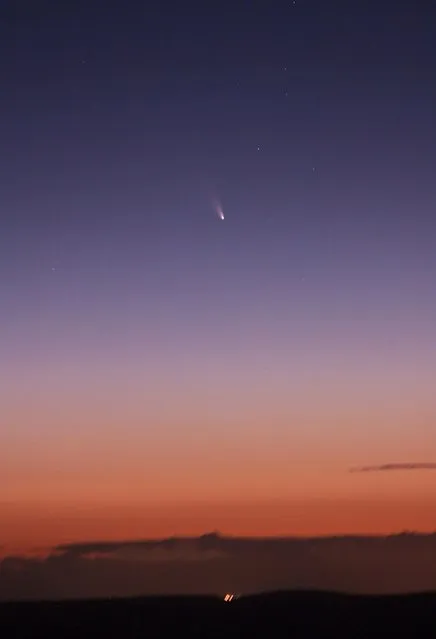
This image provided by NASA shoaws the comet PANSTARRS as seen from Mount Dale, Western Australia on March 5, 2013. According to NASA on March 10, it will make its closest approach to the sun about 28 million miles (45 million kilometers) away. As it continues its nightly trek across the sky, the comet may get lost in the sun's glare but should return and be visible to the naked eye by March 12. (Photo by AP Photo/NASA)

It’s time to start watching for Comet PANSTARRS, one of two comets to get excited about in 2013. Photo: This image provided by NASA shoaws the comet PANSTARRS as seen from Mount Dale, Western Australia on March 5, 2013. According to NASA on March 10, it will make its closest approach to the sun about 28 million miles (45 million kilometers) away. As it continues its nightly trek across the sky, the comet may get lost in the sun's glare but should return and be visible to the naked eye by March 12. (Photo by AP Photo/NASA)
Details
13 Mar 2013 08:03:00
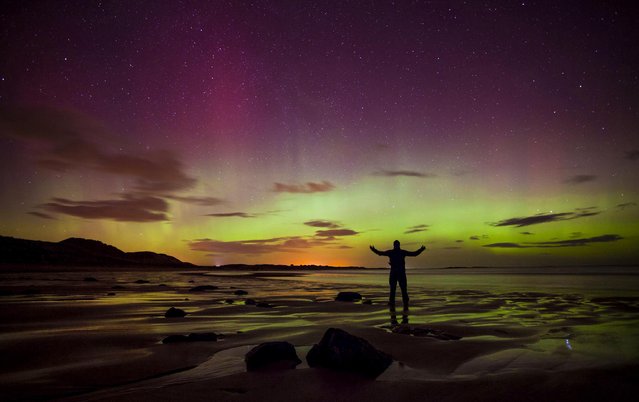
A man poses standing on a rock looking at the aurora borealis, or northern lights, illuminating the night sky at Embleton Bay in Northumberland, England, on February 27, 2014. The northern lights is a fantastical natural light display with fast moving light effects caused by particles charged by the sun colliding with particles in Earth's upper atmosphere. (Photo by Tom White/PA Wire)

A man poses standing on a rock looking at the aurora borealis, or northern lights, illuminating the night sky at Embleton Bay in Northumberland, England, on February 27, 2014. The northern lights is a fantastical natural light display with fast moving light effects caused by particles charged by the sun colliding with particles in Earth's upper atmosphere. (Photo by Tom White/PA Wire)
Details
02 Mar 2014 10:12:00
Fireworks light the morning sky March 6, 2012 as the Disney Fantasy, the newest Disney Cruise Line ship, arrives in her home port of Port Canaveral, Florida after traveling nearly 4,700 miles across the Atlantic Ocean from Bremerhaven, Germany

Fireworks light the morning sky March 6, 2012 as the Disney Fantasy, the newest Disney Cruise Line ship, arrives in her home port of Port Canaveral, Florida after traveling nearly 4,700 miles across the Atlantic Ocean from Bremerhaven, Germany. The 4,000-passenger Disney Fantasy will welcome guests on her maiden voyage on March 31, 2012, sailing seven-night cruises to the Caribbean and Disney's private island Castaway Cay, from Port Canaveral. (Photo by Todd Anderson/Disney Parks via Getty Images)
Details
07 Mar 2012 11:33:00
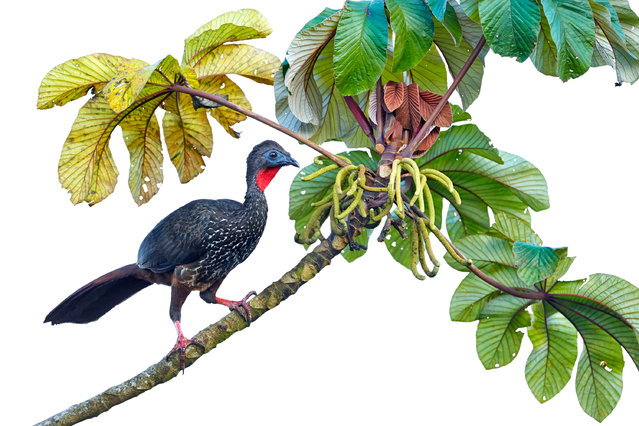
Highly commended birds : Crested guan by Tim Hunt (UK). ‘This photo shows a crested guan in the cloud forests of Costa Rica as it pauses while foraging on a lone branch. Due to the clouds that are so typical for this habitat, I could often only photograph the bird’s silhouette against a grey sky. (Photo by Tim Hunt/GDT European Wildlife Photographer of the Year 2015)

Highly commended birds : Crested guan by Tim Hunt (UK). ‘This photo shows a crested guan in the cloud forests of Costa Rica as it pauses while foraging on a lone branch. Due to the clouds that are so typical for this habitat, I could often only photograph the bird’s silhouette against a grey sky. But then, for a short moment only, the sun broke through the clouds, and I overexposed the image by over two stops in order to blow out the background and allow this beautifully marked bird to stand out’. (Photo by Tim Hunt/GDT European Wildlife Photographer of the Year 2015)
Details
24 Nov 2015 08:01:00