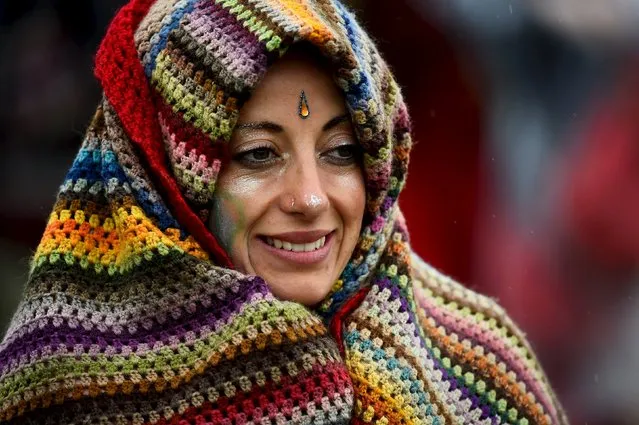
A reveller smiles as she walks in the rain at Worthy Farm in Somerset during the Glastonbury Festival in Britain, June 28, 2015. (Photo by Dylan Martinez/Reuters)
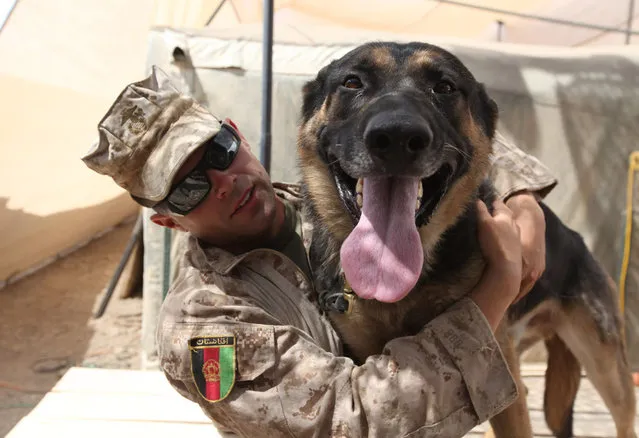
Throughout the course of the long war in Afghanistan, Coalition troops have relied on thousands of military working dogs to help keep them safe, and make their jobs easier. The dogs are trained to detect explosives, to find illegal drugs, to search for missing comrades, or target enemy combatants. Not only are they active on the front lines, but behind the lines they serve as therapy dogs, service dogs, and loyal companions. They also share the same risks as the ground troops, suffering injuries and sometimes death on the battlefields. Gathered here are images of these dogs and their handlers in Afghanistan and back home, from over the past several years, part of the ongoing series here on Afghanistan.
Models pose in designs from May Quant's collection on a street in London, England, on October 16, 1969. Grania, left, wears the "Shimmy Shimmy," a white rayon dress over matching pants with a shawl. Baba, center, wears "Razzamatazz," a jumpsuit featuring plastic sequins in blue, silver and red on nylon. Linda wears "Muffit," a pink minidress with an old English style floppy mobcap. (Photo by AP Photo)
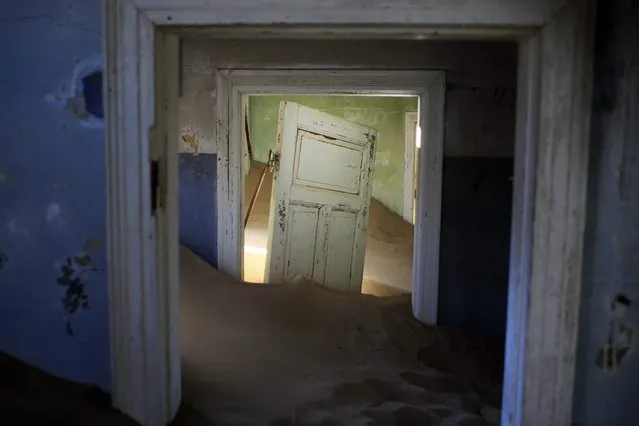
In this July 23, 2013 photo, sand fills an abandoned house in Kolmanskop, Namibia. Kolmanskop, was a diamond mining town south of Namibia, build in 1908 and deserted in 1956. SInce then, the desert slowly reclaims its territory, with sand invading the buildings where 350 German colonists and more than 800 local workers lived during its hay-days of the 1920s. (Photo by Jerome Delay/AP Photo)
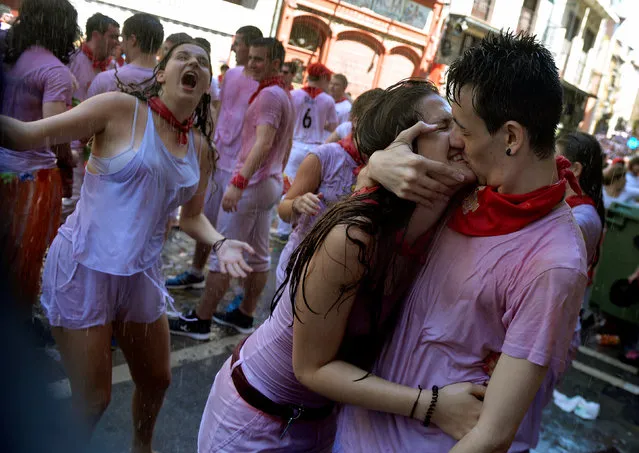
A couple embrace during the start of the San Fermin festival in Pamplona, Spain July 6, 2016. Revelers from around the world kick off the festival with a messy party in the Pamplona town square, one day before the first of eight days of the running of the bulls. (Photo by Vincent West/Reuters)
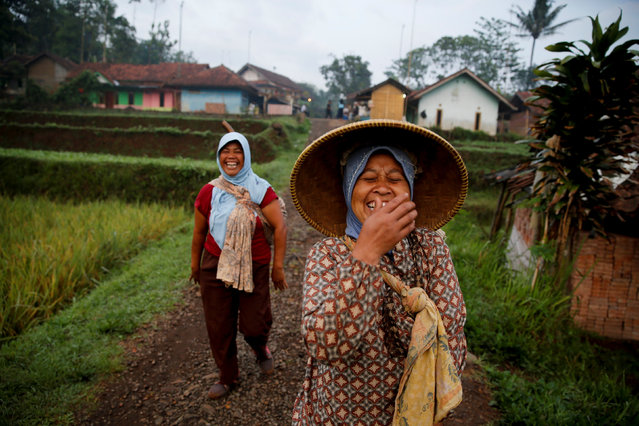
A gory fight to the death between snarling dogs and captured wild boars. Gathered around a bamboo-walled arena, Indonesians in this remote part of Java island seem eager to watch the blood-curdling contests, known locally as “adu bagong” (boar fighting). Not surprisingly, animal rights activists are up in arms against the regular spectacle, which began in the 1960s when wild pig numbers in this area in West Java soared and they were hunted to protect crops. Here: Women share a joke as they walk to a paddy field in Cikawao village of Majalaya, West Java province, Indonesia, October 12, 2017. (Photo by Reuters/Beawiharta)
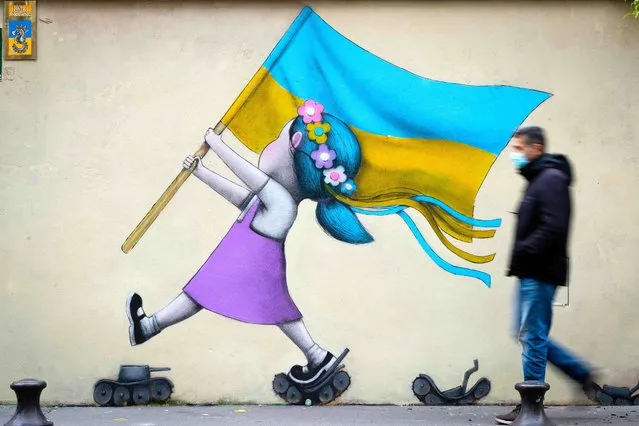
A bystander walks past a fresco by street artist Seth depicting a girl with a Ukrainian flag walking on tanks in Paris on March 01, 2022. (Photo by Joel Saget/AFP Photo)