Loading...
Done
American science fiction writer L. Ron Hubbard, founder of the Church of Scientology, uses his Hubbard Electrometer

“Lafayette Ronald Hubbard (March 13, 1911 – January 24, 1986), better known as L. Ron Hubbard (and often referred to by his initials, LRH), was an American pulp fiction author and religious leader who founded the Church of Scientology. After establishing a career as a writer, becoming best known for his science fiction and fantasy stories, he developed a self-help system called Dianetics which was first published in May 1950. He subsequently developed his ideas into a wide-ranging set of doctrines and rituals as part of a new religious movement that he called Scientology. His writings became the guiding texts for the Church of Scientology and a number of affiliated organizations that address such diverse topics as business administration, literacy and drug rehabilitation”. – Wikipedia

Photo: American science fiction writer L. Ron Hubbard, founder of the Church of Scientology, uses his Hubbard Electrometer (patent pending) to determine whether tomatoes experience pain, 1959. His work led him to the conclusion that tomatoes “scream when sliced”. (Photo by Scott Lauder/Evening Standard/Hulton Archive/Getty Images)
Details
09 Sep 2011 09:34:00
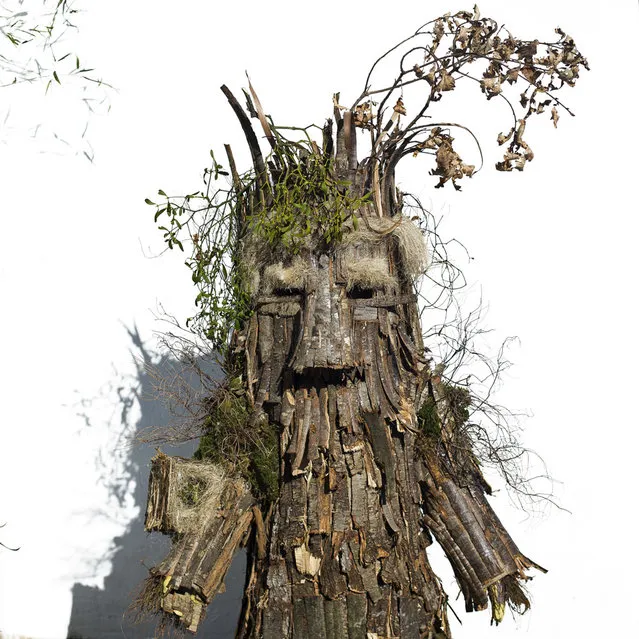
A man dressed as a  “Trapajon”, representing entities of nature, poses for a picture after taking part in the Vijanera Festival in Silio, northern Spain, Sunday, Jan. 6, 2013. The Vijanera masquerade, of pre-Roman origin, is the first carnival of the year in Europe symbolizing the triumph of good over evil and involving the participation of crowds of residents wearing different masks, animal skins and brightly colored clothing with its own complex function and symbolism and becoming the living example of the survival of archaic cults to nature. (Photo by Daniel Ochoa de Olza/AP Photo)

A man dressed as a “Trapajon”, representing entities of nature, poses for a picture after taking part in the Vijanera Festival in Silio, northern Spain, Sunday, Jan. 6, 2013. The Vijanera masquerade, of pre-Roman origin, is the first carnival of the year in Europe symbolizing the triumph of good over evil and involving the participation of crowds of residents wearing different masks, animal skins and brightly colored clothing with its own complex function and symbolism and becoming the living example of the survival of archaic cults to nature. (Photo by Daniel Ochoa de Olza/AP Photo)
Details
19 Jan 2013 13:01:00
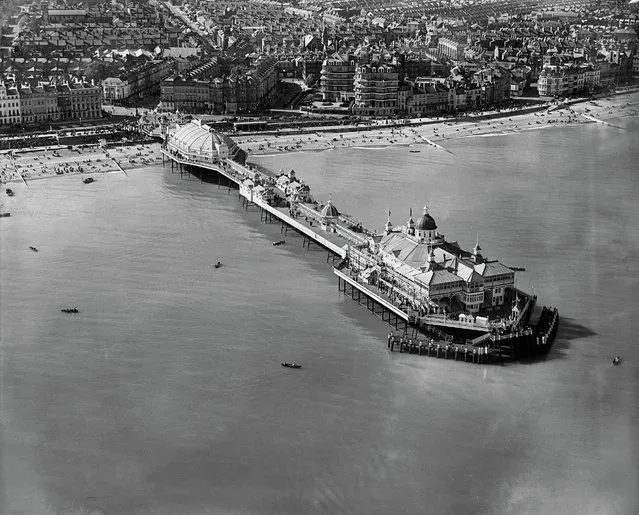
While the lido was described as bringing “modernism to the masses” on the British coast it was just the latest example of a trend that had been developing since Victorian times – transforming seaside towns into resorts for leisure and entertainment. In the latter half of the nineteenth century, the fashion was for local authorities to build great piers stretching from the promenade out into the sea

While the lido was described as bringing “modernism to the masses” on the British coast it was just the latest example of a trend that had been developing since Victorian times – transforming seaside towns into resorts for leisure and entertainment. In the latter half of the nineteenth century, the fashion was for local authorities to build great piers stretching from the promenade out into the sea. The Eastbourne Pier, pictured here in May 1931, was erected between 1866 and 1870 to an ingenious design by Eugenius Birch, which saw the structure sitting on special cups allowing the supporting struts to “move” in bad weather. Arranged on the pier's 1,000-foot length were kiosks, a theatre, a ballroom and a camera obscura. 1931. (Photo by Aerofilms Collection via “A History of Britain From Above”)
Details
25 Feb 2014 12:59:00
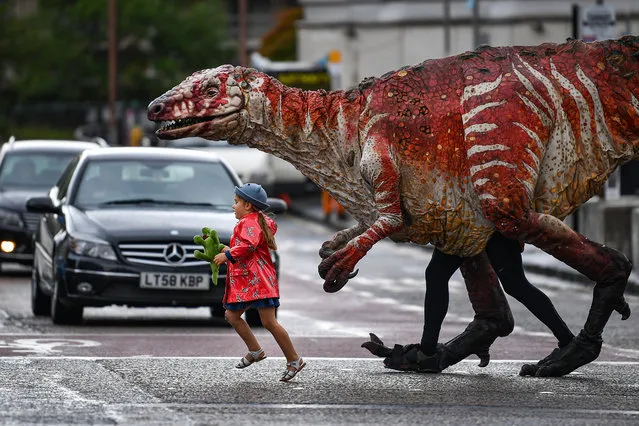
Freya Smith aged three, leads one of Erth’s giant dinosaur puppets across the road on August 6, 2019 in Edinburgh, Scotland. Australian theatre company Erth presents their best-selling show Dinosaur’s Zoo as part of Underbelly’s Fringe programme. Featuring giant dinosaur puppets which walk, roar and blink like the real thing, Dinosaur’s Zoo is a perfect example of edutainment for children of all ages, taking place at the McEwan Hall every day of the Fringe at 11am. (Photo by Jeff J. Mitchell/Getty Images)

Freya Smith aged three, leads one of Erth’s giant dinosaur puppets across the road on August 6, 2019 in Edinburgh, Scotland. Australian theatre company Erth presents their best-selling show Dinosaur’s Zoo as part of Underbelly’s Fringe programme. Featuring giant dinosaur puppets which walk, roar and blink like the real thing, Dinosaur’s Zoo is a perfect example of edutainment for children of all ages, taking place at the McEwan Hall every day of the Fringe at 11am. (Photo by Jeff J. Mitchell/Getty Images)
Details
15 Jan 2020 00:01:00
Paper Illustrations By Eiko Ojalai

llustrations created with paper and collage has become really trendy and the reason is because it's really awesome. Playing with layers of paper and the depth created by the shadows make this artworks much more alive thank if it was just flat colors. Eiko Ojala has great examples in his portfolio that deserved to be featured here on Abduzeedo.
Details
05 May 2014 10:36:00
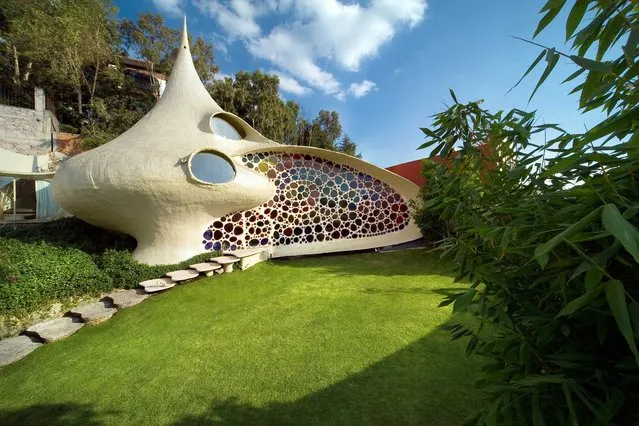
Living In A Shell – Nautilus House

The Nautilus, designer Javier Senosiain’s bizarre, snail-shaped dwelling, is a mind-bending union of artistic experimentation and simplified living. Inspired by the work of Gaudí and Frank Lloyd Wright, Senosiain has brought to Mexico City another sparkling example of what he calls “Bio-Architecture” — the idea that buildings based on the natural principles of organic forms bring us back to local history, tradition and cultural roots, in turn creating harmony with nature.
Details
07 Jun 2013 10:15:00
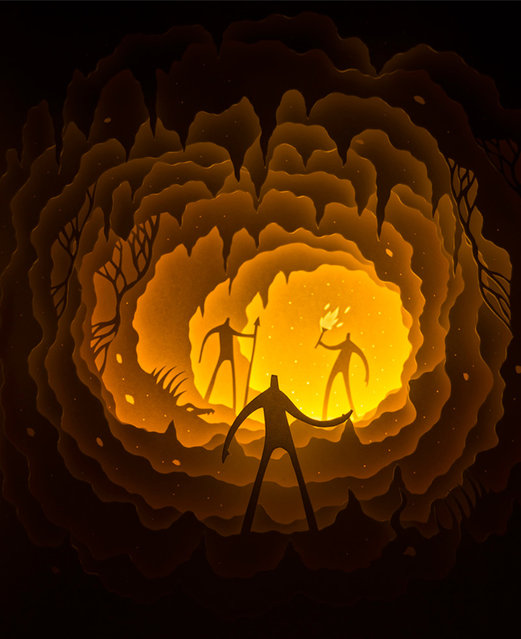
Illuminated Cut Paper Light Boxes By Hari And Deepti

Illuminated Cut Paper Light Boxes by Hari & DeeptiDeepti Nair and Harikrishnan Panicker (known collectively as Hari & Deepti) are an artist couple who create paper cut light boxes. Each diorama is made from layers of cut watercolor paper placed inside a shadow box and is lit from behind with flexible LED light strips. The small visual narratives depicted in each work often play off aspects of light including stars, flames, fireflies, and planets.
Details
17 Jun 2014 12:07:00
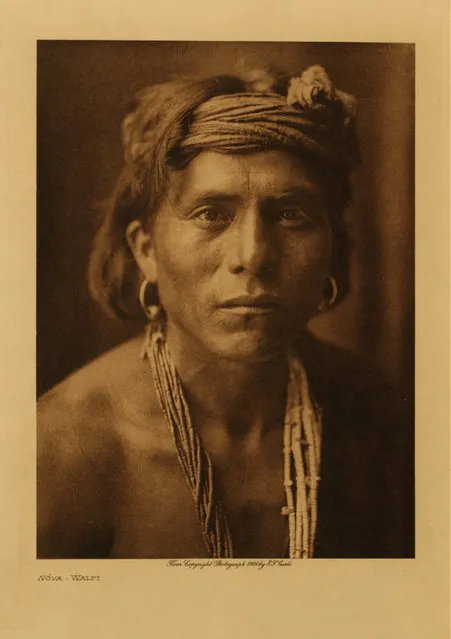
Nova, a Walpi, in 1906. (Photo by Edward S. Curtis)

At the beginning of the 20th century, Edward S. Curtis set out to document what he saw as a disappearing race: the Native American. From 1907 to 1930, Curtis took more than 2,000 photos of 80 tribes stretching from the Great Plains to the Pacific Northwest and Alaska. He then published and sold these photos, along with narrative text, in 20 volumes of work known as “The North American Indian”. It is one of the most significant collections of its kind, “probably the most important photographic document of its age and its topic,” said Jeffrey Garrett, associate university librarian for Special Libraries at Northwestern University. (Photo by Edward S. Curtis)
Details
07 Sep 2014 12:57:00