Loading...
Done
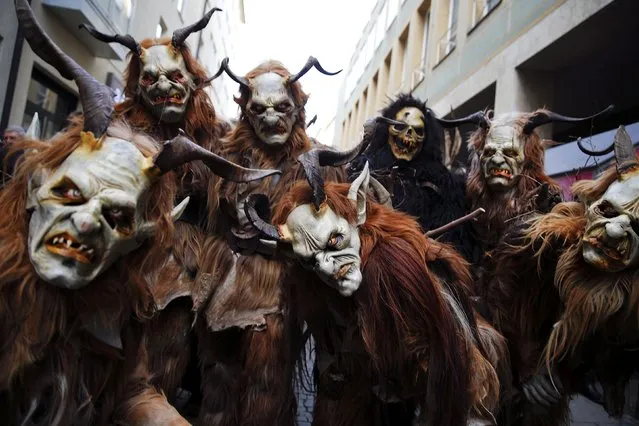
Men dressed as 'Krampuss' prepare to parade at Munich's Christmas market, December 13, 2015. (Photo by Michael Dalder/Reuters)

Men dressed as “Krampuss” prepare to parade at Munich's Christmas market, December 13, 2015. Young single men will wear the traditional attires known as “Krampusse”, consisting of animal skins and masks, with large cow-bells to make loud and frightening noises and parade through the city. They follow “Saint Nicholas” from house to house in December each year to bring luck to the good and punish the idle. (Photo by Michael Dalder/Reuters)
Details
15 Dec 2015 08:02:00
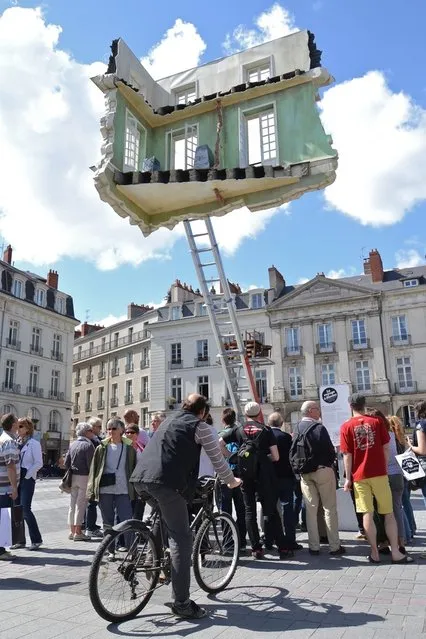
Surreal Floating Room Sculptures By Leandro Erlich

Like a scene from a fantasy movie, a dilapidated room that appears to have been literally ripped out of a building remains suspended in mid air above Nantes, France. Its walls were torn apart, revealing bricks below the plaster, and wood floors reveal the joists inside. The floating room is accessible via a ladder. The gravity defying surreal installation is the work of Argentinean artist Leandro Erlich. The large-scale piece, called “Monte-meubles – L’ultime déménagement” (literally - The Furniture Lift – The Ultimate Moving Out), was created for the biannual Le Voyage a Nantes, an art festival which turns the entire French city into an art gallery.
Details
30 Apr 2014 12:55:00
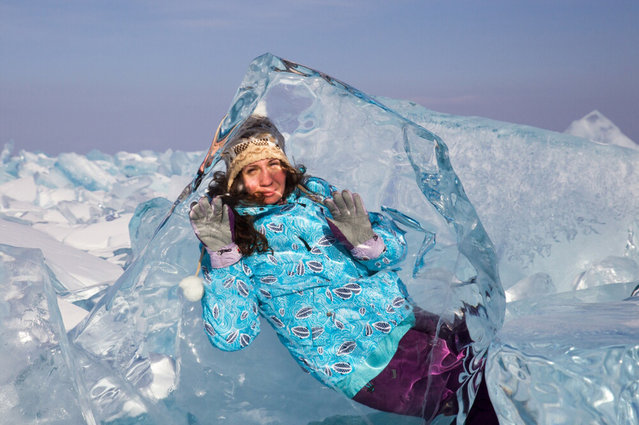
The Turquoise Ice Lake Baikal

Located in Siberia, Laka Baikal is the largest freshwater lake on the planet that contains approximately 20 percent of the Earth’s freshwater. Apart from being the oldest lake in the world at over 25 million years old, Lake Baikal is also home to over two thousand varieties of flora and fauna, of which almost 1,600 are endemic to the lake. The water of Lake Baikal is renowned for being some of the clearest in the world. When the lake freezes during the winter, an amazing phenomena takes place: large shards of transparent ice form on the surface of the lake, giving the amazing appearance of turquoise ice.
Details
02 May 2014 09:21:00
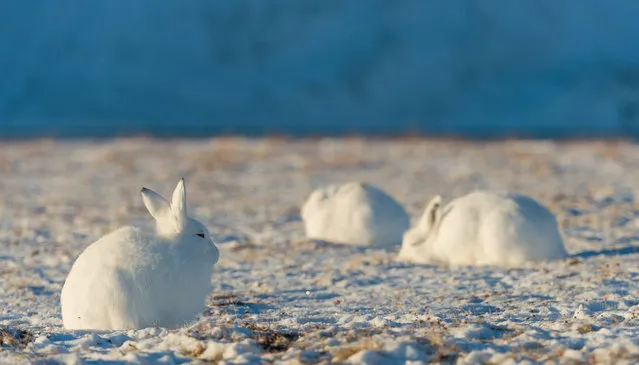
Arctic Hare

The arctic hare, or polar rabbit, is a species of hare which is adapted largely to polar and mountainous habitats. The arctic hare survives with a thick coat of fur and usually digs holes in the ground or under snow to keep warm and sleep. Arctic hares look like rabbits but have shorter ears, are taller when standing, and, unlike rabbits, can thrive in cold climates. They can travel together with many other hares, sometimes huddling with dozens or more, but are usually found alone, taking, in some cases, more than one partner. The arctic hare can run up to 60 kilometres per hour (40 mph). Its predators include the arctic wolf, arctic fox, and ermine.
Details
17 Mar 2014 13:56:00
Chernobyl Disaster – Disaster Fighters

“The Chernobyl disaster was a catastrophic nuclear accident that occurred on 26 April 1986 at the Chernobyl Nuclear Power Plant in Ukrainian SSR, which was under the direct jurisdiction of the central authorities in Moscow. An explosion and fire released large quantities of radioactive contamination into the atmosphere, which spread over much of Western USSR and Europe. It is widely considered to have been the worst nuclear power plant accident in history, and is one of only two classified as a level 7 event on the International Nuclear Event Scale (the other being the Fukushima Daiichi nuclear disaster)”. – Wikipedia (Photos by Alexandr Strannik, August 1986; Source: LiveJournal)
Details
26 Apr 2012 13:20:00
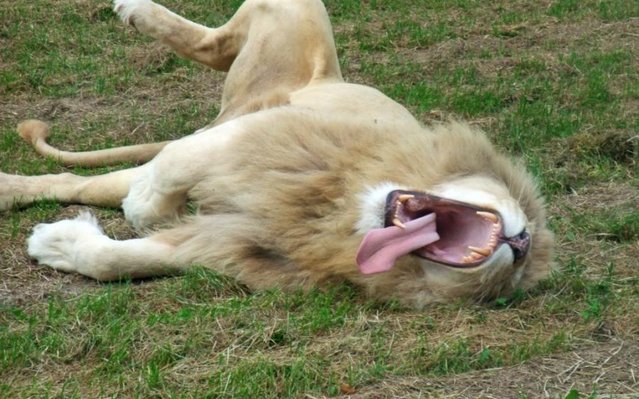
Animals Yawning

In animals, yawning can serve as a warning signal. For example, Charles Darwin, in his book The Expression of the Emotions in Man and Animals, mentioned that baboons yawn to threaten their enemies, possibly by displaying large canine teeth. Similarly, Siamese fighting fish yawn only when they see a conspecific (same species) or their own mirror-image, and their yawn often accompanies aggressive attack. Guinea pigs also yawn in a display of dominance or anger, displaying their impressive incisor teeth. This is often accompanied by teeth chattering, purring and scent marking.

Details
11 Aug 2012 09:12:00
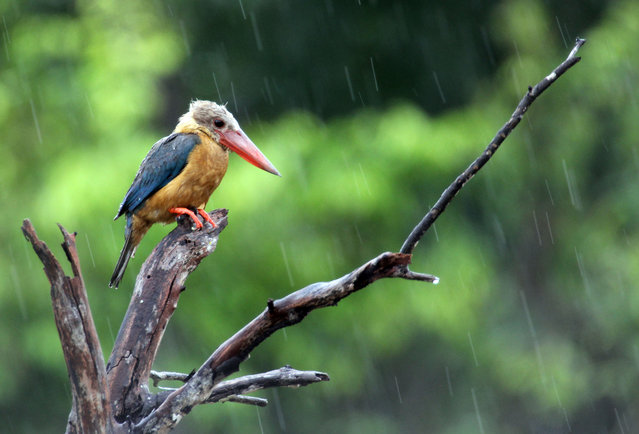
Stork-billed kingfisher during rain in Bintan, Indonesia. The tree species is sparsely distributed in the tropical Indian subcontinent and south-east Asia, from India to Indonesia. (Photo by Sijori Images/Barcroft Images)

A stork-billed kingfisher (Pelargopsis capensis) is seen perched on a tree during monsoon rain on July 25, 2016 in Bintan, Indonesia. The stork-billed kingfisher is a tree species which is widely but sparsely distributed in the tropical Indian subcontinent and Southeast Asia, from India to Indonesia. This kingfisher is resident throughout its range. It is very large, measuring 35 to 38 cm (14 to 15 in) in length. The adult has a green back, blue wings and tail, and grey head. (Photo by Sijori Images/Barcroft Images)
Details
27 May 2017 07:47:00


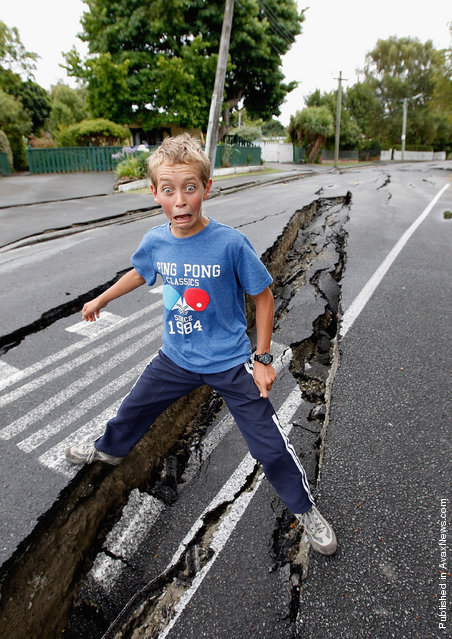
Cole Yeoman steps over a large crack along River Road, Avonside on February 25, 2011 in Christchurch, New Zealand. The death toll has risen to 113 and the hope for finding survivors is fading as rescuers search through debris for over 200 still missing following a 6.3 magnitude earthquake that struck Christchurch on Tuesday. The quake, which was an aftershock of a 7.1 magnitude quake that struck the South Island city on September 4, 2010, has seen damage and fatalities far exceeding those of the original. (Photo by Martin Hunter/Getty Images). CHRISTCHURCH, NEW ZEALAND – FEBRUARY 25
Details
06 Mar 2011 13:00:00