Loading...
Done
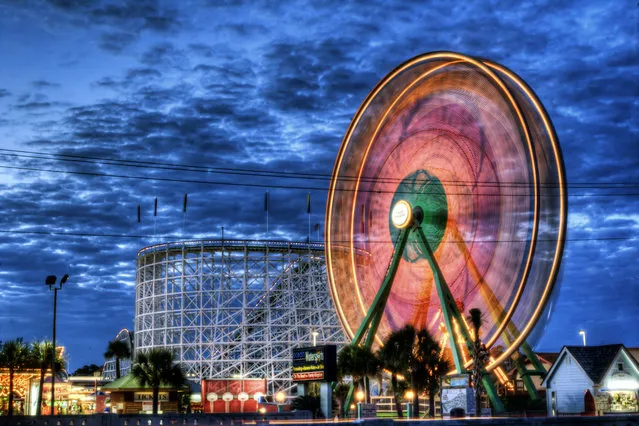
Long Exposure Photos Of Ferris Wheels

We see what Ferris wheels look like when captured using a longer exposure (i.e., shutter left open, typically 2 seconds or more). The lights that adorn the Ferris Wheels blend and blur, creating brilliant patterns and beautiful photos.
Details
28 Aug 2013 09:57:00
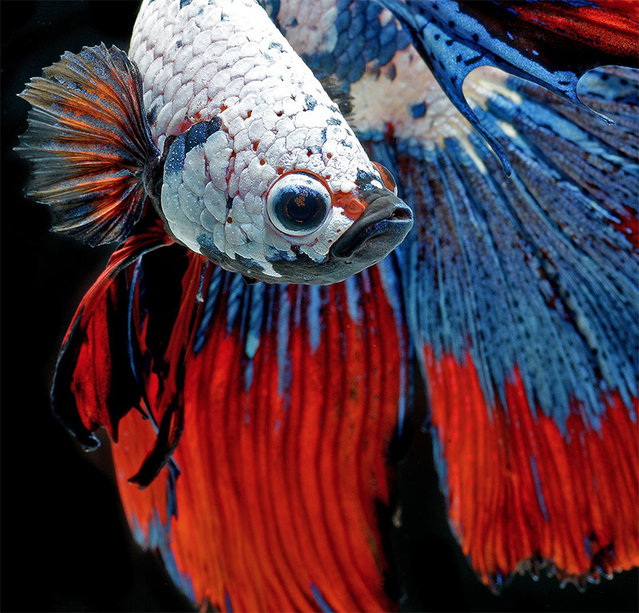
Siamese Fighting Fish By Visarute Angkatavanich

Visarute Angkatavanich gets incredibly close up to capture these stunning portraits of Siamese fighting fish in graceful, dancerly poses. The Thai photographer uses perfectly placed lighting to create the dramatic highlights and shadows that give personality to each little finned creature.
Details
24 Nov 2013 12:52:00
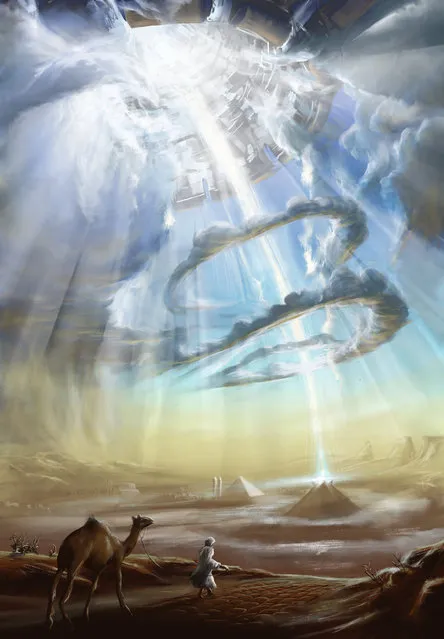
Digital Paintings By Alexander Rommel

Alexander Rommel, aka evergreenarts, is a really talented German Illustrator. His works are very colorful and the lighting is incredible. He mainly focus on the sky, the sun, the water, the wind and the feeling of freedom. His illustrations seem to come directly from dreams.
Details
17 Jul 2014 10:31:00
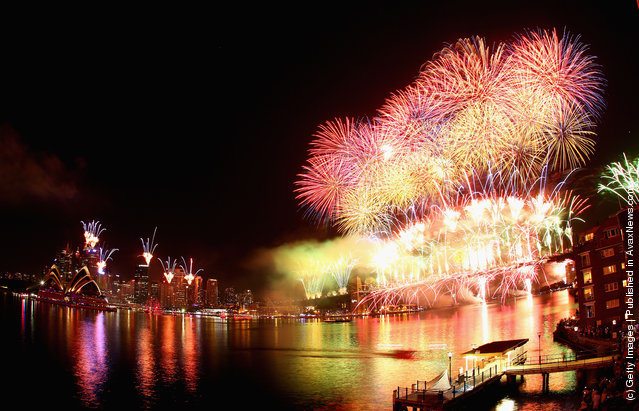
Sydney Celebrates New Years Eve

Fireworks light up the skyline over Sydney Harbour during the midnight fireworks session as Sydney Celebrates New Year's Eve with the theme of “Time To Dream” on on January 1, 2012 in Sydney, Australia. (Photo by Ryan Pierse/Getty Images)
Details
01 Jan 2012 11:43:00
long exposure

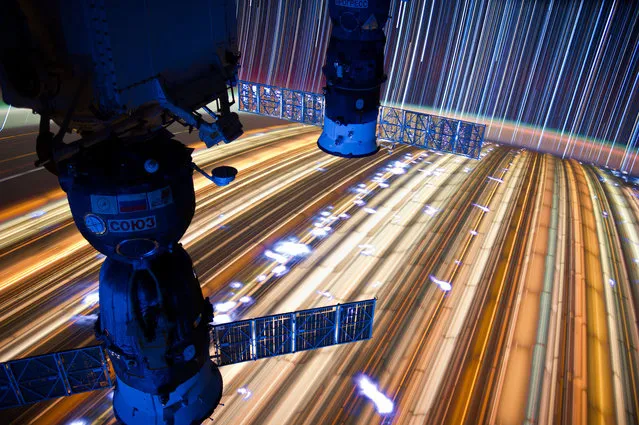
Long-exposure photography or time-exposure photography involves using a long-duration shutter speed to sharply capture the stationary elements of images while blurring, smearing, or obscuring the moving elements. The paths of moving light sources become clearly visible.
Details
03 Jul 2012 14:37:00
Newborn White-Cheeked Gibbon Nomascus

“Nomascus is the second most speciose genus of gibbons (family Hylobatidae). Originally this genus was a subgenus of Hylobates, and all individuals were considered one species, Hylobates concolor. Species within Nomascus are characterized by 52 chromosomes. Some species are all black, some light with a distinct black tuft of crown fur, and some by distinct, light-colored cheek patches. Nomascus is found from southern China (Yunnan) to southern Vietnam, and also on Hainan Island. One of the genus' species, Nomascus nasutus, has been deemed “the most critically endangered ape species in the world”. All of the species in this genus are endangered or critically endangered”. – Wikipedia

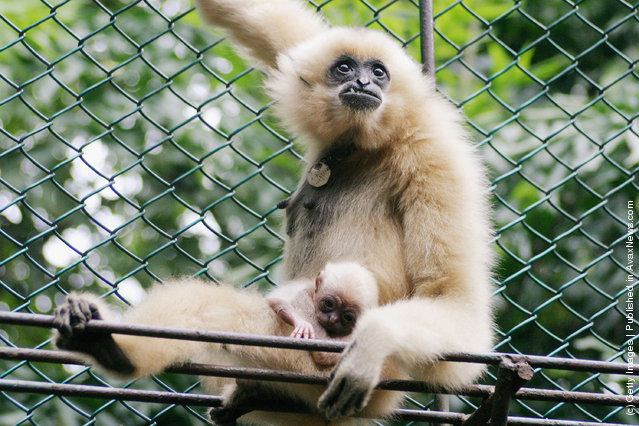
Photo: A newborn White-Cheeked Gibbon clings to its mother in the Nanning Zoo on April 12, 2004 in Nanning, Guangxi province, China. The White-Cheeked Gibbon's natural habitat is Southern China as well as Vietnam and Laos. They are classified as highly endangered and are on the brink of extinction due to poaching and reduction of natural rainforests. (Photo by Getty Images)

Details
12 Aug 2011 11:51:00
Breath of an Arctic fox by Marco Gaiotti, Italy. Marco was watching this little Arctic fox as it incessantly called another nearby. Gradually he noticed the fox’s wet breath was quickly freezing in the air after each call. It was late winter in Spitsbergen, Svalbard, and the air was -35C (-31F). Photographing Arctic foxes is often frustrating, as they are normally running around fast in search of food, but this one was very relaxed and let Marco get close enough to focus on it, with the light glowing perfectly in the background. (Photo by Marco Gaiotti/Wildlife Photographer of the Year 2021)

Breath of an Arctic fox by Marco Gaiotti, Italy. Marco was watching this little Arctic fox as it incessantly called another nearby. Gradually he noticed the fox’s wet breath was quickly freezing in the air after each call. It was late winter in Spitsbergen, Svalbard, and the air was -35C (-31F). Photographing Arctic foxes is often frustrating, as they are normally running around fast in search of food, but this one was very relaxed and let Marco get close enough to focus on it, with the light glowing perfectly in the background. (Photo by Marco Gaiotti/Wildlife Photographer of the Year 2021)
Details
05 Dec 2021 06:36:00
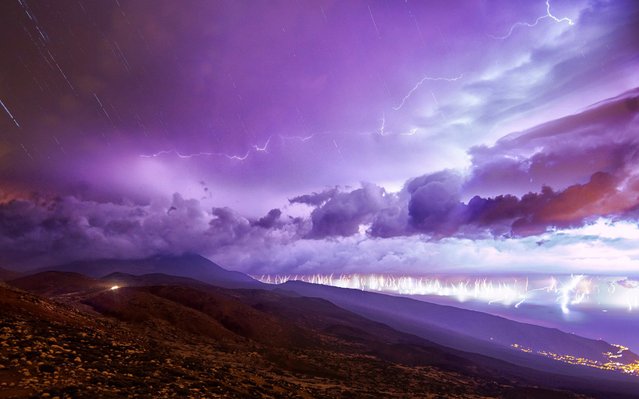
A handout photo made available by TeideLab shows an image composed of 200 pictures that shows the lightning activity between 3 am and 7am during a storm in Izana, Tenerife, Canary Islands, Spain, 27 October 2019. Over 2,000 lighting strikes fell mostly over Tenerife island last 26 October during a strong storm. (Photo by Daniel López/EPA/EFE/TeideLab)

A handout photo made available by TeideLab shows an image composed of 200 pictures that shows the lightning activity between 3 am and 7am during a storm in Izana, Tenerife, Canary Islands, Spain, 27 October 2019. Over 2,000 lighting strikes fell mostly over Tenerife island last 26 October during a strong storm. (Photo by Daniel López/EPA/EFE/TeideLab)
Details
29 Aug 2020 00:03:00