Loading...
Done
Photo Project Of Eric Johansson

Erik Johansson is a Swedish photographer and professional retouch artist who likes to create breathtaking photo manipulations from his photographs by using his creative ideas. Photo manipulation or Photoshopping, as most of people know it, is the application of image editing techniques used by professionals as well as amateurs. Today, there are large numbers of numerous photo editing software available in the market. Erik Johansson graduated with a degree in computer engineering, but his passion is photography and he wonderfully mixed photography with creative Photoshopping. You can see in the images below that how beautifully he has created different moments from various fields of life. Erik Johansson lives and work in Berlin, Germany.
Details
21 Feb 2013 10:40:00
Precious Metal By Yoav Kotik

Jewelry from packaging: Yoav Kotik’s rings, bracelets, necklaces and pendents are made from metal bottle caps. Yoav Kotik, the designer of "Precious metal" jewellery line, is a graduate of the "Bezalel academy of art and design" in Jerusalem. Yoav is a member of the Zik group. He frequently leads Master classes in the field of sculpture and design in recycled materials in academic institutes such as the "Shenkar academy of design" the "Bezalel academy" and the "Wizo academy". His works were presented in galleries across Israel, the UK, the Netherland and Japan.
Details
07 Feb 2014 13:45:00


In this photo distributed by the Israeli Defense Forces (IDF) May 23, 2005, woman soldiers wear branches in their helmets as their infantry instructors' course learns about camouflage during the field craft week of their training May 19, 2005 at an army base near Beersheva in Israel's southern desert. It takes the IDF more than 2 months to teach these 18-year-old female recruits the basic arts of warfare before they assigned to pass on their newly-acquired skills to the army's male and female draftees. (Photo by Abir Sultan/IDF via Getty Images)
Details
18 Apr 2011 10:22:00
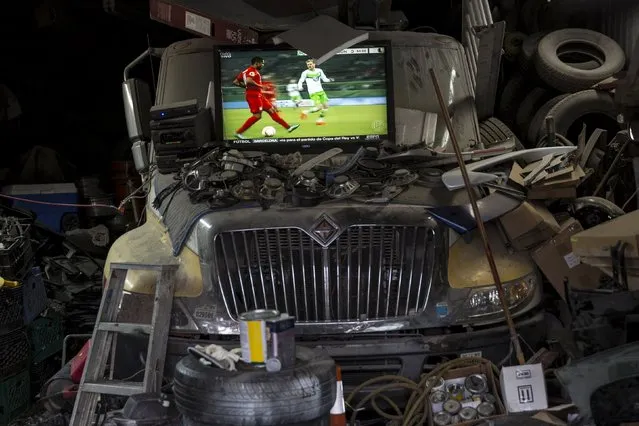
Soccer is played on a television mounted in a workshop in the Willets Point area of Queens in New York October 27, 2015. (Photo by Andrew Kelly/Reuters)

Soccer is played on a television mounted in a workshop in the Willets Point area of Queens in New York October 27, 2015. Willets Point, also known as the Iron Triangle, is an industrial precinct that sits in the shadow of Citi Field, home of the New York Mets baseball team. Many businesses within Willets Point employ a largely immigrant workforce. (Photo by Andrew Kelly/Reuters)
Details
04 Nov 2015 08:00:00
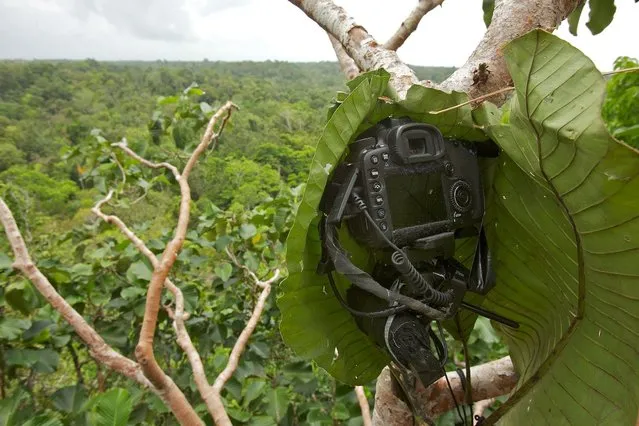
Tim Laman - Wildlife Photojournalist

Tim Laman is a field biologist and wildlife photojournalist. His pioneering research in the rain forest canopy in Borneo led to a PhD from Harvard and his first National Geographic article in 1997. Since then, he has pursued his passion for exploring wild places and documenting little-known and endangered wildlife by becoming a regular contributor to National Geographic. He has eighteen articles to his credit to date, all of which have had a conservation message. Some have focused on endangered species such as Orangutans or Hornbills, while others, such as a series of articles on Conservation International’s Biodiversity Hotspots, have highlighted regions under intense pressure.
Details
14 Sep 2013 10:13:00


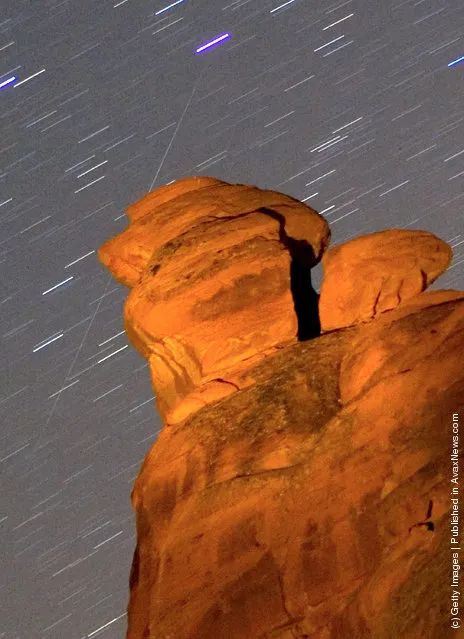
A Geminid meteor streaks diagonally across the sky against a field of star trails behind one of the peaks of the Seven Sisters rock formation in this long exposure early December 14, 2007 in the Valley of Fire State Park in Nevada. The meteor display, known as the Geminid meteor shower because it appears to radiate from near the star Castor in the constellation Gemini, is thought to be the result of debris cast off from an asteroid-like object called 3200 Phaethon. The shower is visible every December. (Photo by Ethan Miller/Getty Images)
Details
07 Jul 2011 10:34:00
Cuban-American artist Jorge Rodriguez-Gerada's six-acre sand and soil “facescape” stretches across the JFK Hockey Field on the north side of the Reflecting Pool along the National Mall October 1, 2014 in Washington, DC. Titled “Out of Many, One” and composed of 2,500 tons of sand, 800 tons of top soil and eight miles of string, the piece is the artist's interpreative blending of 30 different men's faces. (Photo by Chip Somodevilla/Getty Images)

Cuban-American artist Jorge Rodriguez-Gerada's six-acre sand and soil “facescape” stretches across the JFK Hockey Field on the north side of the Reflecting Pool along the National Mall October 1, 2014 in Washington, DC. Titled “Out of Many, One” and composed of 2,500 tons of sand, 800 tons of top soil and eight miles of string, the piece is the artist's interpreative blending of 30 different men's faces. Rodriguez-Gereda used high-precision global positioning satellites to place 10,000 wood pegs as waypoints for the giant face. The piece will be open to the public beginning October 4 and will eventually be tilled back into the earth. (Photo by Chip Somodevilla/Getty Images)
Details
04 Oct 2014 11:39:00
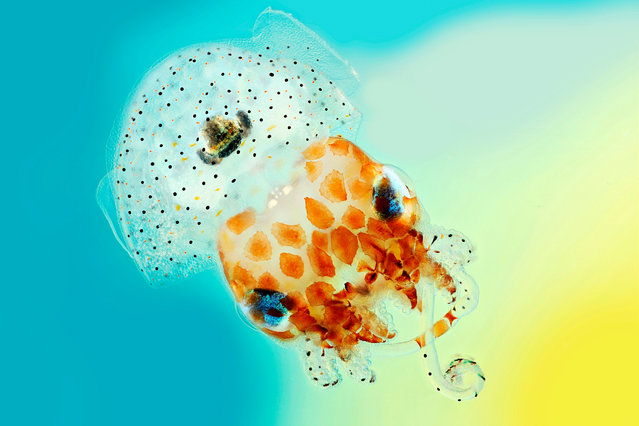
With its huge eyes, comical name and diminutive size, Mark R. Smith’s image of a baby Hawaiian bobtail squid can’t help but raise a smile. A curiously endearing creature, the cephalopod is just 1.5cm across, its mantle cavity bearing more than a passing resemblance to a rather natty shower cap. But it is also a beautiful example of symbiosis – nature’s version of “I’ll scratch your back if you scratch mine” – for on the underside of the squid is a light organ which houses bioluminescent bacteria. The squid offers the bacteria protection and food, while the bacteria emit a glow – a handy trait that the squid uses to offset its silhouette, helping it to evade predators in the depths below. Mark R. Smith’s entry combines several images of a Hawaiian bobtail squid with different focus lengths to create a final picture with greater depth of field than normal. (Photo by Mark R. Smith/Wellcome Images/Macroscopic Solutions)

With its huge eyes, comical name and diminutive size, Mark R. Smith’s image of a baby Hawaiian bobtail squid can’t help but raise a smile. A curiously endearing creature, the cephalopod is just 1.5cm across, its mantle cavity bearing more than a passing resemblance to a rather natty shower cap. But it is also a beautiful example of symbiosis – nature’s version of “I’ll scratch your back if you scratch mine” – for on the underside of the squid is a light organ which houses bioluminescent bacteria. The squid offers the bacteria protection and food, while the bacteria emit a glow – a handy trait that the squid uses to offset its silhouette, helping it to evade predators in the depths below. Mark R. Smith’s entry combines several images of a Hawaiian bobtail squid with different focus lengths to create a final picture with greater depth of field than normal. (Photo by Mark R. Smith/Wellcome Images/Macroscopic Solutions)
Details
08 Mar 2017 00:05:00