Loading...
Done


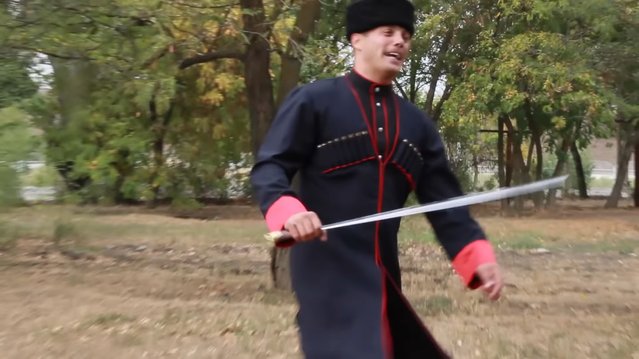
Кубанский казачий хор (Kuban Cossack choir) – Ойся ты ойся. Казачья лезгинка (Cossack lezginka)
Details
01 Apr 2019 00:01:00


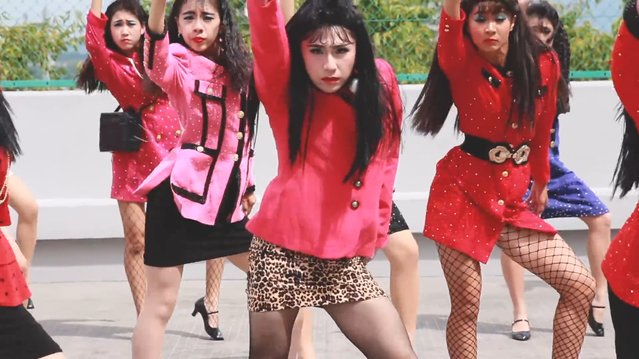
荻野目洋子 (Yoko Oginome) feat. 登美丘高校ダンス部がコ (Tomioka High School Dance Club) – ダンシング・ヒーロー (Dancing Hero)
Details
21 Jul 2020 00:03:00


チャラン・ポ・ランタン (Charan-Po Rantan) – フランスかぶれ (ちょっとだけショートヴァージョン)
Details
02 Mar 2019 00:03:00


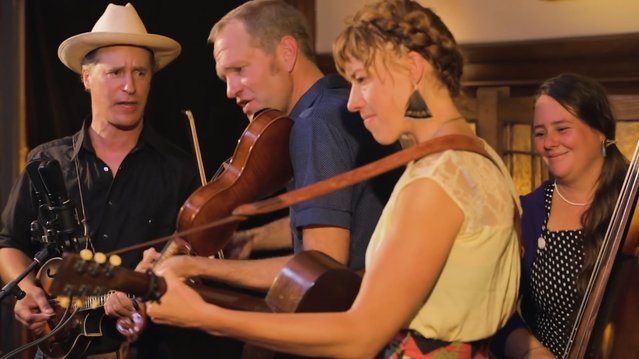
Foghorn Stringband – Reuben's Train. Foghorn Stringband is an old-time string band from Portland, Oregon, United States. They are considered one of the finest old-time string bands on the West Coast.
Details
20 Nov 2019 00:05:00


바버렛츠 (The Barberettes) – Barbara Ann (Cover of The Beach Boys). The Barberettes is a South Korean retro, doo-wop female group that debuted in 2014 as a trio, and is based in Seoul.
Details
04 Aug 2020 00:03:00
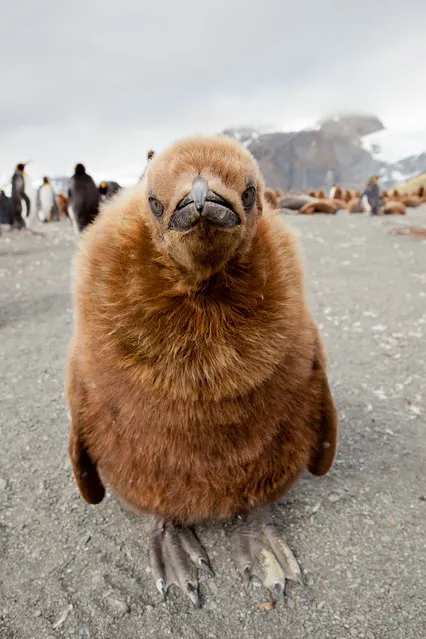
“Cub”. In the colony of penguins in South Georgia. (Photo and caption by Ondrej Zaruba/National Geographic Traveler Photo Contest)

“Cub”. In the colony of penguins in South Georgia. (Photo and caption by Ondrej Zaruba/National Geographic Traveler Photo Contest)

ATTENTION! All pictures are presented in high resolution. To see Hi-Res images – just TWICE click on any picture. In other words, click small picture – opens the BIG picture. Click BIG picture – opens VERY BIG picture.
Details
28 Jun 2013 12:32:00
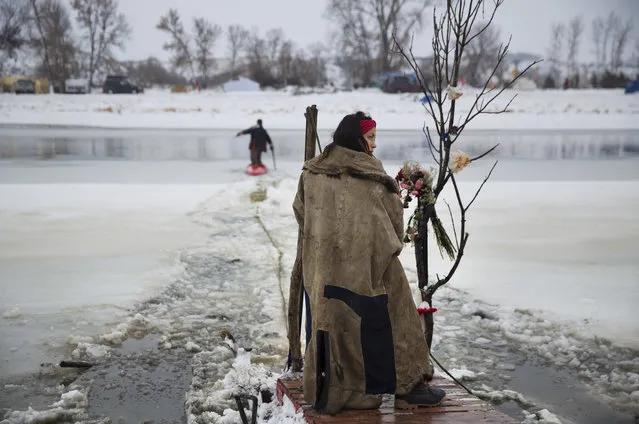
In this Thursday, December 1, 2016 photo, Cat Bigney, part of the Oglala Native American tribe, waits on the shore of the Cannonball river for travelers to arrive by canoe at the Oceti Sakowin camp where people have gathered to protest the Dakota Access oil pipeline in Cannon Ball, N.D. So far, those at the camp have shrugged off the heavy snow, icy winds and frigid temperatures. But if they defy next week's government deadline to abandon the camp, demonstrators know the real deep freeze lies ahead. Life-threatening wind chills and towering snow drifts could mean the greatest challenge is simple survival. (Photo by David Goldman/AP Photo)

In this Thursday, December 1, 2016 photo, Cat Bigney, part of the Oglala Native American tribe, waits on the shore of the Cannonball river for travelers to arrive by canoe at the Oceti Sakowin camp where people have gathered to protest the Dakota Access oil pipeline in Cannon Ball, N.D. So far, those at the camp have shrugged off the heavy snow, icy winds and frigid temperatures. But if they defy next week's government deadline to abandon the camp, demonstrators know the real deep freeze lies ahead. Life-threatening wind chills and towering snow drifts could mean the greatest challenge is simple survival. (Photo by David Goldman/AP Photo)
Details
06 Dec 2016 10:22:00
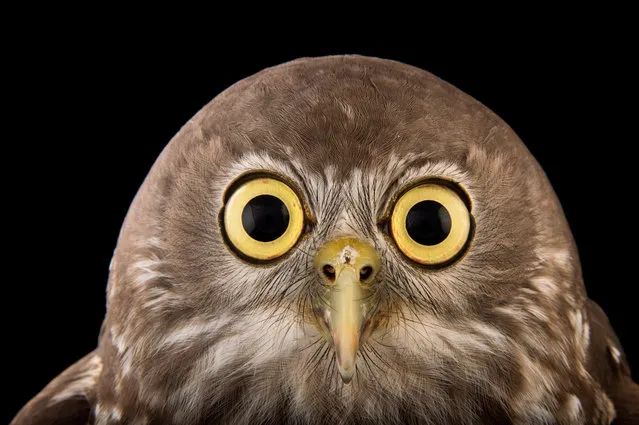
The National Geographic Photo Ark is a travelling exhibition of photographer Joel Sartore’s quest to create a photo archive of biodiversity around the world. So far, Sartore has captured studio portraits of more than 6,000 species – a number that he hopes to double. On 1 July, the ark will open at Melbourne zoo – the first time it has been exhibited in the southern hemisphere. More than 50 portraits will be on display, including many of Australian endangered animals being protected by programs at the zoo itself. These captions have been edited from text supplied by Melbourne zoo. Here: Barking owl. So-named because its call sounds like a barking dog, these birds are native to Australia, Indonesia and Papua New Guinea. In Victoria they are listed as an endangered species, and in 2003 there were estimated to be fewer than 50 breeding pairs. The main threat to the species in Victoria is loss of habitat, especially large trees with hollows in which they can nest and on which many of their prey depend. Apart from a bark, they may utter a chilling scream when they feel threatened. (Photo by Joel Sartore/National Geographic Photo Ark/The Guardian)

The National Geographic Photo Ark is a travelling exhibition of photographer Joel Sartore’s quest to create a photo archive of biodiversity around the world. So far, Sartore has captured studio portraits of more than 6,000 species – a number that he hopes to double. On 1 July, the ark will open at Melbourne zoo – the first time it has been exhibited in the southern hemisphere. More than 50 portraits will be on display, including many of Australian endangered animals being protected by programs at the zoo itself. These captions have been edited from text supplied by Melbourne zoo. Here: Barking owl. (Photo by Joel Sartore/National Geographic Photo Ark/The Guardian)
Details
01 Jul 2017 07:45:00