Loading...
Done
Abandon Village: Doel, Belgium

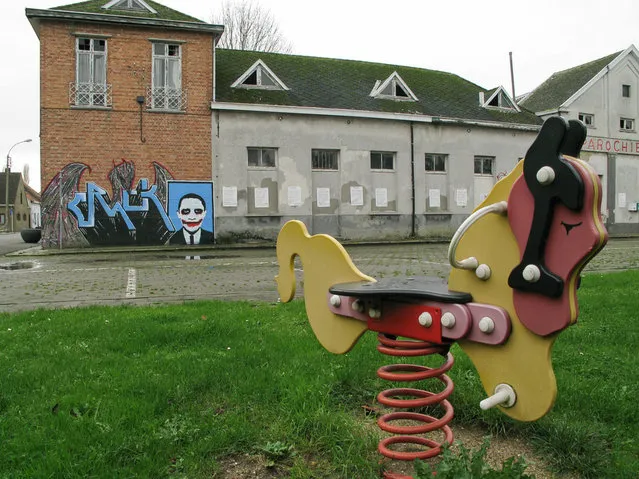
Doel is a 700 year old village on the river Scheldt in Belgium. Near to the local nuclear power plant, with its two giant cooling towers, it became the target for demolition not once but twice in order to make way for the ever expanding harbor. The successful protest groups of the seventies could not compete in the 90's and as residents began to leave, the government refused to rent out the properties again and instead let them fall into disrepair. On the 23rd of March 2007, the government decided that the village would be demolished by 2009 and in June 2008, residents received a letter informing them that they were to vacate their homes by the 1st of September 2009.
Details
20 Mar 2013 11:33:00
Unique World By Anne Bachelier

Art Brokerage specializes in the original paintings of Anne Bachelier. B. 1949 - Anne Bachelier - Metamorphosis, transition, and evolution provide the common threads of the art of Anne Bachelier. The artist captivates her audience with compelling, highly imaginative images that are distinct, unique, inventive and immediately recognizable. Her metaphysical, dream-like fantasies evoke feelings simultaneously powerful, peaceful, and protective. This unique "other" world, untouched by time or place reminds the viewer of the eternal dance of transformation and regeneration.
Details
09 Mar 2015 10:50:00
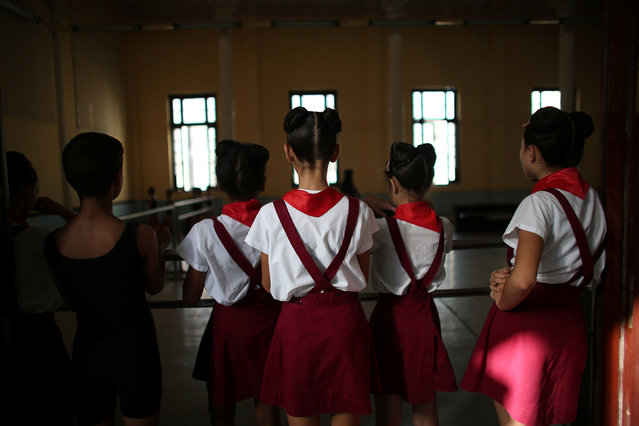
Students at the Cuba's National Ballet School (ENB) watch a class from outside the classroom in Havana, Cuba, October 12, 2016. (Photo by Alexandre Meneghini/Reuters)

Students at the Cuba's National Ballet School (ENB) watch a class from outside the classroom in Havana, Cuba, October 12, 2016. Catherine Conley, the first American full-time student at Cuba's prestigious National Ballet School, hopes to gain an edge back home by learning the powerful Cuban style with its dazzling turns and jumps. (Photo by Alexandre Meneghini/Reuters)
Details
19 Oct 2016 11:46:00
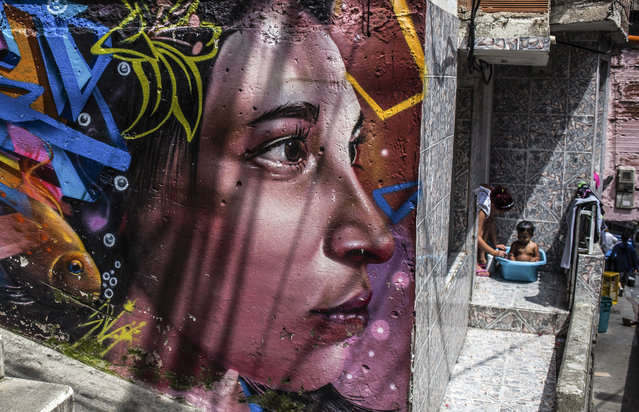
A graffiti, portraying a woman, is seen in Medellin, Colombia on November 19, 2017. (Photo by Juancho Torres/Anadolu Agency/Getty Images)

A graffiti, portraying a woman, is seen in Medellin, Colombia on November 19, 2017. Mural graffitis from different artists, street art can be seen in almost every city on Earth, but street arts raw power and potential for change was felt by me most intensively in Medellins Comuna 13, previously one of Colombias most dangerous neighbourhoods, in fact Communa 13 was constant battleground between gangs, narcos, paramilitaries and the government, but today you would hardly recognise it. (Photo by Juancho Torres/Anadolu Agency/Getty Images)
Details
22 Nov 2017 05:59:00
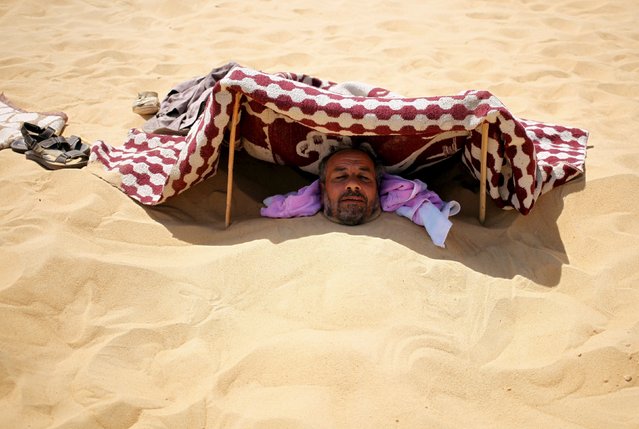
A patient buried in the hot sand looks out from under a shade that protects his face from the sun in Siwa, Egypt, August 12, 2015. (Photo by Asmaa Waguih/Reuters)

A patient buried in the hot sand looks out from under a shade that protects his face from the sun in Siwa, Egypt, August 12, 2015. In the searing heat of summer in western Egypt, at the hottest time of the day, sufferers of rheumatism, joint pain, infertility or impotence lie buried neck-deep in the sand of Siwa near Dakrour Mountain. Locals say taking a sand bath is a natural therapy with powers to cure many medical conditions. (Photo by Asmaa Waguih/Reuters)
Details
28 Aug 2015 12:07:00
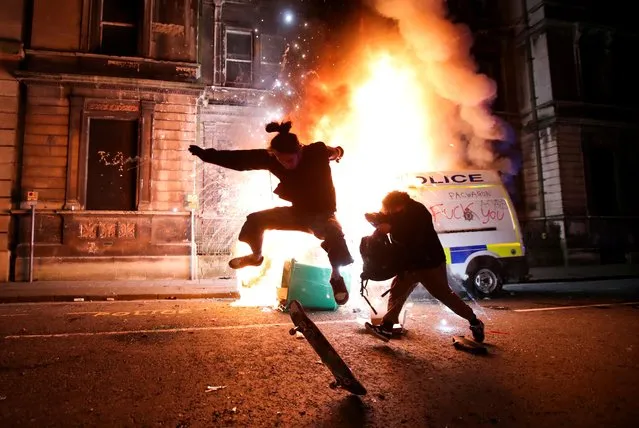
A demonstrator skateboards in front of a burning police vehicle during a protest against a new proposed policing bill, in Bristol, Britain, March 21, 2021. (Photo by Peter Cziborra/Reuters)

A demonstrator skateboards in front of a burning police vehicle during a protest against a new proposed policing bill, in Bristol, Britain, March 21, 2021. The Police, Crime, Sentencing and Courts Bill would give forces in England and Wales more power to impose conditions on non- violent protests, including those deemed too noisy or a nuisance, with fines or jail for those convicted. (Photo by Peter Cziborra/Reuters)
Details
22 Mar 2021 09:12:00
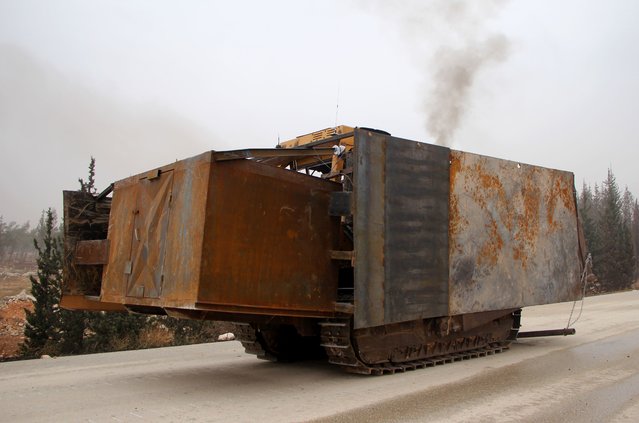
Rebel fighters from the Jaish al- Fatah (or Army of Conquest) brigades manoeuver an alleged explosive- rigged make- shift armoured vehicle during a major assault on Syrian government forces West of Aleppo city on October 28, 2016 Syrian opposition fighters launched a major assault on government forces to break a months- long siege of rebel- held neighbourhoods of the battered city of Aleppo. Rebel groups including the powerful Ahrar al- Sham faction and former Al- Qaeda affiliate Fateh al- Sham Front fired waves of rockets into government- held western Aleppo, killing at least 15 civilians, a monitor said. (Photo by Omar Haj Kadour/AFP Photo)

Rebel fighters from the Jaish al- Fatah (or Army of Conquest) brigades manoeuver an alleged explosive- rigged make- shift armoured vehicle during a major assault on Syrian government forces West of Aleppo city on October 28, 2016 Syrian opposition fighters launched a major assault on government forces to break a months- long siege of rebel- held neighbourhoods of the battered city of Aleppo. Rebel groups including the powerful Ahrar al- Sham faction and former Al- Qaeda affiliate Fateh al- Sham Front fired waves of rockets into government- held western Aleppo, killing at least 15 civilians, a monitor said. (Photo by Omar Haj Kadour/AFP Photo)
Details
29 Oct 2016 11:51:00
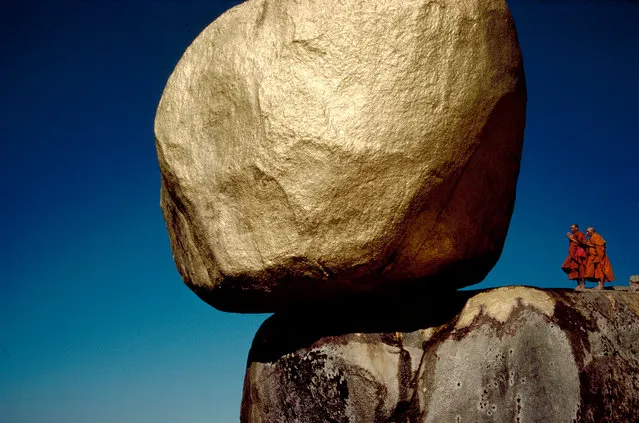
Kyaiktiyo, Burma, 1978. The Golden Rock at Shwe Pyi Daw (the Golden Country), the Buddhist holy place. Hiroji Kubota writes: “I was desperate to keep a distance from America for a while; luckily, I found Burma and its gentle and compassionate people. In the spring of 1978, on the top of the hill where I took this photo, I had two Leica bodies: the one with Tri-X and the other with Kodachrome 64. Soon after, I realised that the colour one looked very colourful and was more powerful. That was my decisive moment, to become a colour photographer”. (Photo by Hiroji Kubota/Magnum Photos)

Kyaiktiyo, Burma, 1978. The Golden Rock at Shwe Pyi Daw (the Golden Country), the Buddhist holy place. Hiroji Kubota writes: “I was desperate to keep a distance from America for a while; luckily, I found Burma and its gentle and compassionate people. In the spring of 1978, on the top of the hill where I took this photo, I had two Leica bodies: the one with Tri-X and the other with Kodachrome 64. Soon after, I realised that the colour one looked very colourful and was more powerful. That was my decisive moment, to become a colour photographer”. (Photo by Hiroji Kubota/Magnum Photos)
Details
10 Jun 2016 13:30:00