Loading...
Done
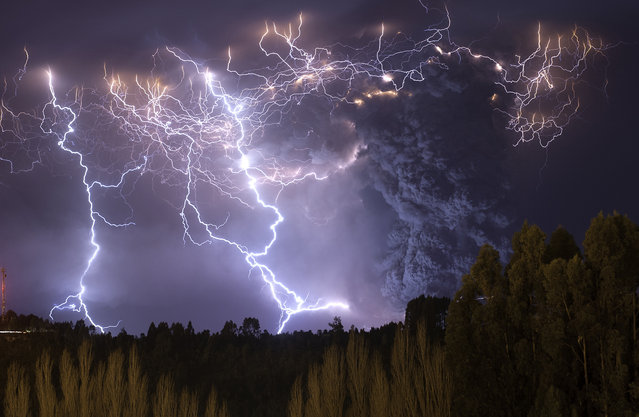
The eruption of Cordon Caulle began on June 4, 2011, located in the Region of Los Rios in Chile. For about 12 months, people and animals became accustomed to living with the daily fall of ash, which also caused problems in the air traffic in South America. The explosions and lightning during first days of the eruption could be seen from hundreds of miles around. This photograph was taken on the second night of eruption from the town of Lago Ranco. (Photo and caption by Francisco Negroni/National Geographic Traveler Photo Contest)

The eruption of Cordon Caulle began on June 4, 2011, located in the Region of Los Rios in Chile. For about 12 months, people and animals became accustomed to living with the daily fall of ash, which also caused problems in the air traffic in South America. The explosions and lightning during first days of the eruption could be seen from hundreds of miles around. This photograph was taken on the second night of eruption from the town of Lago Ranco. (Photo and caption by Francisco Negroni/National Geographic Traveler Photo Contest)

ATTENTION! All pictures are presented in high resolution. To see Hi-Res images – just TWICE click on any picture. In other words, click small picture – opens the BIG picture. Click BIG picture – opens VERY BIG picture.
Details
23 Jun 2013 11:24:00
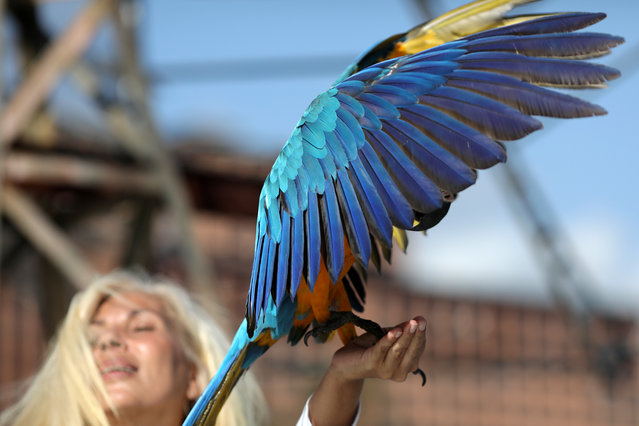
A macaw lands in Carmen Borges' hand while she stays at a rooftop of a building in Caracas, Venezuela, June 12, 2019. (Photo by Manaure Quintero/Reuters)

Looking for an escape from the daily realities of crisis-ridden Venezuela, Carmen Gomez finds solace receiving visitors on the roof of her Caracas apartment building every morning: groups of blue and gold macaws that arrive at daybreak. Here: A macaw lands in Carmen Borges' hand while she stays at a rooftop of a building in Caracas, Venezuela, June 12, 2019. (Photo by Manaure Quintero/Reuters)
Details
24 Jul 2019 00:03:00
Lenticular clouds hover of the mountains of the Kamchatka Peninsula in Russia. (Photo by Denis Budkov/Caters News)

“These eerie formations in the sky may look like alien ships. But as the Daily Mail points out, they’re actually a natural occurrence called lenticular clouds”. – Claudine Zap. Photo: Lenticular clouds hover of the mountains of the Kamchatka Peninsula in Russia. (Photos by Denis Budkov/Caters News)
Details
11 Jun 2013 09:26:00
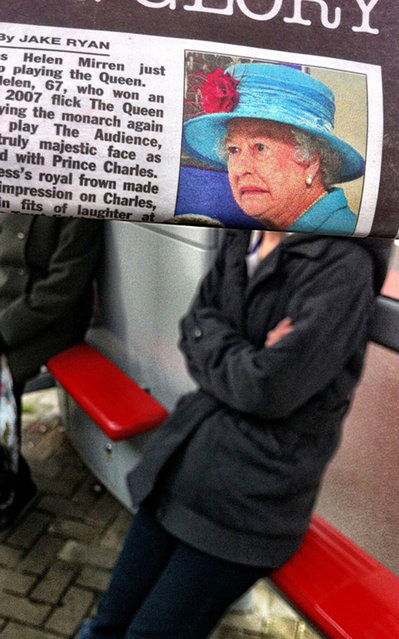
How To Pass Time On Your Commute To Work

We all have our own ways of passing time on our daily commutes. Some people read, others try to sleep, and many listen to music or play on their phones. But one creative commuter has a simple and highly entertaining way that hopefully more people will embrace. By placing a face from a newspaper in front of a person at just the right angle, they transform other commuters into recognizable celebrities while keeping the unbeknownst participant obscured.
Details
02 Jul 2013 10:46:00
An animal rights activist from People for the Ethical Treatment of Animals (PETA) hands out bananas to motorists at an intersection in Bangkok, Thailand, 12 February 2015. (Photo by Diego Azubel/EPA)

An animal rights activist from People for the Ethical Treatment of Animals (PETA) hands out bananas to motorists at an intersection in Bangkok, Thailand, 12 February 2015. Activists called on people turn to vegetarian saying the cholesterol in meat, eggs and daily products can contribute to hardening of arteries and slow the flow of blood to all the body's vital organs. (Photo by Diego Azubel/EPA)
Details
17 Feb 2015 11:57:00
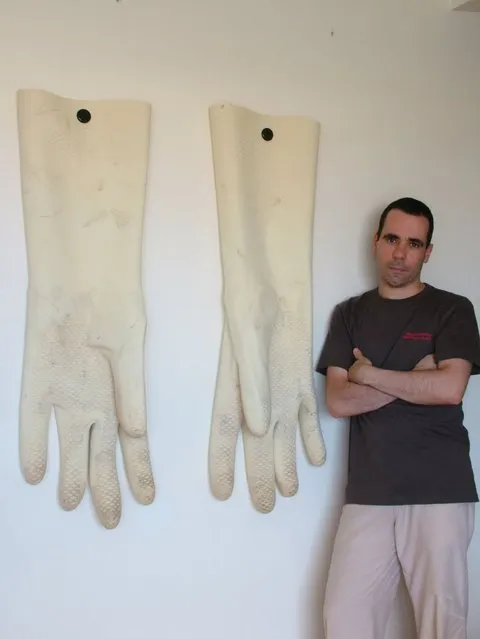
Sculptures By Romulo Celdran

Spanish artist Romulo Celdran (b. 1973) brings exquisite technical skill, a fastidious eye, and a scientific attention to detail to both his mixed-media drawings on board and his larger-than-life sculptures of quotidian objects.
Details
27 Jun 2015 09:01:00
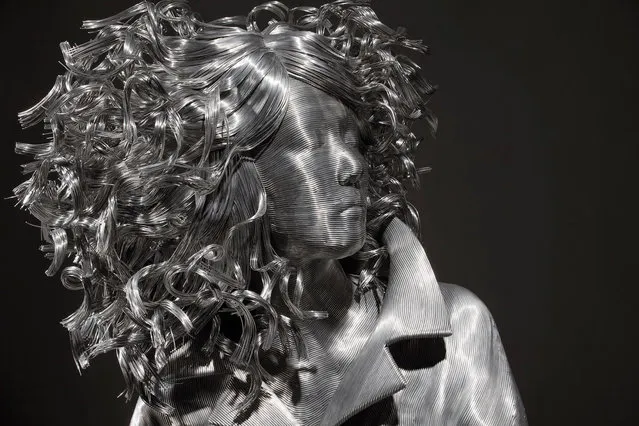
Wire Sculptures By Richard Stainthorp

The English artist Richard Stainthorp creates life-size sculptures with metal wire. Its special feature is to capture, accurately, all the energy and fluidity of the human body. A selection of his works is available in the article.
Details
03 Aug 2015 08:24:00
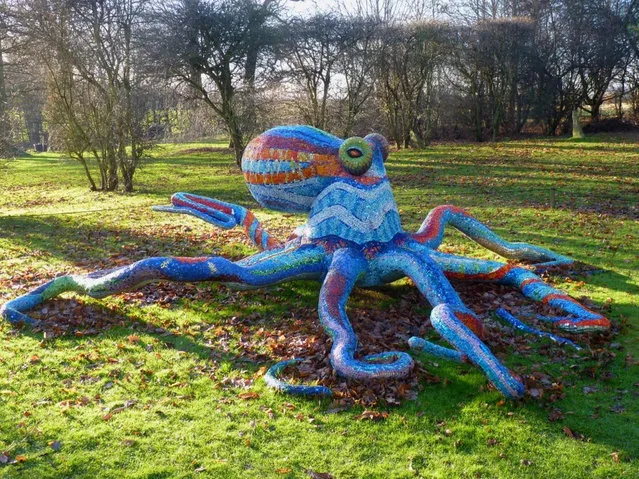
Octopus By Marialuisa Tadei

Marialuisa Tadeis sculpture is very large compared to a life size octopus. The sculptures are made of steel and concrete. They are then turned into a mosaic using hand cut glass. The texture is bumpy because of the mosaic but is smooth on the glass. The main idea behind the sculpture is to explore spiritual and symbolic representation.
Details
22 Apr 2014 10:57:00