Loading...
Done


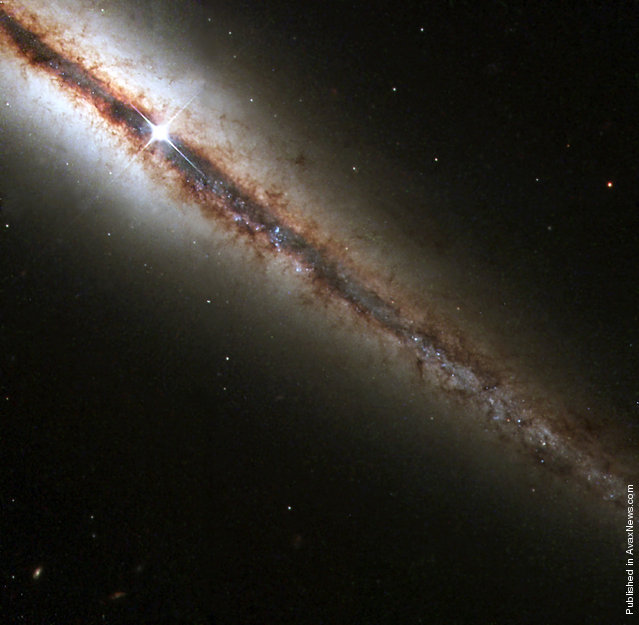
An image produced by the Hubble telescope of the perfectly “edge-on” galaxy, or NGC 4013, March 1, 2001. This new Hubble picture reveals, with great detail, huge clouds of dust and gas extending along, as well as far above, the galaxy's main disk. NGC 4013 is a spiral galaxy, similar to the Milky Way, lying some 55 million light-years from Earth in the direction of the constellation Ursa Major. Viewed face-on, it would look like a nearly circular pinwheel, but NGC 4013 happens to be seen edge-on from our vantage point. Even at 55 million light-years, the galaxy is larger than Hubble's field of view, and the image shows only a little more than half of the object, albeit with unprecedented detail. (Photo Courtesy of NASA/Newsmakers)
Details
28 Feb 2015 22:33:00
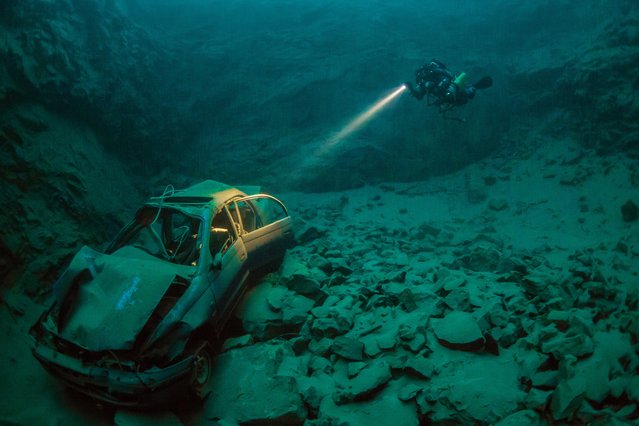
Wide-angle category winner. Part of the Illusion by Marcus Blatchford (UK). Location: National Dive & Activity Centre, Chepstow, Wales. “This is the deepest inland dive centre in the UK. The dive plan was to explore the deep end, but this time I dived ‘unplugged’ (without my strobes). With the exception of this change to my camera technique, there were no planned shots I wanted to achieve – just a fun dive with ad-hoc photos along the way. Shortly after this photo was captured, in 6C water and two hours of decompression ahead of us, we turned and started the long ascent back to the surface”. (Photo by Marcus Blatchford/Underwater Photographer of the Year 2016)

Wide-angle category winner. Part of the Illusion by Marcus Blatchford (UK). Location: National Dive & Activity Centre, Chepstow, Wales. “This is the deepest inland dive centre in the UK. The dive plan was to explore the deep end, but this time I dived ‘unplugged’ (without my strobes). With the exception of this change to my camera technique, there were no planned shots I wanted to achieve – just a fun dive with ad-hoc photos along the way. Shortly after this photo was captured, in 6C water and two hours of decompression ahead of us, we turned and started the long ascent back to the surface”. (Photo by Marcus Blatchford/Underwater Photographer of the Year 2016)
Details
18 Feb 2016 13:44:00
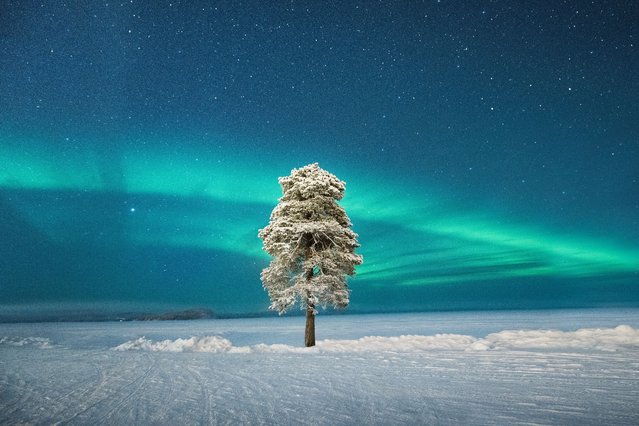
Aurorae category runner-up: Lone Tree under a Scandinavian Aurora by Tom Archer (UK). The photographer decided to explore the area around the hotel on a very crisp -35C evening in Finnish Lapland. When he found this tree, he decided to wait for the misty conditions to change and could not believe his luck when the sky cleared and the aurora came out in the perfect spot. Archer spent about an hour photographing it before his camera started to lock up because of the harsh conditions, but by then he was happy to call it a night. (Photo by Tom Archer/2020 Astronomy Photographer of the Year)

Aurorae category runner-up: Lone Tree under a Scandinavian Aurora by Tom Archer (UK). The photographer decided to explore the area around the hotel on a very crisp -35C evening in Finnish Lapland. When he found this tree, he decided to wait for the misty conditions to change and could not believe his luck when the sky cleared and the aurora came out in the perfect spot. Archer spent about an hour photographing it before his camera started to lock up because of the harsh conditions, but by then he was happy to call it a night. (Photo by Tom Archer/2020 Astronomy Photographer of the Year)
Details
17 Sep 2020 00:03:00
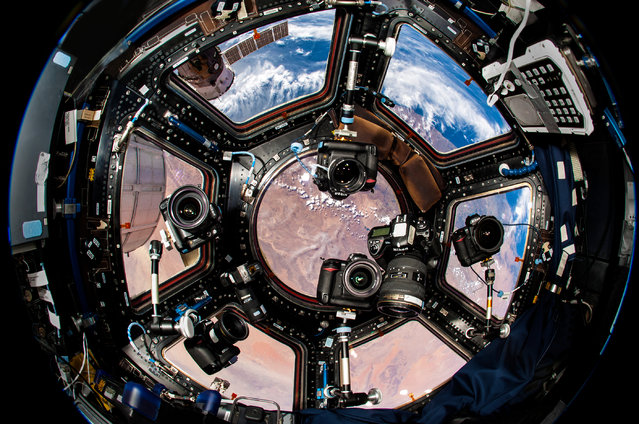
Astronaut Donald R. Pettit would often rig an array of as many as six cameras in the cupola windows and set them all to fire continuously for events such as sunsets, which only last around seven seconds on the ISS. (Photo by Donald R. Pettit)

Astronaut Donald R. Pettit would often rig an array of as many as six cameras in the cupola windows and set them all to fire continuously for events such as sunsets, which only last around seven seconds on the ISS. (Photo by Donald R. Pettit)
Details
05 Sep 2016 11:34:00
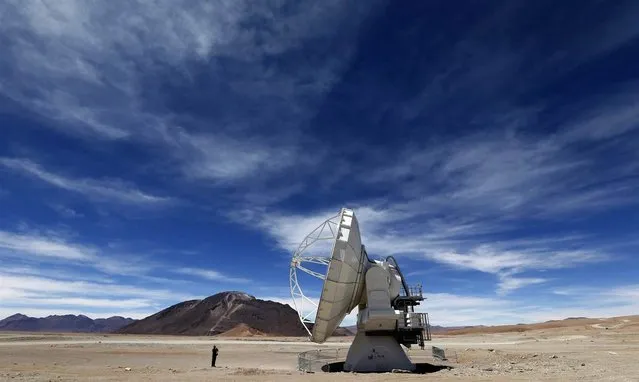
A man takes a photo of a radio antenna that's part of the Atacama Large Milimeter Array Observatory on March 12, 2013 at Llano de Chajnantor, about 43 miles (70 kilometers) from San Pedro de Atacama, Chile. The $1.5 billion ALMA facility, which had its official inauguration on March 13, is considered the world's most expensive ground-based observatory. (Photo by Felipe Trueba/EPA)

A man takes a photo of a radio antenna that's part of the Atacama Large Milimeter Array Observatory on March 12, 2013 at Llano de Chajnantor, about 43 miles (70 kilometers) from San Pedro de Atacama, Chile. The $1.5 billion ALMA facility, which had its official inauguration on March 13, is considered the world's most expensive ground-based observatory. (Photo by Felipe Trueba/EPA)
Details
03 Apr 2013 09:25:00
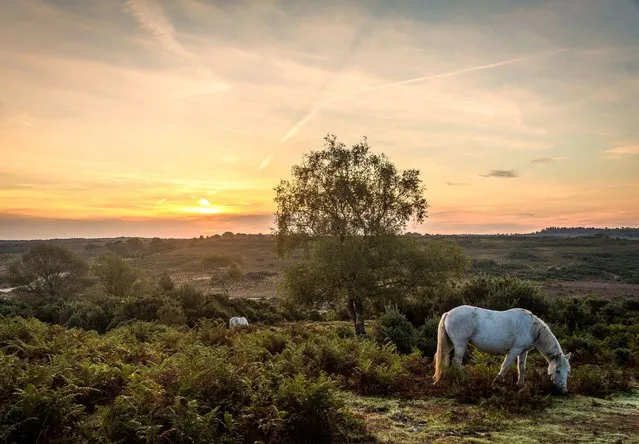
New Forest ponies graze as the sun rises over Godshill in the New Forest, Hants on September 18, 2022, on the day before the Queen's state funeral tomorrow. (Photo by Claire Sheppard/Solent News & Photo Agency)

New Forest ponies graze as the sun rises over Godshill in the New Forest, Hants on September 18, 2022, on the day before the Queen's state funeral tomorrow. (Photo by Claire Sheppard/Solent News & Photo Agency)
Details
02 Oct 2022 04:45:00
Eyes As Big As Plates – Norway And Finland

Eyes as Big as Plates is a whimsical series by Finnish photographer Riitta Ikonen and Norwegian photographer Karoline Hjorth that features senior citizens donning organic materials like twigs and grass. Ikonen says that the collaborative project originally began as "a play on characters and protagonists from Norwegian folklore" but has since evolved into a collection of images exploring "mental landscapes" that reflect a return of body to nature with the use of scavenged materials.
Details
08 Apr 2013 09:53:00
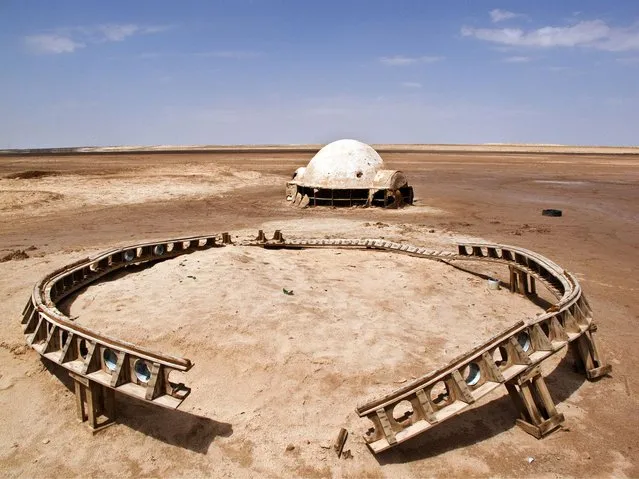
“No More Stars”: Abandoned Stars Wars Sets in the Desert by Rä di Martino

New York-based visual artist and filmmaker Rä di Martino has taken a series of eerie and beautiful photos that capture scenes of abandoned Hollywood film sets. Martino spent over a year traveling throughout the desert towns of Morocco and Tunisia hunting down the old Star Wars sets, exploring these massive structures that stand almost like ancient ruins. “No More Stars” showcases the backdrop of Luke Skywalker's home on the fictional desert planet Tatooine. (Photo by Rä di Martino)
Details
12 Mar 2015 13:38:00